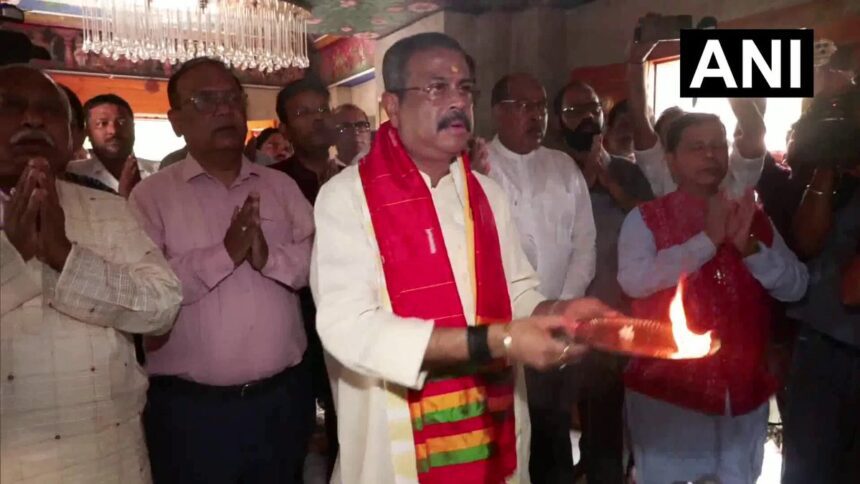

Union Minister Dharmendra Pradhan recently offered prayers at the Shri Jagannath Temple to commemorate Prime Minister Narendra Modi becoming India’s longest continuously serving elected Prime Minister. This event has sparked discussions about the political strategies leaders employ to maintain their positions.
Significance of the Occasion
Prime Minister Narendra Modi’s tenure has marked a significant period in Indian politics, characterized by various reforms and initiatives. By becoming the longest-serving Prime Minister, he has solidified his political legacy. His leadership has seen a broad range of policies aimed at economic growth, social reform, and national security. The event at the Jagannath Temple symbolizes both a personal and political acknowledgment of this milestone.
Political Dynamics and Leadership Strategies
The elaborate offerings and rituals performed by leaders like Dharmendra Pradhan are part of a broader strategy to connect with the electorate. In Indian politics, cultural symbols such as temple visits often serve dual purposes: they reinforce a leader’s image as both a politician and a devotee. This approach can help in garnering support from a diverse voter base that holds religious sentiments in high regard.
A Historical Context: Modi’s Political Journey
Since taking office in May 2014, Modi’s governance has undergone numerous transformations influenced by significant political milestones. His ascent to power was marked by a decisive mandate from voters who were drawn to promises of economic development and good governance. Over the years, he has managed to maintain a strong political base, navigating through challenges while using both domestic and international platforms to bolster his image.
Why This Matters
The political implications of Modi’s milestone extend beyond mere numbers. His prolonged tenure has implications for current governance structures, policies, and the future trajectory of Indian politics. The symbolic acts of devotion by political leaders suggest an intertwining of religion and governance, a phenomenon that reflects the ongoing relevance of cultural factors in political strategy. Understanding this dynamic is crucial for deciphering the current political landscape as well as the electoral motivations of leaders across the spectrum.
Frequently Asked Questions
What does it mean for Modi to be the longest-serving Prime Minister?
This status showcases Modi’s political stability and ability to maintain voter support, which is crucial for his party’s future electoral strategies.
How does the temple visit influence public perception?
Such religious visits are often seen as attempts to align with traditional values, potentially earning favor from religious communities, thus reinforcing the leader’s image as one who respects cultural practices.
What has been the impact of Modi’s policies during his tenure?
Modi’s policies have led to various reforms in the economy, healthcare, and social welfare programs, although they have also faced criticism regarding implementation and societal impact.
What are the potential challenges ahead for Modi?
Despite his achievements, Modi faces challenges such as economic pressure and opposition from various political factions, which could influence his continued popularity and effectiveness as a leader.