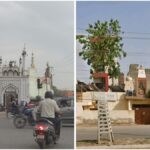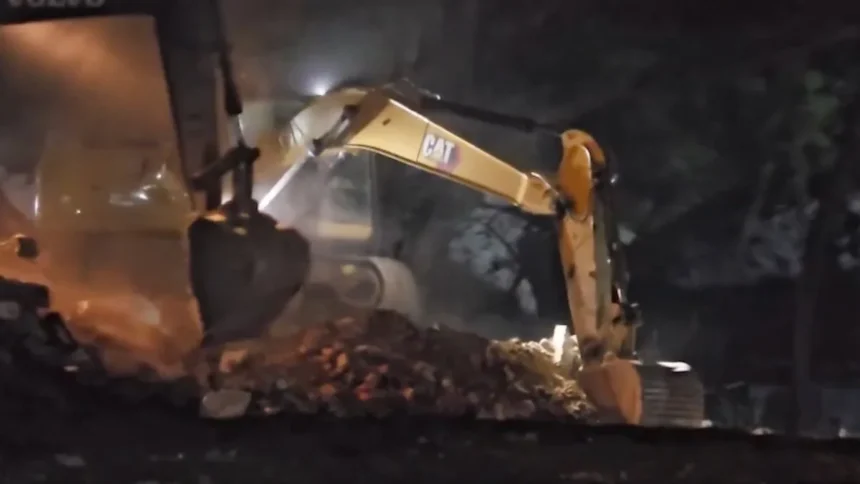

A nearly 200-year-old mosque near Raj Ghat in Varanasi was demolished in a covert operation conducted overnight by authorities, who cited land clearance for a significant railway station redevelopment project. The demolition raised concerns about the treatment of minority communities in India, highlighting potential patterns of discrimination and social exclusion linked to infrastructure projects in regions with historical religious significance.
Demolition of Ajgaib Shaheed Mosque: A Sudden Turn of Events
On a late Tuesday night, the Ajgaib Shaheed Mosque was brought down under tight security measures, as officials claimed the structure was situated on railway land intended for the modernization of Kashi railway station. Local media were not permitted near the site, which led to tensions among residents concerned about the abrupt demolition of a place of worship that has stood for almost two centuries.
A report highlighted that while a mosque was torn down, a Hanuman Temple—also located on the same railway land—was similarly removed, but the focus has primarily remained on the mosque. Critics argue that these actions reflect broader issues of religious bias and the marginalization of Muslim communities under the current political climate in India.
Infrastructure Development vs. Cultural Heritage
The Kashi railway station redevelopment project aims to create a multimodal transport hub estimated to cost between Rs 330 crore and Rs 400 crore, connecting various modes of transit to facilitate passenger movement. While infrastructure development is often necessary for urban planning, the removal of historically significant structures raises questions about the preservation of cultural and religious sites in the face of modernization.
Citizens have expressed concerns that such abrupt demolitions indicate a disregard for community sentiment and historical context. Many fear that the erratic approach to redevelopment could lead to broader patterns of economic and social exclusion for marginalized communities—especially Muslims—who may be disproportionately impacted by these changes.
Security Measures and Law Enforcement Oversight
The demolition culminated in a well-coordinated security operation led by Joint Commissioner of Police Shiv Hari Meena, with the presence of multiple senior police officers and paramilitary forces. This extensive security arrangement sought to ensure the operation transpired without public disturbance. Officials reported using five JCB machines and two Poclain excavators to execute the demolition quickly and efficiently.
While the authorities maintained that the operation was necessary for urban development, the heavy law enforcement presence raises issues about the necessity of such force when addressing community landmarks. This situation invites scrutiny regarding how minority populations are treated during infrastructure projects and whether their rights are being upheld amidst rapid urban expansion.
Why It Matters
The demolition of the Ajgaib Shaheed Mosque amidst a significant redevelopment initiative serves as a critical case study in understanding the intersection of infrastructure development and social justice within contemporary India. It highlights a troubling trend where minority religious structures are dismantled under the guise of urban modernization, pushing agendas that may marginalize community voices. This pattern can have far-reaching implications for social cohesion and religious tolerance, both essential aspects of a harmonious society. The architectural history, cultural sentiment, and social rights of minority populations must be balanced with the objectives of governmental and economic growth projects.
Frequently Asked Questions
What was the reason for the demolition of the mosque?
Officials claimed the Ajgaib Shaheed Mosque stood on railway land earmarked for the modernization of Kashi railway station, which is being transformed into a multimodal transport hub.
How did the local community react to the demolition?
Local residents expressed agitation and concern regarding the sudden nature of the demolition and the lack of media access during the operation, raising alarms about the treatment of minority communities.
What security measures were taken during the demolition?
Extensive security arrangements included the deployment of senior police personnel, multiple police stations, and paramilitary forces to maintain law and order throughout the operation.
What are the broader implications of this demolition for minority communities in India?
This incident underscores wider patterns of discrimination and social exclusion faced by minorities, particularly Muslims, during urban development projects, contributing to fears of eroded rights and cultural eradication.