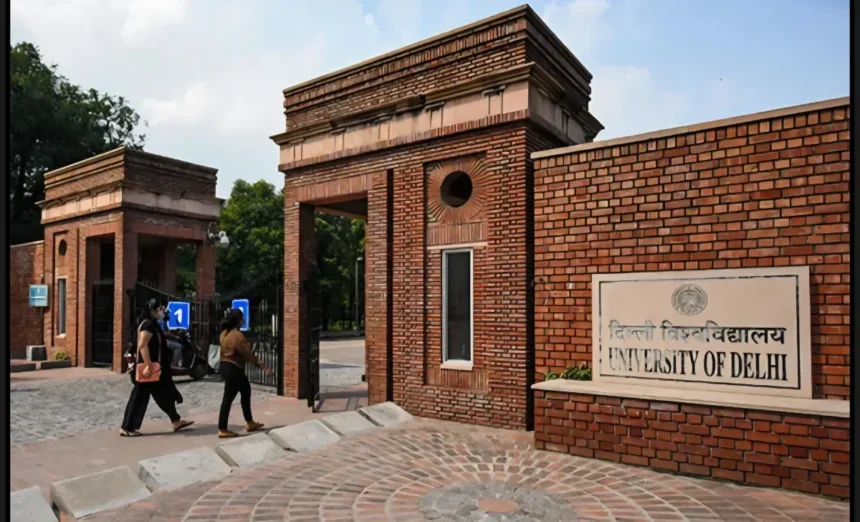

The University of Delhi has eliminated a specialized postgraduate History course on the Delhi Sultanate, alongside other significant topics in Indian history. This decision, part of a broader restructuring under the National Education Policy 2020, raises questions about the representation and understanding of medieval Indian history in higher education.
The Removal of Key Historical Courses
The Delhi Sultanate course, titled “The Delhi Sultanate: Structures of Authority in Medieval North India (13th–14th Centuries),” was an integral part of the MA History curriculum, providing insight into governance, political authority, and cultural developments during that era. The paper, removed from the final syllabus effective July 2026, previously engaged students with various historiographical interpretations and important historical themes.
In addition to the Delhi Sultanate course, “History of North India, c. 1400–1550” was also dropped. Other planned courses such as “Gender and Women in Early India: 1500 BCE to 1000 CE” and “Political Processes and Structure of Polities in Ancient India” have not made it to the revised syllabus. These subjects had been taught for several years and addressed significant themes including social structures, literary cultures, and religious developments in early India.
Academic Implications of Curriculum Changes
The absence of these specialized papers could significantly impact the depth of historical knowledge imparted to students. The change raises concerns about how medieval Indian history is being taught, particularly as it relates to the complexities of India’s multicultural society. Critics argue that a reduction in specialized studies could lead to a diminished understanding of the nuanced political and social fabric of medieval North India.
These adjustments are framed within the larger context of the National Education Policy 2020 and the Postgraduate Curriculum Framework 2024, which aim to modernize and streamline educational offerings. However, the removal of critical historical courses can be interpreted as an attempt to sanitize or simplify the multifaceted nature of India’s past, especially regarding the prominent role of Muslim dynasties in shaping the subcontinent’s history.
The Broader Context of Historical Scholarship
While the Delhi Sultanate material remains part of the undergraduate curriculum, significant debate is expected as to its relevance and inclusion in advanced studies. The omission of these courses from the postgraduate syllabus may reflect a broader trend influenced by political stakeholders, namely the Bharatiya Janata Party (BJP) and the associated Sangh Parivar organizations, known for promoting narratives that align with their ideological stance.
This political influence can lead to systematic marginalization of certain historical narratives, particularly those highlighting Muslim contributions to Indian civilization. The academic community remains critical of such shifts and emphasizes the importance of retaining diverse perspectives in the study of history to foster a comprehensive understanding of India’s past.
Why It Matters
The changes to the University of Delhi’s syllabus are indicative of larger educational policies that impact historical scholarship in India. For students and educators, especially in the humanities, the inclusion or exclusion of specific historical themes can shape their understanding of identity, culture, and community in modern India. This could ultimately influence the national narrative and the educational experiences of future generations. Furthermore, maintaining a diverse and representative academic curriculum is essential for a balanced discourse on history, as it enables critical engagement with complex societal issues, including those related to discrimination and social exclusion.
Frequently Asked Questions
What are the implications of dropping the Delhi Sultanate course?
Dropping this course limits students’ exposure to critical aspects of medieval Indian history and may affect how effectively they understand the region’s complex political and social dynamics.
Are there other historical themes being excluded from the curriculum?
Yes, several courses related to early Indian history, gender studies, and political processes have also been removed from the final syllabus.
How does the National Education Policy impact historical curriculum?
The National Education Policy 2020 aims to modernize the education curriculum in India, but it has raised concerns about potential biases in historical narratives being promoted in academic settings.
Will Medieval Indian history still be taught at the undergraduate level?
Yes, while the postgraduate syllabus has changed, medieval Indian history, including the Delhi Sultanate, continues to be part of the undergraduate curriculum at Delhi University.