
Summary
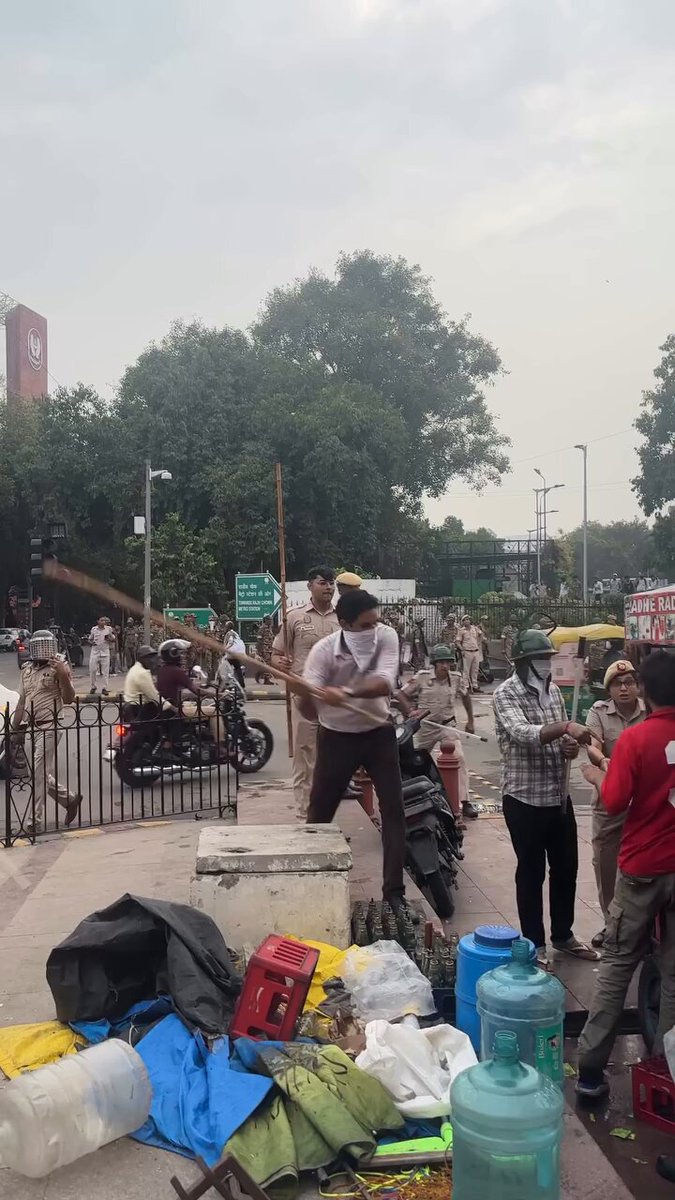
Recent videos shared by prominent political commentator Mohammed Zubair on social media show Delhi Police personnel, both in plain clothes and uniform, violently confronting student protesters. The imagery has sparked outrage and raised critical questions about police conduct in handling dissent in India.
Context of Student Protests
The protests involving students in Delhi are reflective of broader socio-political issues within India, particularly concerning educational policy, government accountability, and civil liberties. Student organizations have a storied history in Indian politics, often acting as a collective voice for youth grievances. Protests have escalated in response to various contentious government decisions, ranging from issues of educational funding to more significant political reforms that are perceived as infringing upon student rights.
Allegations Against Delhi Police
The disturbing images and videos shared by Zubair depict Delhi Police personnel allegedly beating protesters mercilessly. Eyewitness accounts have reported that the law enforcement officials, some with their identities obscured by handkerchiefs, appear to treat protesters aggressively, akin to treating them as criminals rather than citizens exercising their rights. Such actions raise profound concerns regarding the operational protocols of the police and whether their actions align with legal standards regarding the treatment of peaceful demonstrators.
Reactions and Implications
The dissemination of these videos has elicited a vigorous response from the public, political leaders, and civil rights activists. Critics argue that such police violence is indicative of a broader trend towards authoritarianism, where dissent is met with brute force rather than dialogue. Zubair’s posts serve to amplify these tensions, drawing attention to potential abuses within the law enforcement framework tasked with upholding law and order. The situation underscores the fragility of democratic norms within the context of escalating conflicts over civil rights and freedoms in India.
Why This Matters
The events captured in these videos exemplify significant issues within the Indian political landscape, particularly concerning the relationship between the state and its citizens. The willingness of law enforcement to resort to violence against protesters is alarming and suggests a growing intolerance for dissent. In an increasingly polarized nation, how the police respond to protests can set precedents for future interactions between the government and the public. Ensuring accountability within law enforcement is crucial not just for the integrity of policing but also for the preservation of democratic values in India.
Frequently Asked Questions
What sparked the student protests in Delhi?
The student protests emerged in response to various governmental policies and decisions perceived as unfair or oppressive, particularly concerning education and civil rights.
What is the role of the Delhi Police in managing protests?
The Delhi Police are responsible for maintaining law and order during public gatherings, but their methods are often scrutinized when excessive force is used against demonstrators.
Are there legal protections for student protesters in India?
Yes, students and citizens have the right to peacefully assemble and protest under the Indian Constitution, although these rights can sometimes come into conflict with law enforcement practices.
What actions are being taken against police violence?
Activist groups and civil rights organizations are demanding accountability and transparency regarding police conduct, with calls for investigations into incidents of excessive force during protests.