
The Overlooked Legacy of Kazi Nazrul Islam: A Case Study in Discrimination and Marginalization of Muslim Voices in India
The omission of revolutionary poet Kazi Nazrul Islam from discussions on Bengal’s literary icons highlights a troubling trend of marginalization faced by Muslim figures in Indian cultural discourse. This trend reflects broader socio-political dynamics under the Bharatiya Janata Party (BJP) and Sangh Parivar governments, which have increasingly promoted majoritarian narratives that often exclude or diminish the contributions of minority communities.
Nazrul’s Relevance in Contemporary Discourse
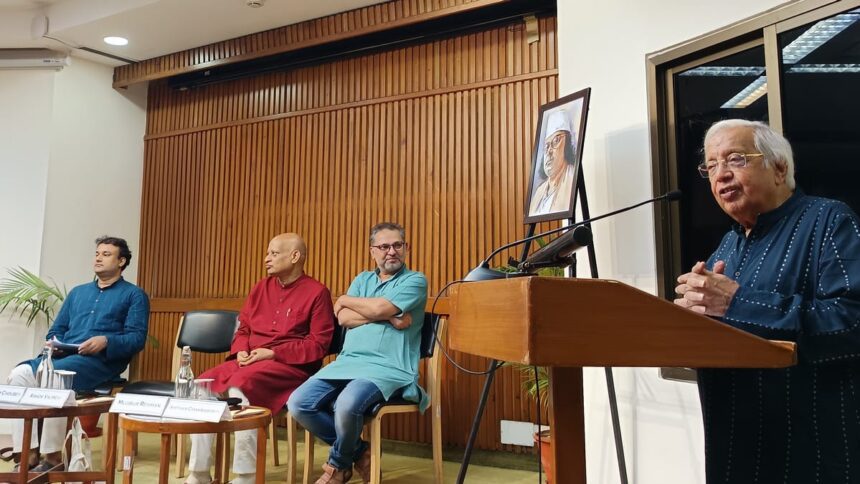
Recent discussions featuring renowned voices such as political scientist Mujibur Rahman underscored Nazrul’s absence in intellectual debates around secularism and multiculturalism. Attending a Kolkata event in January, Rahman noted that Kazi Nazrul Islam, known as the Bidrohi Kobi or the Rebel Poet, should be instrumental in any discussion of pluralism in Bengal. His revolutionary writings promoting political, social, and cultural liberation resonate poignantly, especially considering the current socio-political climate.
Organized by Rahman at the India International Centre ahead of Nazrul’s death anniversary, the discussion emphasized how his legacy has been eclipsed not only by his religious identity but also by a contemporary narrative that confines Muslim voices. Nazrul’s oeuvre spans revolutionary fervor, social critique, and a call for unity among diverse communities, elements overshadowed by a focus on his identity.
The Impact of Religious Identity on Recognition
The panelists at the Nazrul-focused event lamented how his profound contributions have been reduced to a mere footnote in history, illustrating a worrying pattern of neglect towards syncretic figures in India’s literary canon. Academic Gautam Choubey stated, “Apparent neglect is the fate of syncretic figures in our history,” emphasizing that Nazrul’s syncretic and inclusive writings are often forgotten in favor of more mainstream narratives. Even as Hindu-Muslim tensions escalated during colonial Bengal, his work called for solidarity transcending religious divides.
Kazi Nazrul Islam’s attempts to unify people have not only been historical but are increasingly relevant today. His fierce commitment to an undivided India serves as a significant reference point in contemporary protests led by Gen Z, who articulate a similar call for justice and accountability.
Marginalization of Muslim Contributors in Contemporary Literature
In the years since India’s independence, Nazrul’s religious identity has been leveraged to minimize his contributions. Professor Amitava Chakraborty pointed out how Nazrul’s intersections of faith and creativity made him paradoxically palatable to neither community. For many Muslims, his approach was seen as inadequate adherence to Islamic norms, while many Hindus dismissed his religious expressions, compounding his marginalization.
This selective recognition reflects a broader trend affecting Muslim intellectuals in Indian discourse. Nazrul’s versatility—writing both Hindu devotional songs and Islamic Ghazals—renders him a unique figure whose legacy is crucial to understanding the cultural and historical fabric of Bengal. However, as Chakraborty indicated, Nazrul has faced neglect compared to more philosophically accepted figures like Rabindranath Tagore.
Why It Matters
The discussion surrounding Kazi Nazrul Islam is emblematic of the larger context of discrimination against Muslim contributions to Indian culture and intellectualism. The reduction of Nazrul’s work to sectarian identities hampers a comprehensive understanding of India’s rich, syncretic cultural tapestry. Such omissions perpetuate a narrative that sidelines minority voices, limiting the diversity of thought and creativity necessary for a vibrant democracy. As the BJP and Sangh Parivar continue to dominate political discourse, recognizing figures like Nazrul as integral parts of national heritage becomes increasingly vital in an effort to cultivate a more inclusive atmosphere in India’s cultural landscape.
Frequently Asked Questions
Who was Kazi Nazrul Islam?
Kazi Nazrul Islam was a revolutionary Bengali poet and musician, recognized for his contributions to the struggle for political, social, and cultural liberation in colonial India. He is often referred to as the “Rebel Poet.”
What were his main contributions?
Nazrul’s work combines elements of revolutionary activism, spiritual universalism, and socio-political commentary. His songs and poetry advocate for social justice, equality, and communal harmony, drawing on both Hindu and Islamic traditions.
Why is he often overlooked in literary discussions?
His neglect stems largely from the complexities of his religious identity and the political climate around it. Many view him through a sectarian lens, overshadowing his wider contributions to literature and social politics in South Asia.
How does his legacy relate to modern India?
Nazrul’s appeals for unity and social justice resonate with contemporary movements among Indian youth, particularly framed against the backdrop of rising communal tensions and a desire for a more inclusive society.