
The stressed assets of Jaiprakash Associates Ltd (JAL) have sparked a significant dispute within India Inc, as corporate leaders Anil Agarwal and Gautam Adani vie for control of the insolvent company’s holdings in sectors including cement, hospitality, power, and real estate.
The ongoing JAL insolvency case, which has unfolded over nine years, saw the National Company Law Appellate Tribunal (NCLAT) reserve its judgment on April 22. Agarwal’s Vedanta challenged the committee of creditors’ (CoC) decision to accept a lower bid from Adani Enterprises.
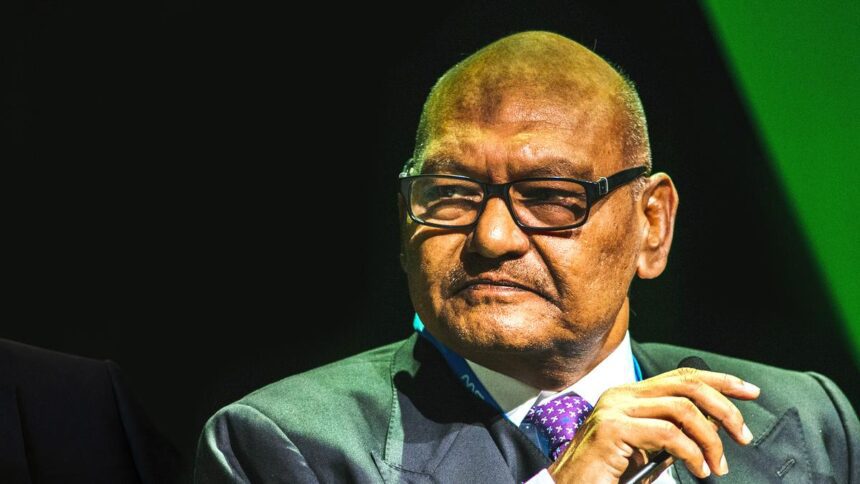
Agarwal asserts, “The IBC system declared us the highest bidder for Jaiprakash Associates. It was publicized widely that Vedanta is the highest bidder. But after that the system gave it to someone else. All this has hurt the image of the Indian system globally.” He emphasized that this incident raises concerns about the integrity of India’s investment climate.
Last month, the Allahabad bench of the National Company Law Tribunal (NCLT) approved Adani Enterprises’ ₹14,535 crore resolution plan for JAL, with approximately 89 percent endorsement from the CoC. Vedanta subsequently filed an appeal with the NCLAT to halt the implementation of the NCLT’s approval. While the NCLAT declined to grant an interim stay, it indicated that any implementation would depend on the outcome of Vedanta’s appeals. Vedanta then escalated its challenge to the Supreme Court, which ruled to permit implementation, conditional upon the NCLAT’s final decision.
Sonam Chandwani, Managing Partner at KS Legal & Associates, commented that accepting a bid from the Adani Group below Vedanta’s offer and lower than the liquidation value is troubling. She acknowledged that while a resolution plan falling beneath liquidation value isn’t prohibited, preferring it over a higher compliant bid demands sound justification based on feasibility and certainty.
The NCLT and NCLAT have recognized the potential for Swiss challenge mechanisms to enhance price discovery and value generation.
In a bid contesting the lenders’ acceptance of Adani’s offer, Vedanta argued that its addendum raised the offer value by approximately ₹3,400 crore gross and ₹500 crore in net present value. In October, Vedanta proposed ₹17,926 crore, with an upfront payment of ₹3,770 crore, later increasing that amount to ₹6,563 crore with an unchanged overall bid value, which included ₹1,200 crore for liabilities related to a Sports City project in Noida.
Despite this, the CoC opted for Adani’s bid of ₹14,535 crore, including a ₹6,000 crore upfront payment, justifying that the quicker balance payments — to be completed within two years compared to Vedanta’s five-year term — played a critical role in their decision.
JAL’s operational challenges began following the 2008 global financial crisis, which severely impacted the Indian real estate and construction sectors. After years of rapid growth until 2013, the company’s fortunes waned as debt levels soared. Efforts by its promoters to offload assets failed to remedy the group’s financial troubles. Notably, JSW Energy acquired two hydropower plants from Jaiprakash Power Ventures in 2014 for ₹9,700 crore, and a $16,100 crore deal to sell cement operations to UltraTech Cement transpired in 2016. By 2017, a Supreme Court intervention halted the sale of personal assets by company directors due to delayed deposit repayments.
In 2018, ICICI Bank initiated JAL’s first insolvency petition, with State Bank of India following suit in 2022, amid an outstanding debt amounting to ₹29,361 crore across 22 lenders.
Vedanta’s petition to the Supreme Court characterized the lenders’ rejection of its bid as “arbitrary” and called into question the resolution professional’s role in the insolvency proceedings. It maintained that the NCLT failed to correctly assess the commercial wisdom of the lenders, which should not be regarded as absolute and can be challenged under circumstances of “arbitrariness, perverseness or capriciousness.”
Vidya K, Partner at King Stubb & Kasiva, Advocates and Attorneys, noted that the decision to forgo Vedanta’s bid emphasizes the importance of the CoC’s “commercial wisdom.” She asserted, “While the CoC’s discretion is wide, it is not unbounded. It must still operate within the framework of transparency, fairness, and value maximization that underpins the corporate insolvency resolution process,” suggesting that mechanisms to boost price discovery, such as Swiss challenges, can substantiate credibility in the process.
The NCLT’s ruling rejecting Vedanta’s bid highlighted that its revised plan submission occurred after final plans were presented for voting. The CoC deemed the addendum unsolicited and incompatible with established processes, arguing that accepting it would necessitate reopening bidding — a course of action deemed unfeasible within the insolvency timeline. An independent evaluator scored Adani at 89.26 out of 100, in contrast to Vedanta’s 75.6. While Vedanta’s offer may have had higher net present value, the Adani bid excelled across overall parameters, including upfront cash and qualitative factors.
Lenders seeking resolution closure favored Adani’s proposal due to its higher upfront cash component and a tighter repayment schedule. Additionally, this decision offers significant relief to approximately 5,000 homebuyers with claims of ₹2,074 crore against JAL.
Aaron Jonathan Solomon, Managing Partner at Solomon & Co, remarked that although Adani’s bid is below liquidation value, other factors were taken into account by the CoC. Liquidation value serves as a minimum threshold for creditor entitlements, with the ultimate decision resting with the CoC.
As this dispute unfolds, it remains to be seen which factor — the highest bid or considerations of commercial feasibility — will ultimately prevail in the NCLAT’s decision.