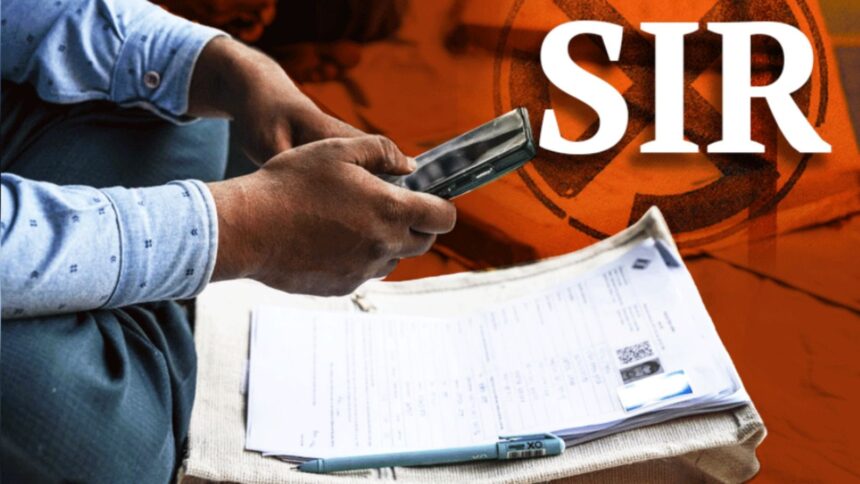

The Congress party has accused the Bharatiya Janata Party (BJP) of strategically disenfranchising Muslim voters during the Special Intensive Revision (SIR) of electoral rolls in Uttarakhand, labeling the initiative as “vote theft.” Allegations surfaced following a report that highlighted the disproportionate targeting of Muslim names for deletion from the electoral rolls, questioning the integrity of the upcoming state assembly elections.
Targeted Disenfranchisement of Muslim Voters
In a recent examination of the SIR process, Congress officials pointed to a report by NewsLaundry that identified a troubling pattern involving the deletion requests filed by BJP affiliates. It was revealed that the five individuals responsible for the highest objection counts across multiple constituencies were connected to the BJP. Their actions raised significant concerns regarding the criteria used for such requests.
For example, in Kichha (Udham Singh Nagar), BJP booth-level agent Rajesh Tiwari submitted an astonishing 4,855 objections out of a total of 4,857. The majority of these objections targeted Muslim voters, many of whom were said to have dual registrations in different states. Similarly, BJP functionary Chankit Horiya lodged 670 objections in Gadarpur, again exclusively focused on Muslim voters. Patterns of appeasing the electoral needs of purely political motives emerged throughout other constituencies like Khatima, Nanakmatta, and Rudrapur.
Response from Officials and BJP Spokespersons
In light of these allegations, BJP spokesperson Vinod Chamoli dismissed claims of religious bias, asserting that all objections were based on verifiable instances of dual or wrongful voter registrations. He emphasized that the process was not driven by religious considerations but rather aimed at maintaining electoral integrity.
Election officials have also reiterated that no names are deleted purely on the basis of objections. The Electoral Registration Officer in Kichha pointed out that all applications undergo a thorough verification process that includes field investigation, issuance of legal notices, and hearings prior to any deletions being authorized. This oversight is designed to uphold the democratic ethos of the electoral process.
The Broader Implications of Electoral Roll Manipulations
The reported targeting of Muslim voters during the electoral revision raises significant questions not only about the upcoming assembly elections in Uttarakhand but also about the larger democratic practices in India. If indeed the allegations hold, this could reflect a worrying trend where particular communities are deliberately marginalized from participating in the democratic process.
Manipulating voter rolls can severely hinder representation and political engagement for marginalized groups, particularly in a country like India where communal dynamics remain intricate. It becomes essential to scrutinize such instances, as they can have a long-term impact on the relationship between communities and governmental institutions in a multi-religious society like India.
Why It Matters
The suppression of voter rights through targeted actions against specific communities poses a direct threat to the democratic foundations of India. For developers and technologists working on applications that aim to enhance electoral transparency and integrity, it is crucial to recognize the importance of safeguarding against social biases in electoral processes. An unbiased approach in the development of electoral technologies and methodologies can ensure fair political representation and bolster the integrity of democratic institutions in the long run.
Frequently Asked Questions
What is the Special Intensive Revision (SIR) of electoral rolls?
The Special Intensive Revision (SIR) is a process undertaken by election authorities to update and clean electoral rolls, ensuring that all eligible voters are registered while removing ineligible or duplicate registrations.
Why are Muslim voters being targeted during this process?
Allegations suggest that members of the BJP have submitted a disproportionate number of deletion requests against Muslim voters, possibly aiming to disenfranchise this demographic ahead of the state assembly elections.
What are the legal safeguards in place for voters during this revision?
Election officials have stated that all objections must undergo verification and legal processes before any names are deleted, including field investigations and hearings to ensure that deletions are justified.
What impact could these actions have on the upcoming election results?
If a significant number of Muslim voters are successfully removed from the rolls, it could potentially skew electoral outcomes in favor of the BJP, altering the balance of representation in the Uttarakhand assembly.