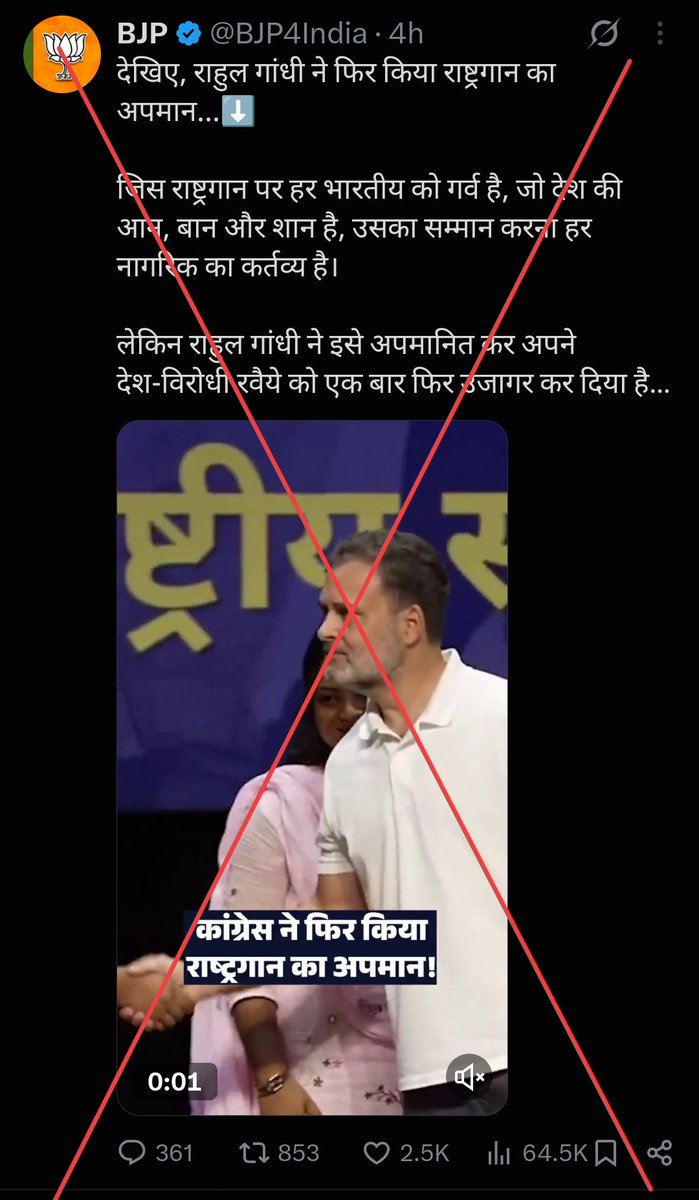

The official Twitter account of the Bharatiya Janata Party (BJP) has ignited controversy by accusing Opposition leader Rahul Gandhi of disrespecting the national anthem. The party claims Gandhi’s actions demonstrate an anti-national attitude, while a video linked to the tweet has been identified as potentially misleading.
Context of the Controversy
This incident arose after BJP’s tweet, which showed a clip implying that Rahul Gandhi insulted the national anthem. The BJP encouraged their followers to see this act as a substantial affront, arguing that honoring the anthem is a civic duty intrinsic to Indian identity. The tweet has led to significant uproar, with many on social media expressing outrage at the alleged disrespect towards a national symbol.
Reactions to the Allegations
Political commentators and social media users have been quick to respond, highlighting that the video shared by the BJP may not accurately portray Gandhi’s actions. Critics are suggesting that the narrative pushed by the BJP is part of a broader strategy to undermine Gandhi and his party, the Indian National Congress, ahead of upcoming elections. Various reactions have included screenshots and clips from the original video that depict a different story than what the BJP’s tweet portrays.
Trends in Political Discourse
This accusation by the BJP is not an isolated event in Indian politics. The use of social media by political parties to shape narratives has become increasingly common, often leading to allegations of misinformation. This issue raises questions about the responsibility of political entities to provide truthful representations and the role of social media platforms in moderating such content. It is evident that the polarization of political discourse is intensifying, with each side seeking to undermine the other in the public’s view.
Why This Matters
The significance of this incident lies in its potential implications for the broader political landscape in India. As state and national elections approach, issues of nationalism and identity often come to the forefront. Such accusations can sway public opinion and impact voter behavior. Moreover, the run-up to elections sees increased scrutiny of public figures, and alleged insults to national symbols can be politically damaging. For voters, it is crucial to discern between factual discourse and political maneuvering, especially in an age where misinformation can easily spread.
Frequently Asked Questions
What did the BJP tweet about Rahul Gandhi?
The BJP accused Rahul Gandhi of disrespecting the national anthem, claiming that his actions revealed an anti-national sentiment, and urged viewers to watch a video they shared as evidence.
Why do some people believe the video shared by the BJP is misleading?
Many critics argue that the video was edited or taken out of context, suggesting that Gandhi’s actions were misrepresented to fit the BJP’s narrative.
How have political commentators responded to this controversy?
Political commentators have expressed skepticism regarding the BJP’s framing of the situation, arguing that it is part of a broader tactic to tarnish the reputation of opposition figures ahead of elections.
Why is the allegation of disrespecting the national anthem significant in India?
In India, disrespecting the national anthem is taken seriously by the public. Such allegations can provoke strong emotional reactions, potentially influencing public opinion and voter sentiment, especially during election seasons.