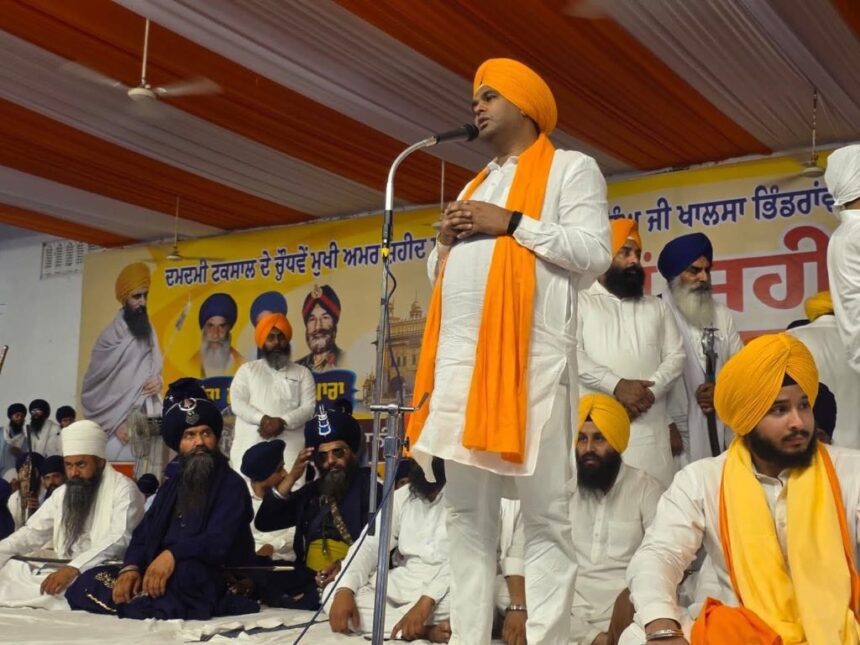

The recent attendance of BJP Minister Girish Mahajan at a commemorative event for Sikh martyrs has sparked discussions, particularly regarding the absence of Bhindranwale’s image during the program. Mahajan’s participation highlighted the nuances of Sikh history and contemporary politics in India.
Context of the Event
On June 19, 1984, a pivotal moment in Sikh history marked the Operation Blue Star, where the Indian military intervened at the Golden Temple in Amritsar. This operation was aimed at removing Jarnail Singh Bhindranwale and his armed supporters who had taken refuge in the temple complex. As a result, the event remains a sensitive topic within the Sikh community. Girish Mahajan, who attended the 42nd Shaheedi Samagam in Amritsar, made it a point not to display Bhindranwale’s photo, an action that has drawn notable attention.
Significance of Mahajan’s Participation
During the Shaheedi Samagam, Mahajan paid tribute to all Sikh martyrs, emphasizing their sacrifices and contributions to society, religion, and humanity. His speech reflected a tone of respect and gratitude towards those who lost their lives. However, his decision to avoid showcasing Bhindranwale’s image appears to be a strategic maneuver to maintain a delicate balance between honoring Sikh sentiment and addressing the broader political landscape that often views Bhindranwale as a controversial figure.
Reactions and Interpretations
The reactions to Mahajan’s actions have varied across different segments of society. Some viewed his tribute as an opportunity to heal historical wounds, stressing unity and remembrance. Others criticized the lack of acknowledgment of Bhindranwale, whose legacy is still a rallying point for many Sikhs, particularly in Punjab. The images posted by Mahajan on social media further fueled this discourse, highlighting the intricate interplay of politics, history, and community sentiments in contemporary India.
Why This Matters
The implications of this event extend beyond a simple remembrance ceremony. It reflects the ongoing struggles within Indian society regarding historical narratives and the complexities of communal politics. As India approaches elections, how political leaders navigate historical issues can heavily influence voter sentiment, particularly in regions with deep-rooted historical grievances, such as Punjab. The BJP’s approach to handling Sikh issues is crucial as they seek to consolidate their base while addressing the broader national audience.
Frequently Asked Questions
What is the significance of the Shaheedi Samagam?
The Shaheedi Samagam is a memorial event to honor the sacrifices of Sikh martyrs, particularly those who fell during significant historical events, including Operation Blue Star. It serves as a platform for collective remembrance and reflection within the Sikh community.
Why is Bhindranwale a controversial figure?
Jarnail Singh Bhindranwale is viewed by many Sikhs as a symbol of resistance against oppression, while others see him as a militant leader whose actions led to significant violence and turmoil in Punjab during the 1980s.
What role does political context play in commemorative events?
Political context deeply influences how commemorative events are framed and interpreted. Politicians often use these occasions to connect with communities, making strategic decisions about what narratives to promote or suppress to navigate sensitive historical issues.
How does Mahajan’s absence of Bhindranwale’s image affect BJP’s image among Sikhs?
By not displaying Bhindranwale’s image, Mahajan likely aimed to project a moderating political stance that seeks to appeal to a broader audience, potentially reinforcing the BJP’s image as a party that respects Sikh sentiments while maintaining a distance from more divisive historical figures.