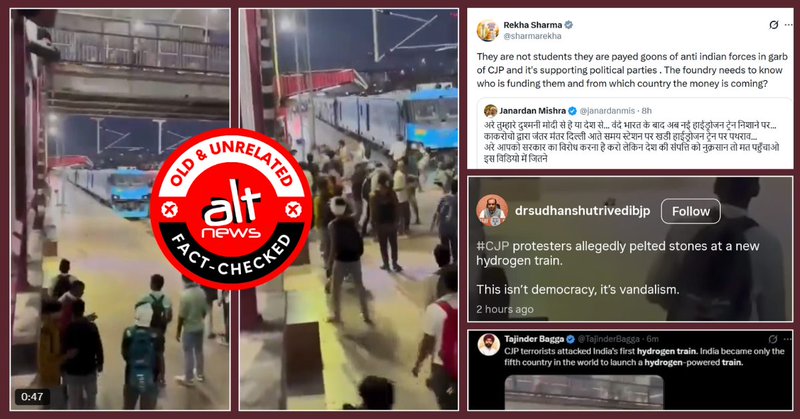

Recently, BJP leaders including Sudhanshu Trivedi and Tejinder Bagga, as well as the RSS mouthpiece ‘Panchjanya’, circulated a video claiming that protesters from the ‘Cochroach People’s Party’ (CJP) threw stones at a newly launched hydrogen train. However, the video in question is old and does not connect to any recent events.
Context of the Claims
The controversy emerged on July 20 when thousands of CJP supporters marched toward Parliament, demanding the resignation of Union Education Minister Dharmendra Pradhan. During this event, clashes reportedly occurred between the protesters and Delhi Police. BJP leaders leveraged this incident to allege that the CJP was responsible for vandalism against a hydrogen train, suggesting a serious breach during a peaceful protest.
The Old Video’s Origin
The video shared by BJP leaders is not new. It depicts an earlier incident that took place in Patna, long before the recent protest. By sharing this outdated footage, the BJP attempts to paint a narrative of violent and unruly behavior by the CJP, despite the absence of concrete evidence linking these actions to the specific protest related to the hydrogen train. Such strategic use of old material raises questions about the authenticity and credibility of the current claims being made.
Political Implications and Strategies
This incident reflects the broader strategy employed by political parties in India to mold public perception through selective sharing of information. By linking the CJP’s protest to vandalism, BJP leaders aim to discredit the opposition and create a sense of fear among the electorate about the consequences of dissent. The portrayal of the CJP, a relatively new political entity, as a violent organization may serve to divert attention from pressing issues such as educational reforms and governance. This tactic not only influences public opinion but also represents a calculated move to consolidate power by undermining potential threats.
Why This Matters
The dissemination of misinformation can have severe consequences for democratic processes. In a political landscape where public discord is already prominent, amplifying divisions can exacerbate tensions and stifle constructive dialogue. For Indian readers, understanding the origins and authenticity of such claims is essential. Misinformation not only shapes narratives but also influences electoral outcomes, potentially impacting the future of governance in the country. Vigilance against misleading information is crucial for maintaining the integrity of democratic discourse and ensuring accountability among political leaders.
Frequently Asked Questions
What triggered the CJP march toward Parliament?
The CJP organized a march on July 20, demanding the resignation of Union Education Minister Dharmendra Pradhan, amid growing discontent regarding educational policies.
Is the video shared by BJP leaders new?
No, the video used by BJP leaders to claim CJP vandalism is old and unrelated to the recent protest events in New Delhi.
What is the significance of the hydrogen train in this context?
The hydrogen train represents a technological advancement in India’s transportation sector, and its connection to the protest illustrates the government’s focus on modernization amid societal unrest regarding educational reforms.
How can misinformation impact Indian politics?
Misinformation can exacerbate divisions, influence public perception, and undermine accountability, making it critical to scrutinize claims made by political entities, especially in election periods.