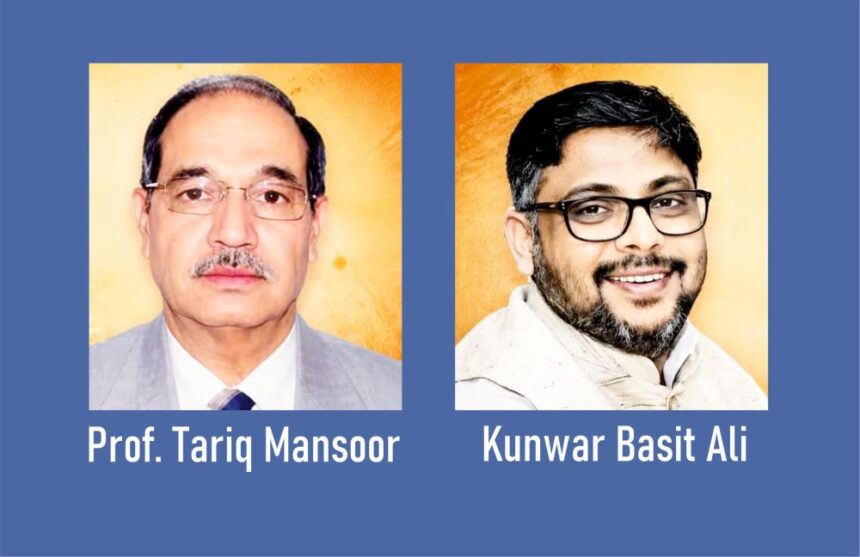

The recent appointments of two Muslim leaders by the Bharatiya Janata Party (BJP) underscore a complex political landscape as the party positions itself in preparation for future electoral challenges. Former Aligarh Muslim University Vice Chancellor Prof. Tariq Mansoor has been appointed as the National Vice President, while Kunwar Basit Ali has taken on the role of National President of the BJP Minority Morcha. This change comes amidst ongoing debates surrounding representation and inclusion within the party, which has faced criticism for its treatment of minority communities.
Political Appointments and Their Implications
The BJP has appointed Prof. Tariq Mansoor and Kunwar Basit Ali to significant roles in its national organizational structure. Prof. Mansoor’s experience as a former Vice Chancellor positions him as a prominent voice among Muslim constituents, while Kunwar Basit Ali’s leadership in the Minority Morcha aims to address concerns of marginalization within the party’s ranks. These appointments are seen as a strategic move to counter criticisms of the BJP as a party that primarily represents Hindu interests.
Critical Reactions to BJP’s Moves
Despite these appointments, skepticism remains regarding the BJP’s commitment to minority rights. Observers note that while these appointments may improve the party’s image, significant challenges still exist in addressing systemic discrimination and social exclusion faced by Muslims in India. Critics highlight that real representation implies not just appointments in high positions but also genuine engagement with the issues affecting Muslim communities, such as economic disenfranchisement and social stigmatization.
The Broader Context of Inclusion
The BJP’s latest moves may be viewed within a broader context of its electoral strategy in a diverse nation like India, where many parties struggle with the balancing act of caste, religion, and regional affiliations. With elections approaching, the BJP is likely focusing on rallying support from various segments of society, including Muslims. This becomes crucial as they navigate public perception and address the historical grievances of marginalized communities.
Why It Matters
The significance of these appointments extends beyond immediate political gains. For the AI industry, developers, or users, understanding how political narratives shape public policy and community dynamics is crucial. The implications of representation in governance can influence socio-economic strategies, technological investments in minority regions, and inclusive practices within organizations. As political actors adapt to social changes, the lessons learned can inform inclusive initiatives in tech and policy-making, ensuring all voices are considered in a rapidly evolving society.
Frequently Asked Questions
What are the new positions that Muslim leaders have been appointed to in the BJP?
Prof. Tariq Mansoor has been appointed as the National Vice President, and Kunwar Basit Ali is now the National President of the BJP Minority Morcha.
What prompted the BJP to make these appointments?
The appointments are seen as a strategic move to bolster the BJP’s image, countering criticisms of minority exclusion and attempting to gain support from Muslim voters ahead of upcoming elections.
How are these appointments viewed by critics of the BJP?
Critics argue that while the appointments may improve the party’s appearance of inclusion, they do not address systemic issues related to discrimination and marginalization faced by Muslim communities in India.
What is the significance of minority representation in Indian politics?
Minority representation is crucial in ensuring that diverse voices are included in the political discourse, which can lead to more equitable policies and better address the socio-economic needs of all communities.