
Congress Leader Challenges RSS Chief’s Remarks on Hindu-Muslim Unity
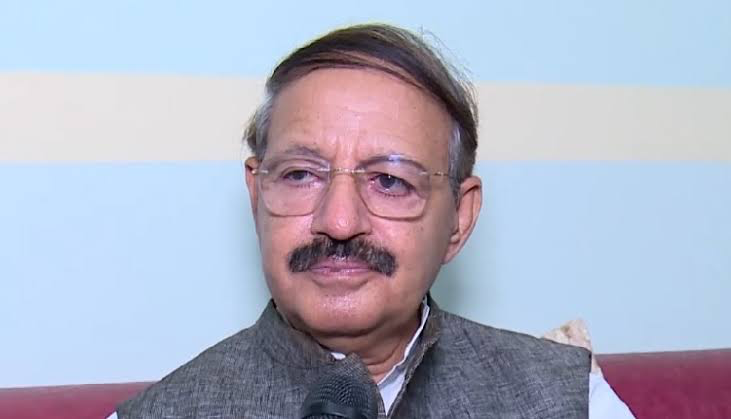
Congress leader Rashid Alvi has contested RSS chief Mohan Bhagwat’s statements regarding Hindu-Muslim unity, made during a recent event in the United States. Alvi questioned the necessity of promoting such ideas overseas, suggesting that this indicates an underlying communal divide that contradicts Bhagwat’s claims of harmony in India.
Bhagwat’s Address and Its Reception
During the ‘One World One Humanity’ event at Madison Square Garden in New York, Bhagwat emphasized the importance of mutual respect among different religions and underscored that true Hinduism encompasses the dignity of all individuals. “A person who believes Muslims should have no place in India cannot call himself a Hindu,” he stated, affirming a vision of unity.
However, Alvi was critical of Bhagwat’s assertions, remarking, “If there is no issue between Hindus and Muslims in India, then what is the sudden need to go there and speak about it?” He expressed concern that Bhagwat seemed oblivious to the divisive rhetoric coming from certain political leaders and alleged that the RSS historically holds an anti-Muslim stance. “The entire world is aware of what is happening within India,” he insisted.
Mixed Reactions from Muslim Leaders
Despite Alvi’s skepticism, several Muslim leaders responded positively to Bhagwat’s comments. Maulana Yasoob Abbas of the All India Shia Personal Law Board found his remarks “commendable,” stating that Hindus and Muslims are “the two eyes of the nation.” Similarly, Maulana Khalid Rashid Firangi Mahali emphasized that while the message was encouraging, it required genuine application at the grassroots level across India.
However, Bhagwat’s appearance attracted protests from various groups, including Muslims, Sikhs, and Christians, who opposed the RSS’s historical association with sectarian tensions. Critics, including New York Mayor Zohran Mamdani, expressed alarm over rising Hindu nationalism and its implications for religious minority rights in India, while the US Commission on International Religious Freedom had previously raised concerns regarding the trip.
The Broader Context of Sectarianism in India
The discourse surrounding Hindu-Muslim relations has become increasingly polarized in India, under the governance of the Bharatiya Janata Party (BJP) and its affiliate, the RSS. Discrimination, social exclusion, and marginalization of Indian Muslims have been focal points of national and international scrutiny. Reports have cited restrictions on religious practices, limitations on educational and economic opportunities, and increasing incidents of violence against Muslims, often fueled by political rhetoric.
Critics argue that statements like Bhagwat’s serve to project an image of inclusivity on international platforms while failing to address the realities faced by the Muslim community in India. There is a growing concern that the appeal for unity may not translate into actionable change or foster a secure environment for all religious communities within the country.
Why It Matters
The implications of these discussions extend beyond Indian politics, impacting global perspectives on religious tolerance and minority rights. As international organizations and foreign governments scrutinize India’s religious dynamics, the revelations of discrimination and social exclusion against Muslims can shape bilateral relations and influence diplomatic dialogues. For AI and tech developers, understanding the interplay of socio-political narratives and communal tensions will be essential in creating tools and algorithms that prioritize equity and inclusivity in socio-political discussions. Moreover, awareness of localized issues like these can inform better practices in data ethics and responsible technology deployment.
Frequently Asked Questions
What prompted Rashid Alvi’s challenge to Mohan Bhagwat’s comments?
Rashid Alvi challenged Bhagwat’s comments because he believed that promoting Hindu-Muslim unity abroad indicates a significant ongoing communal divide in India.
What were the main points of Bhagwat’s address in New York?
Bhagwat emphasized mutual respect among religions and asserted that anyone claiming to be Hindu must recognize the dignity of all individuals and accept that various paths lead to the same goal.
What has been the reaction of various Muslim leaders to Bhagwat’s remarks?
Some Muslim leaders welcomed Bhagwat’s statements, viewing them as commendable and emphasizing the need for unity, while others criticized them as lacking sincerity and practical implementation in India.
How is the RSS viewed in relation to communal tensions in India?
The RSS is often perceived as holding an anti-Muslim stance, and critics allege that it has historically played a role in fostering communal tensions, which has led to widespread scrutiny from various advocacy groups.