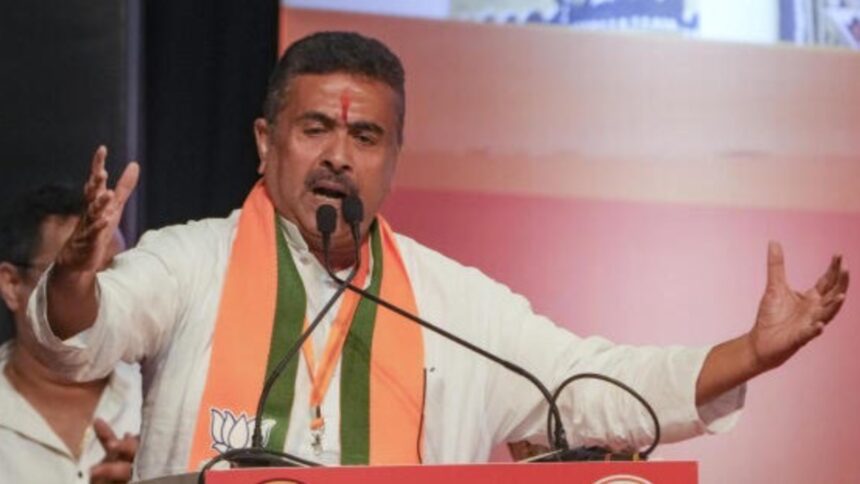

In a significant move, the West Bengal government, led by Chief Minister Suvendu Adhikari, plans to implement a Uniform Civil Code (UCC), a promise made by the Bharatiya Janata Party (BJP) during its electoral campaign. While the government emphasizes a consultative approach before introducing the legislation, concerns are raised about the potential impact on societal divisions, particularly regarding marginalization affecting Indian Muslims.
Uniform Civil Code: Legislative Push and Challenges
During a press event on Friday, Chief Minister Suvendu Adhikari affirmed that the introduction of the Uniform Civil Code (UCC) is imminent, stating, “There will be a UCC in Bengal. There is a specific procedure for it.” Aligning the implementation with existing frameworks seen in Gujarat and Assam, the UCC aims to standardize personal laws across religious communities in the state. The initiative is also positioned alongside societal issues described by Adhikari as “land jihad” and “love jihad,” ostensibly linking personal law reforms to broader narratives of social justice.
While the administration is committed to moving forward, it has indicated that there is no rush to enact the legislation. Government sources suggest the formation of an expert committee, possibly chaired by a retired judge, tasked with examining the proposed UCC and collecting public suggestions. This committee aims to address potential constitutional and legal challenges prior to presenting the bill in the State Assembly later this year.
Political Reactions: Division or Unity?
The announcement has sparked a swift and critical response from the Trinamool Congress (TMC), the state’s ruling party prior to the BJP’s ascendancy. TMC leaders contend that any meaningful reform must emerge from dialogue and consensus, rather than top-down imposition. Their statement emphasized that while they champion the principles of equality and justice, the introduction of the UCC could be perceived as a political tool aimed at deepening social divides.
In stark contrast, the BJP argues that the legacy of the previous TMC government was marred by “appeasement, corruption, nepotism,” and a lack of nationalistic sentiment. Adhikari’s government frames the UCC as a necessary reform to ensure equal rights, particularly for women. The proposed legislation aims to guarantee equal inheritance rights for women, prohibit polygamy, and invalidate child marriages, issues that have long-standing implications for marginalized communities, including Indian Muslims.
Concerns About Marginalization
The introduction of the UCC has drawn scrutiny for its potential to exacerbate existing discrimination against Indian Muslims, who may feel further marginalized in a landscape where religion-based personal laws are being uniformly superseded. Critics within the TMC and other opposition parties argue that the BJP’s approach could be used to exploit sensitive communal issues for electoral advantage, thereby risking the social fabric of Indian society.
Furthermore, as the UCC intersects with proposals like the West Bengal Public Safety and Control of Anti-Social Activities Bill, which grants law enforcement increased powers, fears grow about the potential for misuse against political opponents and vulnerable communities. The opposition has voiced concerns that these measures might serve as instruments for targeted persecution rather than mechanisms of social justice and equality.
Why It Matters
The push for a Uniform Civil Code and the accompanying Public Safety Bill signals a pivotal moment in the political landscape of West Bengal and showcases the broader implications for secularism and minority rights in India. For developers and policymakers in the AI industry, this episode emphasizes the importance of understanding social contexts and inclusion. As technology increasingly intersects with governance, awareness of these dynamics is essential for developing solutions that uphold democratic values and respect diversity. The potential for AI models to impact social policies necessitates a responsible approach that does not inadvertently perpetuate systemic biases or marginalization.
Frequently Asked Questions
What is the Uniform Civil Code (UCC)?
The Uniform Civil Code aims to provide a common set of secular civil laws governing marriage, divorce, inheritance, and adoption, replacing religious-based personal laws in India.
What are the key objectives of introducing the UCC in West Bengal?
The key objectives include ensuring equal rights for women, prohibiting polygamy, invalidating child marriages, and addressing broader social issues related to religious conversions and intercommunal relationships.
What is the response from the opposition regarding the UCC implementation?
The opposition, particularly the Trinamool Congress, has raised concerns that the UCC may deepen social divisions and urge for reform through dialogue and consensus rather than through political maneuvering.
How might the UCC affect Indian Muslims specifically?
Critics argue that the UCC could marginalize Indian Muslims by superseding their existing personal laws, thus impacting their rights and social status within a predominantly Hindu nationalism framework.