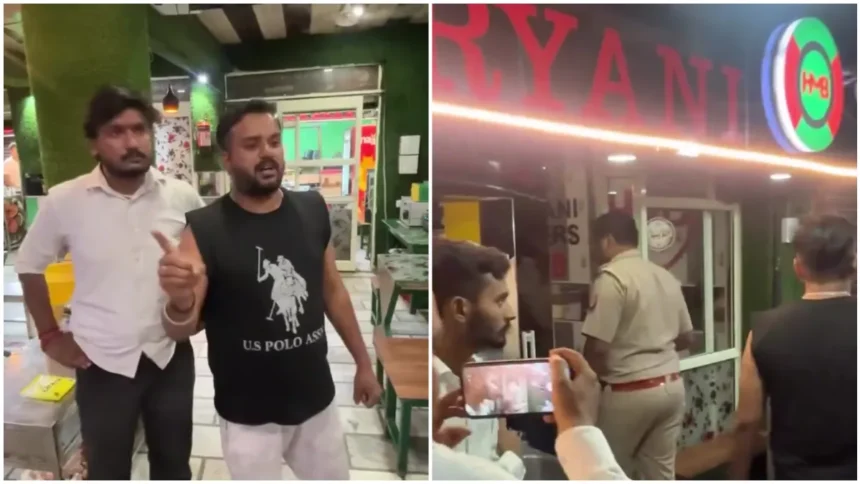

The ongoing restriction on the sale of non-vegetarian food along designated pilgrimage routes in India has sparked significant controversy, particularly affecting Muslim-owned businesses. Recent incidents in Uttar Pradesh, where local Hindu groups voiced objections against restaurants selling chicken biryani, underline the growing trend of social exclusion and economic boycotts in the context of religious sentiments.
Incident in Saharanpur: Bajrang Dal Intervenes
In a notable event on August 10, members of the Bajrang Dal expressed their discontent over the sale of chicken biryani at a restaurant called Hyderabad Chicken Point in Deoband, Uttar Pradesh. The group claimed that selling non-vegetarian food during the Hindu month of Sawan, especially along the Kanwar pilgrimage routes, violated administrative directions. Accompanied by police, the members were filmed inspecting the restaurant, highlighting the community’s enforcement of what they describe as religious propriety.
Wider Implications: Economic Boycotts and Social Exclusion
The incident in Deoband reflects a larger trend in Uttar Pradesh, where authorities have clamped down on various establishments accused of selling non-vegetarian food near pilgrimage routes. In a similar case from Bareilly district, police detained two shopkeepers for operating a chicken biryani shop despite prior warnings. The cultural tension over food choices often translates into economic consequences for Muslim-owned businesses, which provides further evidence of systemic marginalization. Following complaints, the shop was dismantled, illustrating the swift actions taken against those who defy these religious guidelines.
Authorities’ Stance: Protection of Religious Morality?
Local government officials have justified these actions by asserting that they are intended to uphold public sentiment and protect religious observances. Circle Officer Arun Kumar Singh noted that shop owners had been duly informed about the restrictions affecting non-vegetarian food sales during the Sawan period. However, these actions have incited public debates regarding the balance between religious practices and individual freedoms, raising questions about the bureaucratic enforcement of community standards that disproportionately target minority groups.
Why It Matters
This situation is emblematic of the broader dynamics at play in Indian society under the vigilant surveillance of religious ideologies and the influence of groups like the Bajrang Dal. When businesses face economic repercussions based on religious affiliations or practices, it can lead to widespread social and economic boycotts, further stoking divisions between communities. Additionally, such restrictions can have legal implications for how individual rights are interpreted in the evolving landscape of India’s socio-political fabric. Ultimately, this trend could affect foreign investment, tourism, and India’s global image as a secular, diverse democracy, leading to increased scrutiny from international human rights organizations.
Frequently Asked Questions
What are the restrictions on the sale of non-vegetarian food during Sawan in India?
During the Hindu month of Sawan, authorities in certain regions impose restrictions on the sale of non-vegetarian food, including meat and chicken, particularly along designated pilgrimage routes used by Kanwariyas, to uphold religious sentiments.
What actions have been taken against establishments selling non-vegetarian food?
In recent incidents, local authorities and organizations like Bajrang Dal have conducted inspections and issued warnings, with some establishments facing police action that includes detainment of owners and shutdown of businesses for violating the imposed restrictions.
How does this affect Muslim-owned businesses?
The enforcement of these restrictions disproportionately impacts Muslim-owned establishments, leading to economic hardships, social exclusion, and broader implications for community cohesion and individual rights in the region.
What is the role of local authorities in enforcing these restrictions?
Local authorities argue that they are enforcing these restrictions to maintain social harmony and respect for religious practices. However, critics argue that these measures infringe upon personal freedoms and contribute to a culture of discrimination against minority communities.