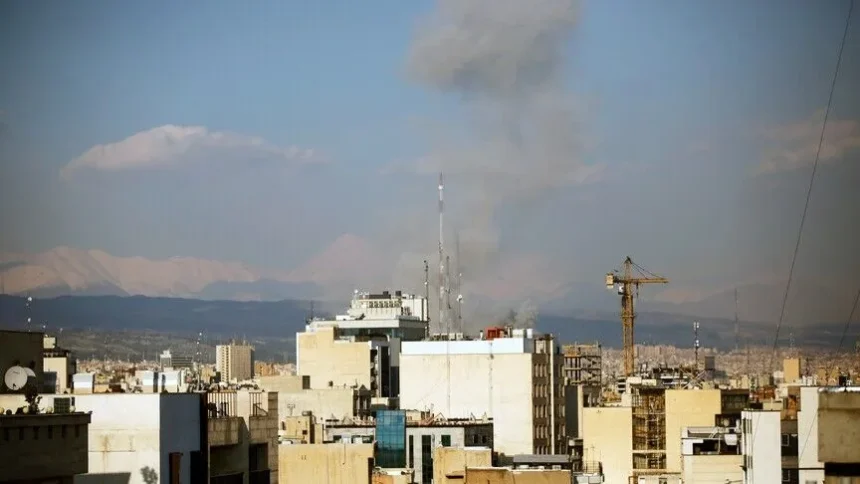

Escalating Conflict: A Regional Overview
On Tuesday, air raid sirens echoed across Bahrain as Iranian military strikes intensified, targeting several countries in the region amid ongoing tensions with the United States. The Bahraini Interior Ministry has urged citizens to remain calm and seek safety, highlighting the increasingly volatile situation that has developed in recent days.
Bahrain’s Response to Iranian Aggression
Bahrain’s military reported successfully intercepting and destroying multiple Iranian aerial projectiles aimed at the kingdom. Fortunately, no casualties or material damage have been reported at this time. The Iranian Islamic Revolutionary Guard Corps (IRGC) claimed responsibility for targeted attacks, asserting they hit critical US infrastructure, including data centers linked to Amazon in Bahrain, and drones targeting the US-operated Sheikh Isa Air Base.
This situation arises amidst a backdrop of aggressive US military actions against Iran, which have escalated rapidly since last week. This mutual exchange of strikes poses significant risks to the stability of the region and raises questions about the long-term implications for military engagement in the area.
The Broader Context of US-Iran Relations
The current conflict marks a significant escalation between the US and Iran, despite a recent memorandum of understanding brokered by Pakistan in June, which aimed to foster peace and stability. Historically, tensions between the two nations have been characterized by a cycle of retaliation and hostility, often involving collateral impacts for regional allies such as Bahrain.
Iran’s assertion that it is targeting US interests reflects a persistent trend of using regional allies and bases to project power, resulting in an environment of heightened alertness among neighboring countries. As factions within Iran engage in aggressive rhetoric and action, the regional geopolitical landscape continues to shift, impacting the strategic calculus for both allies and adversaries in the Middle East.
Why It Matters
The ongoing conflict between the US and Iran, particularly with the involvement of regional states like Bahrain, has geopolitical ramifications that extend far beyond military engagements. Increased tensions may disrupt global oil markets, affect multinational companies operating in the region, and result in humanitarian crises. The potential for a wider conflict could further complicate the security dynamics in the Middle East, prompting heightened military readiness and shifts in foreign policy for global powers.
Moreover, the international community’s response to these incidents could set precedents regarding engagement and disengagement strategies in conflict zones. For developers working in areas such as conflict-resolution AI, understanding the nuances of these relationships will be of great importance, as technological solutions will need to align with the complex realities on the ground.
Frequently Asked Questions
What triggered the latest air strikes between Iran and the US?
The escalation began following a series of US military actions against Iranian assets, prompting Iran to retaliate with strikes targeting US interests, including infrastructure in Bahrain.
How has Bahrain responded to the Iranian missile attacks?
Bahrain’s military reported intercepting and destroying several Iranian missiles. The government has urged citizens to stay calm and move to safe locations during the attacks.
What role did Pakistan play in the current US-Iran dynamics?
Pakistan facilitated a memorandum of understanding in June aimed at reducing conflict between the US and Iran, although recent events have intensified tensions despite this diplomatic effort.
What are the implications for regional security in the Middle East?
The ongoing conflict poses significant risks for regional stability and security, potentially affecting oil markets, economic conditions, and humanitarian situations in neighboring countries.