
Summary
In a poignant open letter, author and activist Ambreen Zaidi raises critical concerns about the disconnect between the inclusive vision espoused by RSS chief Mohan Bhagwat and the lived realities faced by Indian Muslims. Despite Bhagwat’s recent acknowledgment of Hindu-Muslim unity, Zaidi highlights ongoing discrimination, social exclusion, and economic boycotts confronting Muslim communities in India.
Mohan Bhagwat’s Inclusive Message
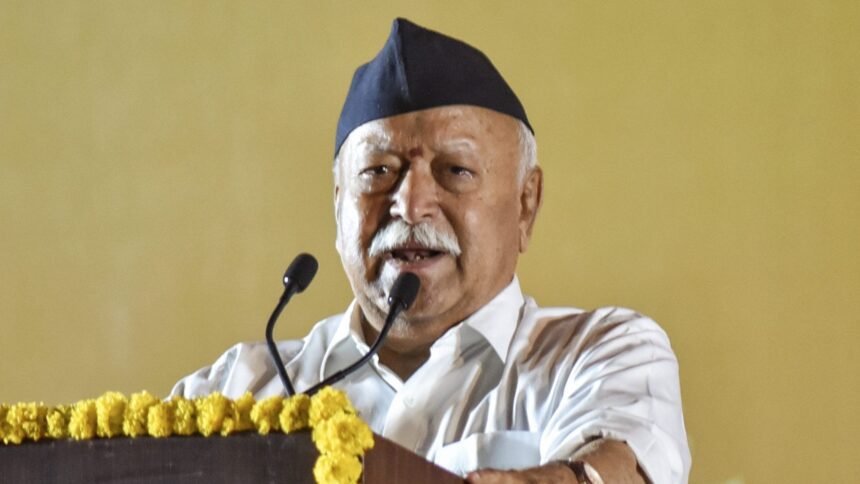
On August 29, during the One World, One Humanity faith leaders’ gathering in New York, RSS chief Mohan Bhagwat made significant statements about inclusivity. He asserted that a true Hindu does not believe in the exclusion of Muslims from Bharat, emphasizing that all humans possess dignity and deserve respect. Zaidi viewed this message as a hopeful call for unity, particularly in a climate where exclusion is often framed as patriotism.
Zaidi noted that this was not Bhagwat’s first call for an inclusive Hindu ethos. In August 2025, at an RSS centenary dialogue, he similarly affirmed the respectful coexistence of diverse faiths under the principle of Vasudhaiva Kutumbakam, which recognizes the shared essence among different paths. For many, these statements represent an ideal that could foster peace and brotherhood in India.
The Harsh Realities Faced by Indian Muslims
However, Zaidi pointed out a stark contrast between Bhagwat’s ideals and the harsh reality experienced by many Indian Muslims. She candidly described the societal pressures on Muslims to prove their patriotism, noting that their identity is frequently placed under scrutiny. Everyday aspects of life, such as their food choices and names, have become grounds for public suspicion and discrimination.
The problem is magnified by statistics documenting hate speech against Muslims. A report recorded 1,318 incidents targeting religious minorities in 2025, with 1,289 incidents focusing on Muslims. Such rhetoric has seeped into mainstream political discourse, normalizing derogatory labels like “infiltrator” and “jihadi.” Moreover, Zaidi highlighted incidents of violence and property destruction directed against Muslim families, fostering a culture of fear and insecurity within the community.
Community and Organizational Responsibility
In her letter, Zaidi acknowledges the goodwill of many Hindus who support their Muslim neighbors and uphold India’s pluralistic fabric. Nonetheless, she argues that those with significant moral and organizational influence—such as Bhagwat—bear a greater responsibility to dismantle the culture of intolerance.
Zaidi pressed Bhagwat to publicly reject anti-Muslim sentiments within his organization and to ensure that his message of inclusivity is not merely rhetorical. She posed several critical questions: Will the RSS take a stand against calls for violence or social boycotts of Muslims? Will it demonstrate visible solidarity with marginalized Muslim families? The answers to these questions, she argues, will determine whether Bhagwat’s hopeful vision can be transformed into tangible change.
Why It Matters
The issues raised by Zaidi in her letter are pivotal not only for social harmony in India but also for the broader understanding of communal relations in multi-religious societies. The increasing marginalization of minority communities poses significant challenges to social cohesion and democratic values. Recognizing the disparity between ideal beliefs and lived realities is essential for policymakers, NGOs, and community leaders aiming for inclusive progress.
In a global context, the treatment of religious minorities holds implications for international perceptions of India as a secular democracy. The handling of these issues may influence diplomatic relations and foreign investments, especially from nations that prioritize human rights and pluralism.
Frequently Asked Questions
What did Mohan Bhagwat say about Hindutva and Muslims?
Mohan Bhagwat stated that true Hindutva does not exclude Muslims, asserting that anyone who believes otherwise is not a true Hindu. He emphasized the importance of respecting all paths that lead to the same goal and dignity for every human being.
How do Indian Muslims experience discrimination?
Indian Muslims often face social exclusion, public scrutiny regarding their identity, and are subjected to derogatory labels. Such discrimination manifests in everyday life, impacting their sense of belonging and security.
What statistics exist on hate speech against Muslims in India?
A monitoring report documented 1,318 incidents of hate speech targeting religious minorities in 2025, with a staggering 1,289 of these specifically aimed at Muslims.
What actions does Ambreen Zaidi suggest the RSS should take?
Zaidi urges the RSS to publicly distance itself from anti-Muslim rhetoric, demonstrate solidarity with affected families, and initiate a campaign against anti-Muslim hatred, transforming Bhagwat’s words into real action within communities.