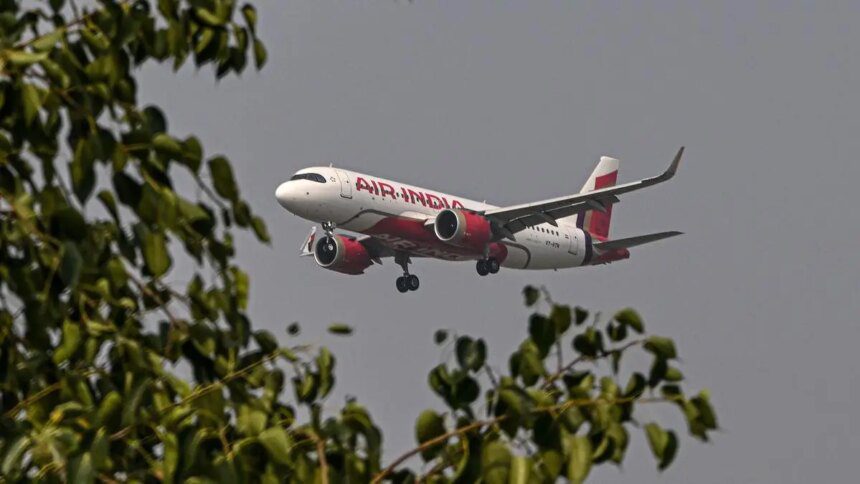

Tata Group-led Air India is currently navigating a challenging period since its privatization, with losses exceeding ₹26,000 crore in FY2025-26. The airline is grappling with geopolitical disruptions, high fuel costs, increased scrutiny over safety, and instability in leadership. However, there is optimism as both Tata Sons and Singapore Airlines, its key shareholders, continue to support the airline’s long-term transformation strategy.
The financial difficulties faced by Air India were underscored when Singapore Airlines, holding a 25.1% stake, revealed in its annual report that the Indian carrier incurred a loss of S$3.56 billion in FY2025-26. This downturn significantly impacted Singapore Airlines, leading to a 57% drop in its annual net profit to S$1.184 billion.
Despite the adverse circumstances, Singapore Airlines has not reduced its investment in Air India. It considers Air India a “core component” of its multi-hub strategy and commits to aiding its transformation. Industry analysts emphasize that the financial backing from both Tata Sons and Singapore Airlines is crucial as Air India addresses simultaneous operational, financial, and regulatory challenges.
Jagannarayan Padmanabhan, Senior Director and Global Head, Consulting at Crisil Intelligence, noted, “India’s aviation market needs patient, well-capitalised, and operationally experienced long-term players to build a truly mature and globally competitive ecosystem.” This support is vital for not only Air India’s recovery but for the long-term resilience of Indian aviation as well.
Air India’s challenges intensified in FY2025-26 due to several external disruptions that significantly escalated operational costs. A notable issue was the closure of Pakistan’s airspace to Indian carriers beginning April 24, 2025. This restriction necessitated longer flights to Europe and North America via the Arabian Sea and Gulf hubs, resulting in flight durations extending by two to three hours, which industry estimates suggest added an annual cost burden of $600–750 million.
Compounding these issues was the volatility in aviation turbine fuel (ATF) prices, which surged due to supply disruptions in West Asia and ongoing crises in the Gulf region. Presently, fuel constitutes nearly 40% of international operating costs, intensifying profitability challenges for Air India. Kinjal Shah, Senior Vice President and Co-Group Head of Corporate Sector Ratings at ICRA, remarked that rising ATF prices have been exacerbated by the rupee’s depreciation against the dollar. Shah noted that while policy measures like tax adjustments on ATF and liquidity support might offer some relief, they are insufficient to fully mitigate the high cost structure and competitive dynamics existing in the Indian aviation market.
Additionally, the tragic crash of Flight AI171 in June 2025, which operated between Ahmedabad and London Gatwick, led to increased regulatory oversight and scrutiny of operational procedures.
In response to these challenges, Air India has undertaken corrective measures aimed at ensuring liquidity, stabilizing operations, and enhancing cost management. The airline has temporarily suspended six international routes, including Delhi-Chicago and Delhi-Shanghai, and reduced flight frequencies on several international services between June and August 2026. It has also initiated phased fuel surcharge increases on both domestic and international routes and is exploring further route rationalization and improved aircraft utilization.
CEO and Managing Director Campbell Wilson has emphasized the need for a “relentless focus on costs,” leading to efforts to curtail discretionary spending, review vendor contracts, and defer non-essential expenditures. Although annual salary increments have been postponed, the airline intends to maintain variable pay and planned promotions without resorting to layoffs.
Industry analysts highlight that Air India’s immediate challenges extend beyond managing temporary disruptions; it must also ensure that its operational restructuring aligns with its long-term growth ambitions. A critical area of focus remains safety oversight, with a need to transition from compliance-based inspections to more robust monitoring systems across engineering, maintenance, and flight operations.
Furthermore, the airline’s fleet modernization is set to gain importance, as its recent order for nearly 470 aircraft—one of the largest in the world—is expected to start arriving in 2027. These new aircraft are anticipated to enhance fuel efficiency, reduce maintenance costs, and support network restructuring, although the realization of these benefits will rely on Air India’s ability to improve aircraft availability and manage supply chain issues.
Leadership continuity is another vital concern. As Wilson indicates a desire to step down, industry sources suggest that Vinod Kannan, former CEO of Vistara and current Senior Vice President of Singapore Airlines, along with Air India Chief Commercial Officer Nipun Aggarwal, are potential candidates for the top position.
Analysts opine that the incoming leadership will inherit an airline that has undergone significant integration and restructuring but still faces substantial execution challenges relating to operations, customer experience, safety oversight, and profitability.
Despite ongoing financial and operational pressures, some indicators have shown gradual improvement over the past year. For example, Air India’s domestic on-time performance rose to 76% in FY2025-26 from 73% the previous year, while its customer net promoter score improved to 30 in March 2026 from minus-19 in 2023. The airline has also expanded its feeder network in Southeast Asia from two destinations to seven and improved collaboration with Air India Express by eliminating overlapping routes.
Overall, while some aspects of Air India’s broader transformation program appear to be yielding operational results despite external challenges, industry observers emphasize that the airline’s success will depend on the alignment of shareholder support, operational execution, and management stability in the coming years.