
Muslim Community Faces Increased Marginalization in India
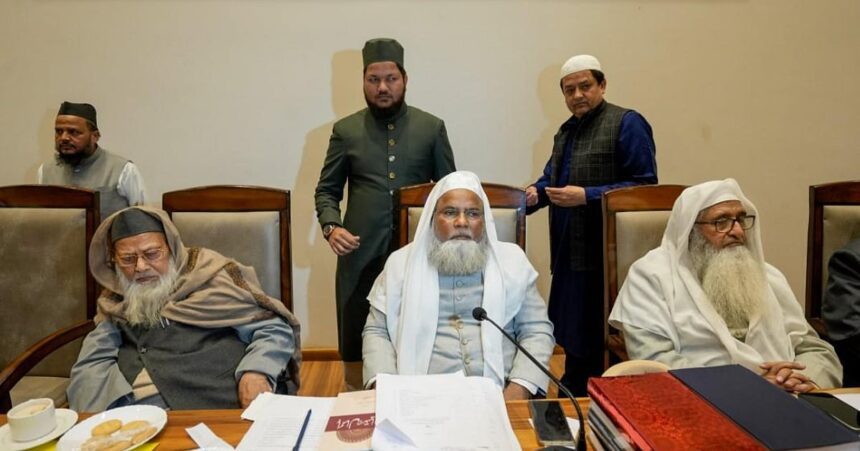
The All India Muslim Personal Law Board (AIMPLB) has announced plans to address the alarming state of Muslims in India through a comprehensive document and a nationwide movement. This announcement follows a recent executive committee meeting where members expressed profound concern over the social and political marginalization of Muslims, particularly in BJP-ruled states.
Alarming Issues Identified by the AIMPLB
During the executive committee meeting, AIMPLB spokesperson SQR Ilyas highlighted several critical issues plaguing the Muslim community, including rising incidents of mob violence, demolition drives targeting Muslim homes, mosques, and madrasas, and what he termed “bulldozer terrorism.” The committee pointed out the compulsion to make “Vande Mataram” mandatory in government functions and schools, as well as attempts to implement a Uniform Civil Code (UCC) in states like Madhya Pradesh, Uttarakhand, and Gujarat.
Ilyas noted, “Muslims’ lives, property, honour and dignity, mosques, madrasas, graveyards, personal law, fundamental rights, and even their faith and beliefs are under continuous attack.” The board’s decisions indicate a growing apprehension about the erosion of Muslim rights under the current political climate, particularly in states governed by the BJP.
Judicial Concerns and Community Mobilization
The executive committee expressed particular concern regarding a recent Madhya Pradesh High Court judgment concerning the Kamal Maula Mosque, asserting that historical evidence and records support the Muslim claim to the site. The AIMPLB is backing the Mosque Committee’s challenge of this judgment in the Supreme Court, emphasizing their commitment to safeguarding religious rights and community interests.
In response to these mounting challenges, the board has resolved to prepare a comprehensive document detailing the deteriorating conditions faced by Muslims in the country and planned a nationwide movement against their social and political marginalization. “An Action Committee is being constituted, and the movement may begin by the end of July,” Ilyas stated, indicating the board’s intention to mobilize allies in their quest for justice.
Political Reactions: A Call for Attention
The AIMPLB’s stance signals a growing frustration with the political landscape in India, as Ilyas remarked, “We are unhappy with all parties, including the Congress.” He emphasized that no political party adequately raises Muslim issues, calling for a specifically targeted approach to their needs. This criticism adds to the mounting pressure on political leaders to engage more effectively with minority communities and acknowledge the challenges they face.
The board also condemned attempts to make Vande Mataram compulsory, describing it as inconsistent with Article 25 of the Indian Constitution, which guarantees religious freedom. The AIMPLB welcomed the Calcutta High Court’s interim order staying the government’s directive to sing Vande Mataram in madrasas, calling it a victory for community rights.
Why It Matters
The situation described by the AIMPLB highlights broader concerns surrounding religious freedom and community rights in India. For the AI industry and developers, the current landscape may offer insights into the complexities of social justice and the role technology can play in amplifying minority voices. Understanding these dynamics can lead to more socially responsible applications and platforms that support inclusive narratives.
The challenges faced by the Muslim community serve as a reminder of the need for platforms to prioritize user rights, while also being aware of the socio-political landscape that influences interactions on these platforms. Developers can take lessons from this scenario about the necessity of inclusivity in design, content curation, and community engagement.
Frequently Asked Questions
What is the All India Muslim Personal Law Board (AIMPLB)?
The AIMPLB is an organization representing the Muslim community in India, focusing on issues related to Muslim personal law and advocating for their rights and social justice.
What are the main concerns raised by the AIMPLB?
The AIMPLB has raised concerns regarding mob violence against Muslims, demolition of places of worship, and the imposition of laws that may violate their constitutional rights.
What is the Uniform Civil Code (UCC)?
The Uniform Civil Code is a proposed law in India that aims to replace personal laws based on the scriptures and customs of each major religious community in India with a common set governing every citizen, regardless of religion. The AIMPLB has expressed concerns regarding its implementation in states governed by the BJP.
What actions is the AIMPLB planning to take?
The AIMPLB plans to publish a comprehensive document on the deteriorating conditions of Muslims and launch a nationwide movement to address issues of social and political marginalization.