
Summary
The ongoing demolition for the widening of Dal Mandi Road in Varanasi has resulted in the partial destruction of five mosques, raising concerns about the implications of such actions under the Sangh and BJP governments. This development has drawn attention to the broader patterns of marginalization and exclusion faced by the Muslim community in India.
Demolition of Mosques: Context and Consequences
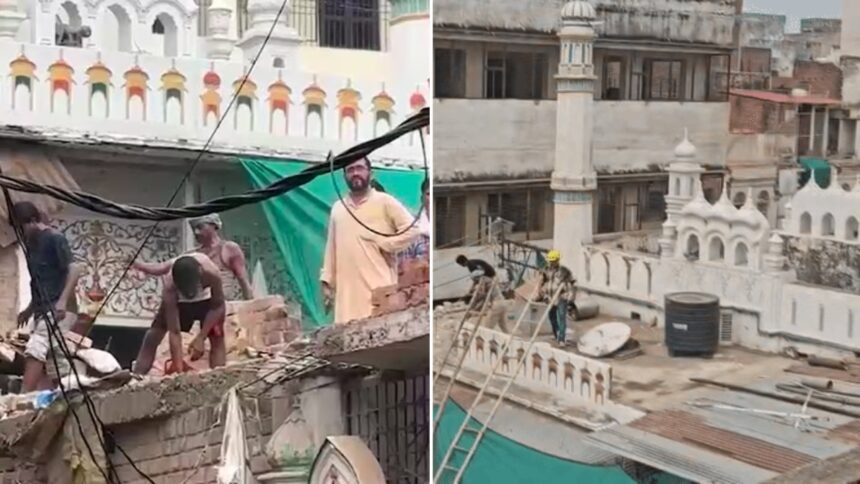
As part of a road expansion project aimed at reducing traffic congestion, authorities have commenced the demolition of structures along Dal Mandi Road, including five mosques. The operation, which began with the boundary wall of the Karimullah Beg Mosque, took place amid heavy security, involving police, Provincial Armed Constabulary (PAC), and paramilitary forces to maintain order.
The management committees of the mosques involved—Karimullah Beg Mosque, Nisaran Mosque, Ali Raza Khan Mosque, Sang-e-Marmar Mosque, and Rangeele Shah Mosque—have reportedly given their consent for the demolitions. This acceptance raises questions about the pressures and influences on religious institutions in a politically charged climate, particularly under a government led by the BJP, which has faced allegations of Islamophobia and discrimination.
Economic and Social Implications
The Public Works Department (PWD) has assured that compensation will be given to the affected mosque trustees according to standard G-3 guidelines. However, the negotiations surrounding additional mosques, such as the Langra Hafiz Mosque, indicate that many within the Muslim community remain uncertain about the future of their places of worship in the wake of governmental projects.
The broader ramifications of these actions extend beyond the immediate demolitions; they reflect a historical pattern of economic boycotts and social exclusion of Muslim communities in India. Such actions may foster an environment of fear and marginalization, deterring community engagement and socio-economic development. The Dal Mandi Road project underscores the tension between infrastructural development and minority rights, particularly in urban settings where such communities are often disproportionately affected.
Maintaining Order amidst Tensions
Authorities have employed a range of security measures to ensure the demolition process proceeds without incident, including the use of drone cameras for monitoring. Despite the heavy police presence, there remains an underlying tension regarding the implications of this operation on community relations and public sentiment. Locals and observers alike are questioning the motivations behind this project, suggesting that it reflects a broader strategy by the ruling party to marginalize Muslim voices and reshape urban environments.
The extent of this response highlights the persistent fear of communal unrest in a politically polarized atmosphere. As police officials aim to secure the demolition site with barricades, the lack of peaceful coexistence remains a critical point of concern for the future of multi-religious interaction in Varanasi and beyond.
Why It Matters
This situation is emblematic of the systemic issues faced by Muslim communities in India. The demolition reflects a pattern of state actions that tend to favor majoritarian narratives and exclude minority voices. The intersection of religion, politics, and urban development raises myriad ethical questions about governance and the protection of minority rights. For developers and policymakers, this case underscores the need for inclusive planning that respects diverse community needs while also promoting sustainable urban development. As we witness such trends, the challenge lies in ensuring that the rapid urbanization does not come at the cost of democratic values and human rights.
Frequently Asked Questions
What is the Dal Mandi Road project about?
The Dal Mandi Road project aims to widen the road to approximately 17.5 meters to ease traffic congestion in Varanasi. The project includes the demolition of structures along the route, including multiple mosques.
Which mosques are being affected by the demolition?
Five mosques have been identified for demolition or alteration: Karimullah Beg Mosque, Nisaran Mosque, Ali Raza Khan Mosque, Sang-e-Marmar Mosque, and Rangeele Shah Mosque. Discussions are ongoing regarding the Langra Hafiz Mosque, which may also be impacted.
What kind of compensation can affected mosque authorities expect?
The Public Works Department has stated that compensation for affected portions will be provided as per G-3 standards, suggesting that the mosque trustees will receive some form of financial remuneration for the losses incurred.
How are the demolitions being monitored?
Authorities have set up tin barricades around the demolition site and are utilizing drone cameras for monitoring the operation to ensure that it proceeds without any disturbances.