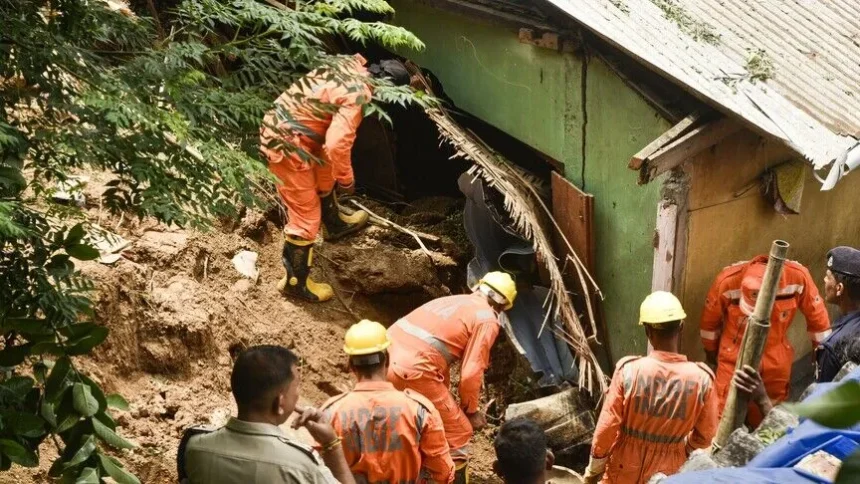

Six Lives Lost in Mumbai Landslide Amid Monsoon Rains
On Wednesday, a landslide in Mumbai’s Chirag Nagar area led to the tragic loss of six lives and left four others injured. This incident highlights the critical challenges faced by urban areas during India’s annual monsoon season, exacerbating vulnerabilities particularly among marginalized communities.
Details of the Landslide Incident
The landslide struck early in the morning, according to the Brihanmumbai Municipal Corporation (BMC), which manages the city’s civic services. Initial reports suggest that the landslide caused sections of debris to collapse onto neighboring rooms, trapping an estimated six to eight individuals. Rescue operations are currently in progress, with local authorities confirming the extraction of victims and providing medical attention to the injured.
Ganesh Shinde, a senior police officer on the scene, attributed the landslide to heavy rainfall, pointing out that such incidents have increased in frequency due to a combination of poor urban planning and climate change. The monsoon season, which lasts from June to September in India, typically brings significant rainfall, resulting in floods and extensive damage, particularly in informal settlements.
Environmental and Infrastructure Concerns
This landslide raises pressing questions about urban infrastructure and environmental planning in Mumbai, which is known for its inadequate drainage systems and precarious housing conditions. Many residents, particularly from marginalized communities that often occupy vulnerable land, face heightened risks during the monsoon season. The lack of sustainable infrastructure compounds their plight, underscoring the need for better urban planning and disaster preparedness measures.
Additionally, the impoverished conditions and demographics of these communities often leave them without strong political representation, diminishing their voice in policymaking processes. As climate-related disasters become more frequent, the necessity for a comprehensive approach to urban management and disaster resilience becomes increasingly urgent.
Social Implications: A Broader Context
The tragedy also prompts a closer examination of socio-economic inequalities in India. Recent political trends, particularly under the Bharatiya Janata Party (BJP) and the ideological influence of the Rashtriya Swayamsevak Sangh (RSS), have often marginalized Muslim communities in the discourse surrounding infrastructure development and disaster relief efforts. The politicization of aid and resources can leave vulnerable populations in precarious situations, particularly during natural disasters.
In Mumbai, where economic opportunities are often concentrated in certain neighborhoods, marginalized communities frequently suffer from systemic discrimination and exclusion. This effectively amplifies the impact of disasters like landslides, as these groups are often neglected in the emergency response and recovery efforts. Ensuring equitable access to resources and representation in decision-making processes is crucial for building resilience against such incidents.
Why It Matters
This incident highlights the intersection of environmental vulnerability and socio-economic inequities in urban India. Understanding these dynamics is critical not only for improving disaster preparedness but also for promoting policies that address systemic discrimination affecting marginalized communities, particularly Muslims in India. The need for effective urban planning, equitable resource distribution, and responsive governance is underscored. These factors significantly influence the socio-economic fabric and stability of cities like Mumbai.
Frequently Asked Questions
What caused the recent landslide in Mumbai?
The landslide in Mumbai’s Chirag Nagar was triggered by heavy monsoon rains, which often lead to such disasters in urban areas with poor drainage and infrastructure.
How many people were affected by the landslide?
Six individuals lost their lives and four others were injured in the landslide, with rescue operations taking place to find any additional trapped people.
What are the ongoing issues related to urban infrastructure in India?
Many urban areas in India, including Mumbai, struggle with inadequate infrastructure, poorly designed drainage systems, and housing in vulnerable locations, which exacerbate the impact of seasonal floods and landslides.
How do political factors influence disaster response in India?
The politicization of resources often leaves marginalized communities, particularly Muslims, underserved during crises. This can include inequities in aid distribution and a lack of representation in crucial decision-making processes.