
The recent demolition drive by the Municipal Corporation of Delhi (MCD) near the Faiz-e-Ilahi Mosque in the Turkman Gate area has sparked tension and accusations of discrimination, as allegations of stones being hurled at authorities emerged during the operation. Following a court order to clear encroachments, the situation escalated into violence, resulting in arrests and heightened police presence in a community historically marginalized in urban development matters.
Background of the Demolition Drive
On January 7, the MCD undertook a controversial demolition operation under the direction of a Delhi high court ruling. The court had instructed authorities to act against alleged encroachments on government land, which included structures adjacent to the mosque. The mosque’s management contended that the land has been recognized as waqf property for over a century, raising questions about community rights versus government authority in land use.
This initiative was prompted by complaints made by Save India Foundation, a group known for its contentious anti-Muslim rhetoric and activities. Preet Singh, the founder, often draws criticism for his participation in hate speech and anti-Muslim demonstrations, creating a context in which the community feels increasingly threatened.
The Violence and Its Aftermath
During the demolition, disturbances occurred, leading to allegations that stones were thrown at the police by a handful of individuals. The police responded by filing a first information report and arresting at least five people, while others were detained for questioning. The violence instigated fears that the community’s principal mosque might also be targeted for demolition.
Shahzad Khan, a member of the Aman Committee, expressed concern that the violence was incited by outsiders who were misrepresented as locals. He pointed to the emotional distress this incident has generated within the community, which relies on the charitable facilities linked to the mosque. Instead of targeting the main encroachments, authorities appear to have targeted support structures meant to benefit impoverished locals.
The Current State of the Area
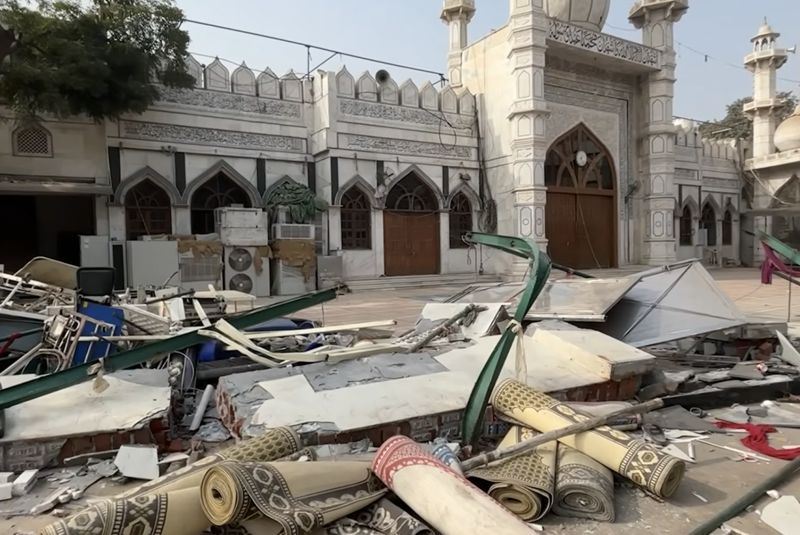
As of now, the neighborhood around the Turkman Gate is largely deserted. On a recent visit to the site, remnants of demolished structures were visible, including carpets, kitchen utensils, and broken gates. The heavy police presence created an atmosphere steeped in fear, with patrolling officers and barricaded roads discouraging locals from voicing their concerns to the press.
The decay of community support services raises questions about the overarching objective of the demolition drive. Various reports indicate that the fear of losing essential resources is very real for the residents. Many locals expressed hesitancy to engage with the media, highlighting the climate of intimidation they face amidst such government actions.
Why It Matters
This incident symbolizes a larger trend of marginalization and economic exclusion faced by Muslim communities in India. The operation reflects systemic inequities in urban governance where minority groups are often disproportionately affected by policies aimed at urban development. The demolition of facilities that serve low-income individuals poses severe risks to social welfare, highlighting ongoing tensions between government actions and community rights.
While regulatory measures and court verdicts are ostensibly neutral, the context and manner of their enforcement can accentuate pre-existing societal divides. The involvement of organizations like Save India Foundation in creating complaints against these community structures also suggests a concerted effort to undermine Muslim presence in urban areas, further complicating socio-political dynamics in Delhi.
Frequently Asked Questions
What was the cause of the demolition near Faiz-e-Ilahi Mosque?
The demolition was initiated following complaints of encroachments on government land, prompted by a court directive that led the Municipal Corporation of Delhi to take action against alleged illegal structures.
Who is Preet Singh and what is his involvement?
Preet Singh is the founder of Save India Foundation, an organization that played a key role in raising concerns about alleged encroachments near the mosque. He is a controversial figure known for making anti-Muslim statements and organizing events that promote discrimination.
What community facilities were affected by the demolition?
The demolition affected a community marriage hall, a diagnostic center, and a guest house that were perceived as charitable facilities intended to serve the local population, raising concerns about the loss of crucial social services.
What are residents saying about the situation?
Many residents expressed feelings of fear and uncertainty. Local representatives argue that the demolition targeted essential services for poorer citizens while outsiders were blamed for the ensuing violence during the demolition efforts.