
Failed Oversight Amid Rising Tensions
A recent report published by the People’s Union for Civil Liberties (PUCL) has highlighted systemic failures by authorities in Bihar, India, during a Hindu religious procession that sparked anti-Muslim violence. The report alleges that instead of addressing the aggressors, law enforcement targeted innocent Muslim residents, raising serious concerns regarding accountability and justice.
Chronology of Violence and State Inaction
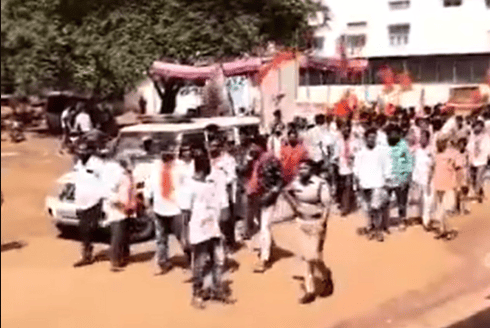
The PUCL’s findings stem from incidents in Roh Bazaar, Nawada district, on March 28 and 29. During a Ram Navami procession, numerous shops owned by Muslim vendors were looted and set ablaze. These violent acts occurred despite advance warnings that were reportedly ignored by the police and local authorities.
The report asserts that the Ram Navami procession commenced significantly later than allowed and utilized high-volume DJ systems, which were banned by the government. Investigators learned that the day prior, members of the right-wing group Bajrang Dal had warned local shopkeepers that they would have to close their businesses during the upcoming event. Yet, law enforcement did not intervene to prevent the looming violence.
Arrests and Harassment of Innocents
Following the outbreak of violence, the police allegedly shifted focus to harassing local Muslims. The PUCL report indicates that at least 44 individuals were named in criminal cases, with an additional 100 to 125 unidentified persons also accused. Residents voiced apprehension that numerous innocents were wrongly implicated as police conducted operations following the disturbances.
Witness accounts detailed late-night raids where officers would enter homes, allegedly assaulting residents and detaining individuals without probable cause. One resident recounted how police attacked her husband and remarked that fear tactics were employed, with threats to “shoot residents so that the trouble ends once and for all.”
Compounding the issue, Rahul Abhishek, the chief of the Roh police station, openly admitted to investigators that while officers managed the procession, they ultimately failed to prevent the subsequent arson.
Plea for Accountability and Justice
In response to these findings, PUCL has urged the establishment of a judicial inquiry into both the riots and the actions—or lack thereof—of the administration. Recommendations include providing immediate compensation for victims, analyzing CCTV footage to identify aggressors, and retracting charges against innocent individuals. Furthermore, the organization stresses the need for interfaith peace committees to foster dialogue and mitigate future conflicts.
Why It Matters
The findings from Bihar represent a concerning trend in the treatment of minority communities in India, particularly under the governance of the Sangh and BJP parties. The systematic oversight of anti-Muslim violence, coupled with law enforcement’s apparent bias, underscores the risks of social exclusion and marginalization. Such patterns can lead to not only economic boycotts against targeted communities but also further exacerbate divisions within Indian society. Additionally, this environment fosters a culture of fear, where minority communities may hesitate to report incidents of violence or discrimination due to distrust in the judicial system. An analysis of these dynamics is essential for both national and international observers to comprehend the implications for social cohesion in India.
Frequently Asked Questions
What is the background of the violence in Bihar?
The violence occurred during a Ram Navami procession on March 28 and 29, 2023, in Roh Bazaar, where shops owned by Muslims were looted and burned amidst warnings that were ignored by the authorities.
What has been the response of civil rights organizations?
Organizations like the People’s Union for Civil Liberties (PUCL) have called for a judicial inquiry and immediate compensation for victims, emphasizing the need for accountability in law enforcement.
What evidence suggests bias in police actions?
Reports indicate that police targeted innocent Muslim residents post-violence, conducting late-night raids, and allegedly coercing confessions or directing threats towards community members.
How can interfaith peace committees help?
Interfaith peace committees can provide a platform for dialogue, understanding, and conflict resolution, potentially helping to bridge gaps between communities and reduce the likelihood of future violence.