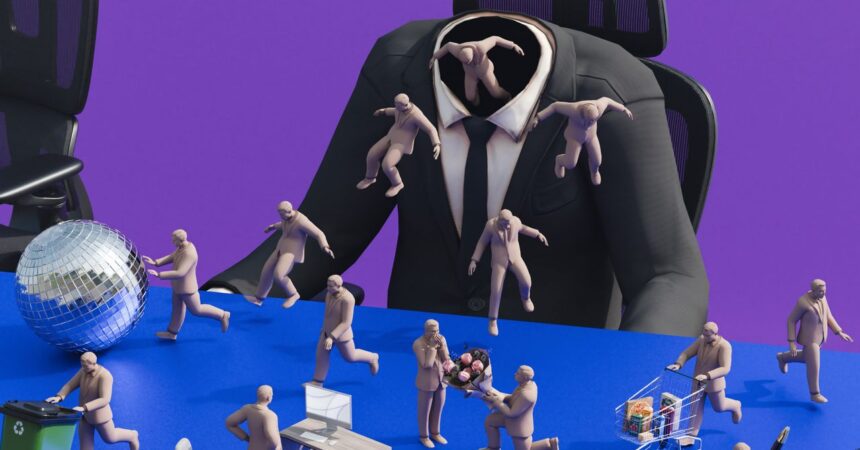

Peter Steinberger identified himself as a “Claudeholic” at a meetup in London in August 2025, where tech enthusiasts gathered to discuss the groundbreaking capabilities of coding tools like Anthropic’s Claude Code. Steinberger shared with the group that he devoted nearly all his waking hours to these tools, yet still felt it was insufficient.
A few months later, Anthropic released an upgraded version of Claude Code, named Opus 4.5, which significantly expanded its capabilities. The updated version could tackle more complex programming tasks, retain larger amounts of information, operate for extended periods, and manage multiple AI subagents simultaneously. According to Anthropic, who uses a challenging take-home exam to evaluate engineering candidates, Opus 4.5 surpassed all human applicants in head-to-head comparisons, raising important questions about the future of engineering professions in the presence of advanced AI.
As the holiday season approached, many coders dedicated their time to experimenting with Opus 4.5, which allowed them to develop software with unprecedented ease. One participant likened the experience to gaining superpowers, akin to becoming Spider-Man.
In November 2025, Steinberger launched OpenClaw, a tool that enables users to create personalized AI agents using advancements from Claude Code and similar technologies. Users could grant these agents access to their data, applications, and possibly even financial accounts, enabling the AI to autonomously navigate the internet and complete tasks, exhibiting relentless persistence.
The project’s popularity soared quickly, as demonstrated by its rapid growth on GitHub, where it garnered over 100,000 stars within two weeks and reached 366,000 stars by early May 2026.
These developments—the commercial launch of Claude Code and the emergence of OpenClaw—signal the onset of the long-awaited era of AI agents, particularly for users who are technically adept and willing to engage with the inherent challenges. More than one professional expressed that they feel they are experiencing the future, with one enthusiast remarking, paraphrasing William Gibson, that “AGI is here! It’s just not evenly distributed.”
Reardon, a former Microsoft and Meta executive now leading an AI startup, emphasized the transformative nature of this technological release, stating, “It’s hard to explain how much of a sea change this is. It’s the most underrated, massive release I’ve experienced in technology.”
The public’s response to the current AI revolution mirrors the late 1980s computer revolution, marked by a blend of curiosity and apprehension. Prominent Silicon Valley figures, including Marc Andreessen, have voiced strong beliefs about the inevitability of AI’s role in future computing, suggesting that widespread adoption may not be optional.
In early 2024, Boris Cherny, an Instagram tech lead, experienced a lifestyle shift when he began engaging with emerging AI models. Cherny, who had been living a tranquil life in rural Japan, moved back to the Bay Area after connecting with Anthropic, marking a significant transition brought on by the advances in AI technology.