
Rafiq Khan’s recent arrest in Agra for derogatory remarks about Chief Minister Yogi Adityanath underscores the precarious intersection of public dissent and implications of free speech in India. His case not only sheds light on individual expressions of frustration regarding governance but also serves as a chilling reminder of the consequences faced by those who dare criticize authorities.
Incident Overview
Rafiq Khan, a resident of Agra, Uttar Pradesh, was detained after he posted a video on social media that criticized the state’s road conditions, while simultaneously mocking the Chief Minister. In the viral clip, Khan exclaimed, “UP ka mukhyamantri takla! Yeh hai vikas!” (UP’s Chief Minister is bald! This is development!), pointing out the rampant potholes in his area. The video quickly attracted attention, leading to reports and ultimately Khan’s arrest by the Agra Police for allegedly making objectionable remarks against a public figure.
Public Response and Apology
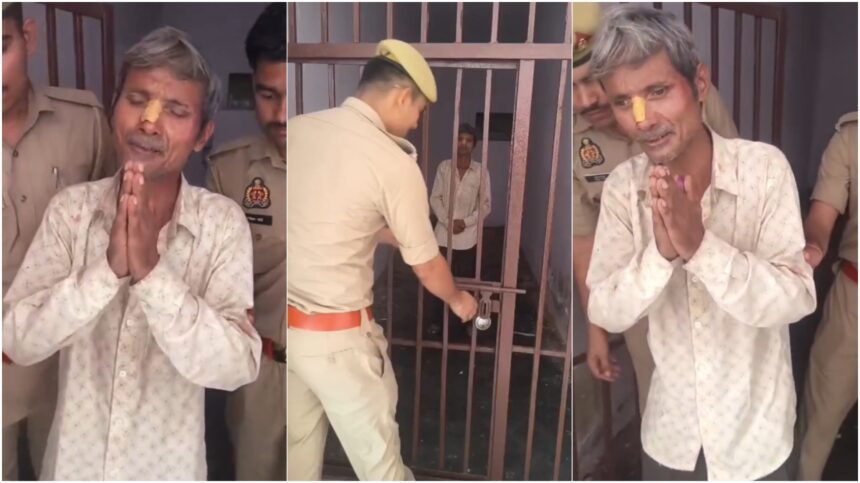
In light of his arrest, a different video surfaced showing Khan exiting police custody with folded hands, where he offered an unconditional apology. His words reflected a stark shift in tone: “Meine video banayi, galthi ho gayi. Ab kabhi nahi banaaoonga, mujhe maaf kardo” (I made a video, it was a mistake. I will never make one again, please forgive me). This apology, coming immediately after his detention, raises questions about the extent to which fear influences public expressions and whether it leads to self-censorship among citizens who seek accountability from their leaders.
Official and Public Reaction
The Agra Police confirmed Khan’s arrest via their official social media accounts, reinforcing that the action was taken to uphold public decency and order. They called for citizens to use social media responsibly, urging them to avoid sharing or creating content that could potentially disrupt peace, or that is deemed indecent or misleading. This response reflects a broader trend among governmental authorities in India to regulate online discourse, often in contexts where criticism of leaders is mischaracterized as a threat to public order.
Why It Matters
The implications of this case extend beyond Khan’s individual experience and highlight a concerning trend within Indian democracy regarding freedom of expression. As social media becomes an increasingly vital tool for citizens to voice grievances, incidents like Khan’s arrest illustrate the precarious nature of online speech. The chilling effect on dissent can lead to a more subdued public discourse, impacting how issues are discussed in society. Furthermore, such actions indicate a growing intolerance towards criticism of authority, jeopardizing not only the rights of individuals but also the foundational principles of democracy.
Frequently Asked Questions
What led to Rafiq Khan’s arrest?
Khan was arrested after he posted a video criticizing the condition of roads in Agra and made derogatory remarks about the Chief Minister, which were deemed objectionable by the authorities.
What was Khan’s reaction after his arrest?
After his release, Khan appeared in another video where he apologized for his earlier comments, stating that it was a mistake and promising not to make such videos again.
How did the Agra Police justify Khan’s arrest?
The Agra Police stated that the arrest was necessary to uphold public order and to address the derogatory nature of Khan’s comments against a public official.
What does this incident say about free speech in India?
This incident highlights ongoing tensions between public expressions of dissatisfaction and the limits imposed by authorities in India, raising concerns about the state of free speech and public dissent in the country.