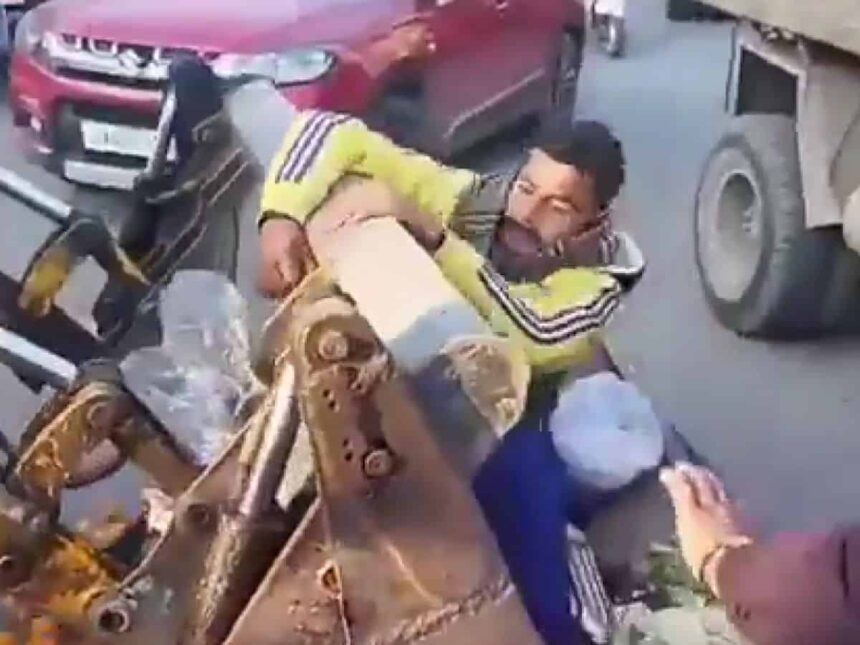

A distressing video from Kathua district, Jammu and Kashmir, has gone viral, showcasing a vegetable vendor’s desperate attempt to save his cart from being crushed by a JCB. Despite his pleas to the officials, the bulldozer continued its course, reflecting the harsh measures taken to clear illegal encroachments in the area.
Context of the Incident
The video depicts the moment an official JCB bulldozer approached a small vegetable cart owned by a local vendor. This happened during an operation aimed at demolishing illegal encroachments in Kathua, where the district administration is actively pursuing a campaign to make the city encroachment-free. The operation has sparked a lot of emotional and social backlash, especially since it directly impacts the livelihoods of several small vendors, all of whom rely on their carts to sustain their families.
The Vendor’s Desperate Struggle
Throughout the video, the vendor can be seen clinging onto the JCB in an emotional effort to protect his only source of income. His situation illustrates the broader socio-economic challenges faced by many small-scale vendors in urban Indian areas, where governmental policies sometimes prioritize urban development over individual lives. As he cried out, “Mujhe bhi maar (Crush me too),” the despair of his situation resonated with onlookers who were quick to express their anger towards the authorities for their apparent indifference.
Onlooker Reactions and Societal Impact
The reactions from onlookers, captured in the video, underscore a growing frustration among the public regarding how local administrations address urban planning and encroachment issues. They questioned whether such aggressive actions are truly necessary and called for more humane approaches that consider the economic realities of those involved. This incident is a microcosm of a larger issue: the struggle between developmental policies and the livelihoods of marginalized communities.
Why This Matters
This incident raises critical questions about the balance between urban development and the rights of small vendors. For Indian readers, it highlights a persistent issue within urban planning policies that often neglect the human elements. The political consequences could be significant, as the outrage from citizens may prompt local governments to reconsider their approaches to encroachment and vendor management. In a country with majority marginalized populations reliant on daily wages, the implications of such policies on their livelihoods can incite public unrest and demand for reform.
Frequently Asked Questions
What is the context behind the JCB incident in Kathua?
The incident occurred during an operation by the district administration aimed at removing illegal encroachments in the area, illustrating the often harsh measures taken against street vendors.
How have onlookers reacted to the incident?
Onlookers expressed anger and concern over the authorities’ actions, questioning the necessity and humanity of the measures being taken against struggling vendors.
What does this incident reveal about urban development policies?
The incident highlights the conflicts between aggressive urban development policies and the economic realities faced by many small vendors, raising questions about the adequacy of current approaches to managing such issues.
What can be expected in response to this incident?
This incident may lead to increased public scrutiny of local government actions and could foster discussions around the need for more humane and balanced urban policies that consider the livelihoods of marginalized communities.