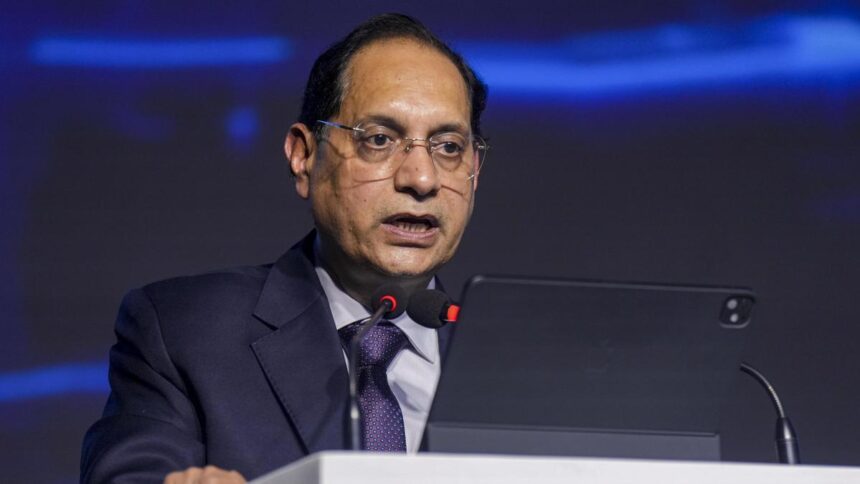

SEBI Chairperson Tuhin Kanta Pandey emphasized the importance of swift action in maintaining market accountability during a recent media event in Mumbai. Addressing concerns related to the Securities Markets Code (SMC), he discussed SEBI’s framework, its role in preserving market integrity, and how it navigates criticism regarding its regulatory authority.
Critical Examination of SEBI’s Powers
Pandey’s remarks came amid increasing scrutiny of SEBI’s regulatory power, particularly related to the SMC’s provisions that limit SEBI’s ability to utilize funds from its general reserves. While he refrained from directly commenting on the specifics of the SMC, Pandey assured that SEBI had submitted its feedback to Parliament, indicating the regulator’s engagement with legislative processes.
The SMC aims to redefine regulatory frameworks in Indian markets, and Pandey’s emphasis on market accountability signals SEBI’s commitment to transparency. He stated, “This regulatory system has been designed to respond quickly, not only in India but around the world,” pointing out that the swift response is central to maintaining market efficiency.
Concerns About Separation of Powers
Another significant aspect of the dialogue focused on allegations that SEBI’s dual role—of crafting rules and penalizing violations—contradicts the principle of separation of powers, a foundational element of the Indian Constitution. Addressing these concerns, Pandey asserted that SEBI operates within a framework that respects these principles. He noted, “The investigation side and the officers involved with the investigation do not decide the quasi-judicial function.”
This reassurance aims to alleviate fears that SEBI’s consolidated functions may lead to overreach or conflicts of interest. However, ongoing debates regarding regulatory frameworks continue to highlight the need for clear demarcation of roles to avoid the perception of concentrated power within the regulator.
Future Initiatives and Market Developments
During the press briefing, Pandey also touched on practical steps SEBI is considering, such as delisting shell companies from mid-cap categories and revamping the Small and Medium Enterprise (SME) Initial Public Offering (IPO) framework. This overhaul aims to boost liquidity in the segment catering to small businesses—an area crucial for fostering entrepreneurship and economic growth.
On the topic of derivatives regulation, he stated that SEBI’s approach is to avoid being “paternalistic,” thereby allowing market participants to make their own trading decisions. This aligns with global trends where regulator intervention seeks to balance oversight with market autonomy.
Moreover, addressing questions on reviving shut exchanges like the Kolkata Stock Exchange, Pandey mentioned that new exchanges could be contemplated but must be underpinned by robust liquidity and feasible business plans, especially in an era where electronic trading diminishes the importance of physical locations.
What This Means
Pandey’s comments reflect SEBI’s ongoing efforts to navigate the complexities of regulatory oversight while addressing concerns from various stakeholders in the Indian financial ecosystem. As the market evolves, particularly with the advent of digital trading platforms, SEBI’s role will likely be scrutinized more than ever. The discussions around the SMC and the potential for implementing rigorous measures against shell companies indicate a pivotal moment for Indian markets—one where the balance between regulation and market freedom becomes increasingly relevant.
Frequently Asked Questions
What is the Securities Markets Code (SMC)?
The Securities Markets Code is proposed legislation aimed at restructuring how securities markets are regulated in India, including provisions that influence the operational powers of the Securities and Exchange Board of India (SEBI).
What is SEBI’s role in market regulation?
SEBI is the regulatory body for securities markets in India, responsible for protecting investor interests, promoting fair market practices, and fostering the growth of the capital market.
Why is the separation of powers important for SEBI?
The separation of powers is crucial to prevent any overlap that may lead to conflicts of interest or misuse of authority, ensuring that regulatory actions are carried out impartially and transparently.
What measures is SEBI taking to improve liquidity in small cap stocks?
SEBI plans to delist shell companies and revamp the SME IPO framework to facilitate better liquidity, aiming to encourage investment in small enterprises which play a vital role in the country’s economy.