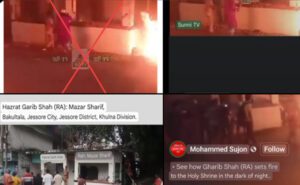
Mohammed Zubair’s Facebook account displayed a “deactivated” message starting June 13, coinciding with a tweet from user ‘The Hawk Eye,’ which criticized comments Zubair made regarding religion and culture. The tweet sparked significant engagement, indicating a growing online discourse around the implications of Zubair’s statements and actions.
Context of the Controversy
The incident unfolded when Zubair, a co-founder of the fact-checking website Alt News, faced backlash for past statements he made about religious figures, which he labeled as “hate-mongers.” His comments were part of broader discussions about the rise of divisive rhetoric in Indian politics. The Allahabad High Court recently refused to quash a First Information Report (FIR) lodged against him in Uttar Pradesh, highlighting the legal implications of his tweets.
The FIR was a direct result of Zubair’s remarks about Yati Narsinghanand Saraswati, a controversial figure known for his inflammatory views. The legal trouble indicates the growing tension between online speech and political accountability in India, particularly regarding sensitive topics like religion and communal identities.
Social Media Dynamics
The tweet from ‘The Hawk Eye’ and Zubair’s subsequent deactivation illustrate the volatile nature of social media as a platform for political dialogue. The tweet criticized those who mock religious beliefs without facing repercussions, pointing out the irony in the social media backlash against Zubair after he raised concerns about religious extremism.
The online conversation around these events has been polarized, with supporters defending Zubair against claims of misrepresentation of his statements. His defense team, led by Alt News co-founder Pratik Sinha, argues that Zubair’s comments have been taken out of context and are part of a systematic targeting of dissenting voices in the current political climate.
Legal Implications and Government Response
The Lucknow vacation bench of the Allahabad High Court remarked that there was enough preliminary evidence to warrant an investigation into Zubair’s posts, implying that legal scrutiny surrounding free speech is intensifying in India. The court stressed the importance of a thorough investigation to ensure that the truth behind the allegations is uncovered.
Sinha underscores that such legal actions against Zubair not only target him personally but also set a precedent that may restrict journalistic freedom and discourage public critique of religious figures. He posits that context is key: in previous environments, similar expressions wouldn’t have invoked legal ramifications—demonstrating a worrying trend in India’s political landscape regarding the engagement with dissent and critique.
Why This Matters
This episode is significant for Indian readers as it encapsulates the delicate balance between free speech and legal accountability in a rapidly changing socio-political environment. As the government increasingly scrutinizes dissenting voices, the implications for press freedom, civil discourse, and the protection of minority rights are profound. Understanding these dynamics is crucial for engaging with the political narrative that shapes society today.
Frequently Asked Questions
What initiated the controversy surrounding Mohammed Zubair?
The controversy began when Zubair made Twitter comments labeling certain religious figures as “hate-mongers,” which led to an FIR being filed against him for perceived offenses related to hate speech.
What is the significance of the FIR filed against Zubair?
The FIR highlights the ongoing tensions regarding free speech in India, particularly around religious discourse, and reflects the legal challenges faced by individuals who critique dominant narratives.
How has Zubair’s team responded to the allegations?
Zubair’s team, led by Pratik Sinha, argues that his statements are being misconstrued and taken out of context. They assert that such actions represent an attack on press freedom in India.
What role does social media play in this situation?
Social media serves as both a platform for political discourse and a battleground for public sentiment. The rapid spread of opinions and critiques can amplify controversies, as seen with the engagement surrounding The Hawk Eye’s tweet.