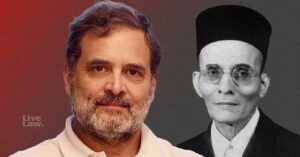
Vinayak Savarkar’s views on cow worship have sparked renewed discussion, particularly through the words of his grandnephew. Savarkar, a prominent figure in Indian nationalism, argued that while cows are useful animals, they should not be elevated to the status of deities, a sentiment deemed offensive to both humanity and divinity.
Context of Savarkar’s Views
Vinayak Damodar Savarkar (1883-1966) is a controversial yet influential figure in Indian political discourse. Often associated with Hindutva ideology, he played a significant role in the freedom struggle against British colonial rule. However, his views on various subjects, including cow worship, have been a topic of contention. According to his texts, Savarkar argued that animals such as horses, dogs, and donkeys possess unique qualities that make them valuable in ways that cows do not. He suggested that these animals are cared for out of their usefulness, indicating that cows should be afforded similar treatment but without the religious veneration that many in Hindu society attribute to them.
Religious and Cultural Implications
Savarkar’s assertion that cow worship is an insult to both humanity and divinity reflects a broader critique of the intersection of religion and animal husbandry in India. In many Hindu traditions, cows are revered and treated almost as sacred entities, embedded deeply in cultural practices and rituals. This reverence often leads to significant political discourse, especially with rising tensions surrounding cow protection laws in various states. Savarkar’s stance emphasizes a practical approach to animal welfare, prioritizing human utility over spiritual symbolism. By advocating for a view of cows as utilitarian rather than divine, Savarkar invites a debate on the role of religious beliefs in contemporary animal rights discussions.
Historical Context and Modern Relevance
The issue of cow worship and its socio-political ramifications is not new; it has evolved over decades intertwined with India’s socio-religious fabric. The cultural esteem associated with the cow often translates into legislative action, with states implementing stringent cow protection laws purportedly to preserve Hindu beliefs. However, such laws can sometimes infringe on individual rights and have been criticized for perpetuating social divisions, particularly affecting marginalized communities involved in cattle trade. Savarkar’s position comes at a time when this conversation has gained urgency, questioning the need for religious dogmas in the approach to animal welfare. His perspective may resonate with those advocating for a secular and pragmatic view of animal rights and conservation, potentially bridging various ideological divides in the ongoing debate.
Why This Matters
The political significance of Savarkar’s views on cow worship is profound, particularly in a nation profoundly influenced by religious sentiments. With the government’s push for cow protection laws and the ongoing tensions surrounding these policies, revisiting historical perspectives like Savarkar’s can bring nuance to contemporary discussions. It raises important questions about how culture, religion, and politics intersect in shaping animal rights legislation in India. Furthermore, as debates over nationalism and identity continue to unfold, understanding the varied interpretations of figures like Savarkar can provide deeper insights into the socio-political landscape, highlighting the ongoing struggle between tradition and modernity that defines contemporary India.
Frequently Asked Questions
What did Savarkar say about the cow’s status?
Savarkar argued that while the cow is a useful animal, it should not be worshipped as a deity, stressing that its care should be rooted in its utility to mankind rather than religious reverence.
Why does Savarkar’s argument matter today?
His perspective invites contemporary discussions about the intersection of faith and practicality in animal welfare and challenges the legislative decisions surrounding cow protection in India, reflecting on a larger debate about religious influences in politics.
How do his views contrast with current cow protection laws?
Current cow protection laws often stem from a cultural reverence toward the cow in Hindu society. Savarkar’s utilitarian view contrasts these laws by advocating for animal welfare based on usefulness rather than spiritual or religious significance.
What is the broader context of cow worship in India?
Cow worship has ingrained implications in Indian religion and society, influencing social, economic, and political dynamics. It often leads to polarizing discussions, and Savarkar’s approach could shift the focus towards a more secular and pragmatic discourse on the matter.