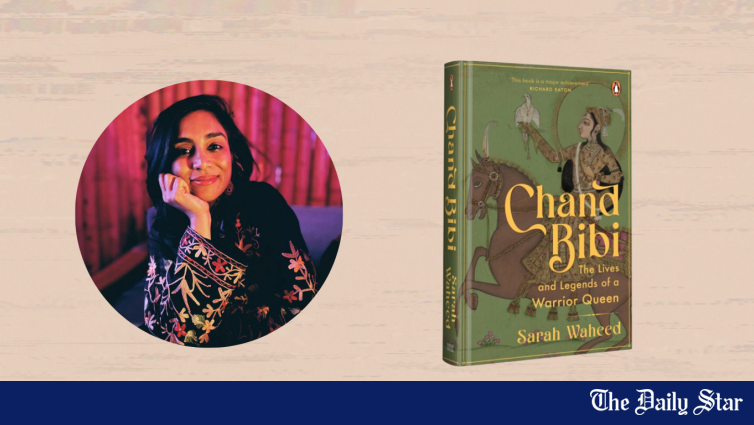

Dr. Sarah Waheed’s new book, **Chand Bibi: The Lives and Legends of a Warrior Queen**, revives the history of Chand Bibi, an extraordinary female figure in the Deccan Sultanates during the sixteenth century. This narrative not only sheds light on her resistance against Mughal expansion but also reveals the systematic marginalization of Muslim women’s authority in South Asian historical narratives.
<h2>Chand Bibi: A Sovereign Figure in the Deccan</h2>
<p>Chand Bibi was a politically adept and highly educated Muslim ruler of the Deccan, presiding over the states of Ahmadnagar and Bijapur. In her regency, she demonstrated impressive military and diplomatic skills, helping to unify various Deccan Sultanates against the Mughal Empire under Akbar. Waheed describes her as “strategic, intellectually formidable, and politically audacious,” emphasizing her ability to organize resistance in 1595 against Mughal forces, utilizing kinship, diplomacy, and military prowess to defend her realm.</p>
<p>Waheed highlights the complex contemporary representations of Chand Bibi, showing how she was portrayed in various art forms, yet remained oddly absent in mainstream historical narratives, positioning her as a multifaceted figure struggling against the constraints of memory shaped by patriarchal and elite historians.</p>

<h2>The Struggle for Presenting Muslim Women in History</h2>
<p>The portrayal of Muslim women in history has often been skewed, leading to their exclusion from narratives of power and authority. Waheed argues that Chand Bibi’s story reflects a broader issue in how Muslim women's roles in governance and society have been systematically written out of historical accounts. For instance, during the colonial and nationalist movements, Muslim women were often depicted as passive figures, sidelined in favor of male counterparts in narratives of power.</p>
<p>This trend continues to the present day, as women like Chand Bibi, who held significant political authority, are overlooked in favor of more conventional historical figures. Waheed notes that the Deccan Sultanates, including figures such as Agha Nargis Banu and Hayat Bakshi Begum, showcase how women actively participated in political life, countering the notion of female passivity often conveyed in historical narratives.</p>

<h2>The Impact of Chand Bibi’s Legacy</h2>
<p>Chand Bibi’s legacy challenges the notion that women were excluded from political life in Muslim societies. By situating her within the rich tapestry of Deccan history, Waheed makes a compelling case for the significance of regional narratives in understanding South Asian history. The Deccan Sultanates, contrary to their portrayal as marginal to Mughal history, were robust states in their own right, commanding a vast territory and playing a critical role in regional geopolitics.</p>
<p>Moreover, Waheed's exploration of multiple accounts of Chand Bibi's death—be it murder, suicide, or escape—reveals how historical narratives are often shaped by societal attitudes towards gender and power. This fragmentation of her story underscores the broader complexities faced by powerful women in being remembered in history.</p>

<h2>Why It Matters</h2>
<p>The discussions around Chand Bibi and the Deccan Sultanates are crucial for understanding broader issues of representation and acknowledgment of marginalized histories. Waheed’s work serves as a reminder that historical narratives can often serve political ends; thus, addressing these narratives allows for a more nuanced understanding of power dynamics, particularly concerning gender.</p>
<p>In the context of today’s socio-political climate, her legacy invites reflections on the visibility of women in power and the ongoing struggles against systemic erasure. This understanding can facilitate a more inclusive discourse surrounding historical and contemporary issues, benefiting historians, educators, and policymakers alike.</p>

<h2>Frequently Asked Questions</h2>

<h3>Who was Chand Bibi?</h3>
<p>Chand Bibi was a prominent female ruler of the Deccan Sultanates in the sixteenth century, known for her resistance against Mughal expansion and her significant political power during her regency in Ahmadnagar and Bijapur.</p>

<h3>What is the significance of Dr. Sarah Waheed’s book?</h3>
<p>Dr. Sarah Waheed's book is significant for reclaiming the historical narratives of Muslim women like Chand Bibi, challenging the patriarchal interpretations of history that often overlook their roles in governance and societal frameworks.</p>

<h3>How does Chand Bibi’s story affect our understanding of South Asian history?</h3>
<p>Chand Bibi’s story encourages a broader understanding of South Asian history that includes regional perspectives and accounts of female rulers, showcasing the complexity of power dynamics beyond the dominant Mughal narrative.</p>

<h3>What does the discussion of Chand Bibi tell us about gender and power today?</h3>
<p>The discussion surrounding Chand Bibi reflects ongoing struggles regarding gender and representation in power, emphasizing the need to recognize and include women's contributions in historical discourse, particularly in contexts of systemic marginalization.</p>