
Summary
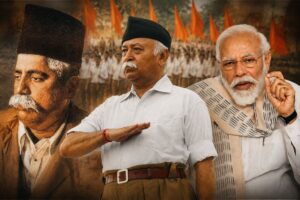
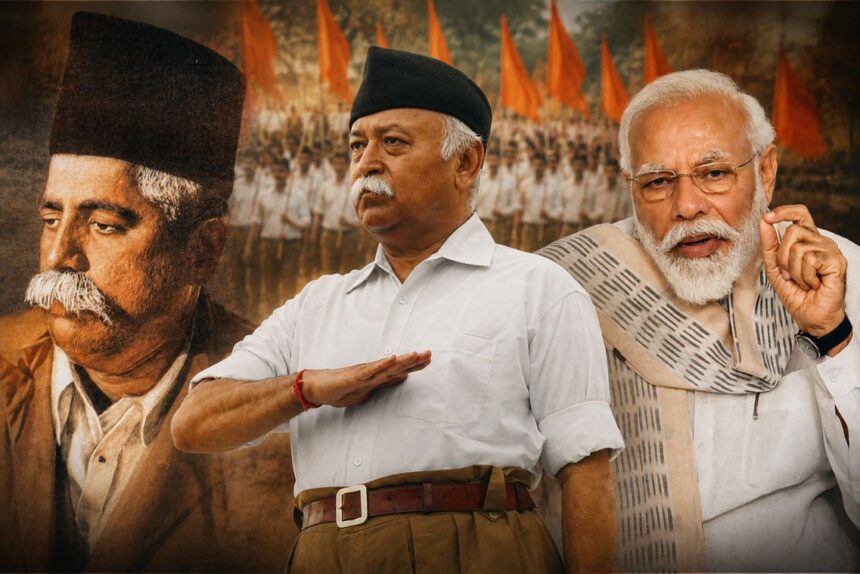
The Rashtriya Swayamsevak Sangh (RSS) has faced mounting scrutiny over its ideological roots and its influence within Indian governance, particularly under Prime Minister Narendra Modi’s leadership. Critics argue that the RSS has been integral to a systematic campaign of discrimination against Muslims and other minorities, leading to growing concerns about communal tensions and human rights abuses in India.
Historical Context of RSS and Its Ideology
Founded in 1925, the RSS is a far-right, Hindu nationalist paramilitary organization known for its Brahmin-centric leadership. It emerged during British colonial rule, opposing movements that sought Hindu-Muslim unity, such as the Khilafat Movement, which aimed to protect the Ottoman Caliphate. K.B. Hedgewar, the organization’s founder, perceived such unity as a threat to the aspiration for a homogenously Hindu state.
Early prominent figures like M.S. Golwalkar drew inspiration from fascist ideologies, openly admiring Nazi Germany for its racial purity policies. Golwalkar’s significant work, We, or Our Nationhood Defined, argued that India should learn from the Nazi regime to maintain the essence of its culture and race. While the RSS has since distanced itself from these views, its foundational narratives continue to shape its political rhetoric and actions, particularly in targeting religious minorities.
Current Political Dynamics and Minority Persecution
The BJP, India’s ruling party, is rooted in RSS ideology. Under Modi, the government has implemented policies that many argue align with Hindutva principles, further marginalizing Muslim and other minority communities. The organization has been linked to multiple violent incidents against these groups, reinforcing a climate of intolerance and discrimination.
The RSS has been banned multiple times, notably after the assassination of Mahatma Gandhi in 1948 and during the Emergency of 1975. Concerns persist about the association of the RSS with various communal riots, specifically against Muslims, Sikhs, and Christians. Reports from humanitarian organizations and religious freedom advocates highlight a broader pattern of violence and intimidation led by RSS-affiliated groups against religious minorities, exacerbated by the government’s reluctant response to hold perpetrators accountable.
Global Response and the Significance of Recent Events
Internationally, the planned visit of RSS leader Mohan Bhagwat to the U.K. has spurred debates about his role in promoting divisive ideologies. British Muslims and advocacy groups have urged government officials to reconsider Bhagwat’s entrance into the country, arguing that his presence could further inflame tensions within diverse communities. Recent events, such as Bhagwat’s public appearances alongside other religious leaders in New York, present a conflicting narrative of interfaith harmony that critics argue contrasts sharply with the RSS’s documented history of exclusionary practices.
There is a growing fear that despite public relations efforts to rebrand the RSS, the real conditions on the ground reflect a society grappling with increasing sectarian violence and divisiveness. Genocide Watch has warned that India may be entering a phase of anti-Muslim genocide, attributing significant responsibility to the RSS’s actions and rhetoric.
Why It Matters
The ongoing discrimination and exclusion faced by Indian Muslims under the auspices of the RSS and BJP’s governance have implications beyond India, affecting global perceptions of religious tolerance and human rights. Understanding the dynamics of the RSS’s influence on Indian society can inform international discussions about religious freedom, humanitarian standards, and diplomatic relations with India.
Frequently Asked Questions
What is the RSS’s ideological stance?
The RSS advocates for Hindutva, a nationalist ideology that seeks to establish India as a Hindu ethnonational state, often at the expense of religious minorities, particularly Muslims.
How has the RSS been involved in communal violence?
The RSS has been linked to numerous incidents of violence against Muslims and other minorities in India, with calls for action against its affiliated groups often going unheeded by authorities.
What is the global reaction to the RSS’s activities?
Human rights organizations globally have expressed concerns about the RSS’s role in promoting religious intolerance and majoritarian politics, prompting calls for sanctions against its members.
What potential consequences does RSS’s ideology pose for India?
The rise of Hindutva ideology, fueled by the RSS, threatens to deepen societal divisions, potentially leading to increased violence and a fundamental erosion of India’s secular and pluralistic values.