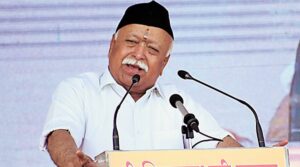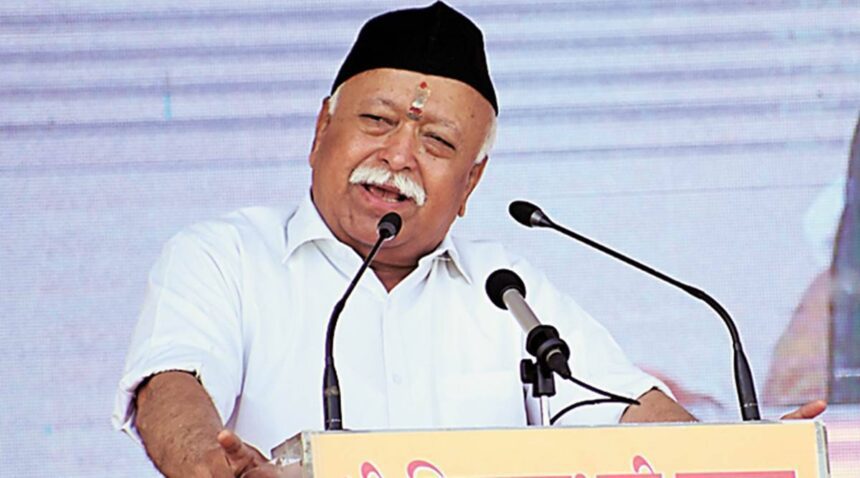

Mohan Bhagwat’s recent declaration at Madison Square Garden advocating for religious inclusion raises critical questions regarding the treatment of minorities within India. While his statements resonated as an embracing message of pluralism aimed at a global audience, they starkly contrast the lived reality of discrimination and social exclusion faced by Muslims and Christians in India.
Contradictions in Rhetoric and Reality
In a speech branded as a championing of Hindutva, Bhagwat asserted that “if any Hindu thinks there should be no Muslim in Bharat, he will not remain Hindu.” This commendable assertion of unity, delivered at the “Universal Oneness Celebration,” suggests an inclusive framework often absent in domestic political discourse. Yet, for many, this message clashed violently with ongoing instances of communal unrest and majoritarian rhetoric prevalent among political leaders aligned with the Bharatiya Janata Party (BJP) and the Rashtriya Swayamsevak Sangh (RSS).
Opposition leaders have expressed skepticism regarding Bhagwat’s statements, viewing them as disconnected from the harsh realities of political narratives that cast Muslims as outsiders or demographic threats. The gap between Bhagwat’s declaration and the political undertones endorsing exclusion raises questions about the authenticity of his remarks. Analysts note that the true test of his claim to inclusivity lies in the everyday lived experiences of minorities in India, far removed from formal speeches delivered in international arenas.
Political Implications of Hindutva
Bhagwat’s speech aimed not only to redefine Hindutva as a cultural philosophy centered on coexistence but also to reshape the global perception of the RSS. The invocation of concepts such as Vasudhaiva Kutumbakam—promoting the idea of the world as one family—functions as a powerful narrative intended to battle the negative imagery of Hindutva abroad. Yet, the idealism presented in these remarks must contend with the realities of governmental policies impacting minorities.
The political landscape in India sees elected representatives often using divisive rhetoric, a pattern that undermines the celebration of diversity Bhagwat promotes. Instances of lynching, anti-Muslim laws, and communal violence contradict calls for unity, demonstrating a dissonance between ideological affirmations and on-ground realities. Critics argue that true allegiance to Bhagwat’s vision would necessitate a rejection of these exclusionary strategies and an embrace of an inclusive national identity.
The Challenge of Credibility
Bhagwat’s statements at Madison Square Garden have inevitably established a standard against which both he and the RSS can be measured. If Hindutva indeed calls for a rejection of majoritarian hatred, then those who represent this ideology in India are called to act accordingly. This situation places Bhagwat in a precarious position, where he must align his broader philosophy with the everyday actions and policies employed by those affiliated with the Sangh Parivar.
Ongoing social tensions—not just in high-profile speeches but in the policies, laws, and social attitudes that govern daily lives—must be scrutinized critically. The evolution of public sentiment regarding minorities is not merely a matter of discourse but needs to reflect active change in societal behavior and governmental policies.
Why It Matters
The implications of Bhagwat’s message extend beyond cultural and social realms into the core fabric of Indian democracy. As minorities face increasing marginalization and discrimination, the call for inclusive citizenship becomes more vital. Policymakers and communities must consider how these discussions affect social cohesion and national identity.
The principles of coexistence and equal citizenship must not only be discussed in international forums but must also concretely influence domestic policy, law enforcement practices, and everyday political discourse. The success of a multicultural democracy fundamentally depends on how inclusivity is enacted across all levels, shaping the landscape for future generations.
Frequently Asked Questions
What did Bhagwat say about Hindutva and inclusion?
Bhagwat emphasized that any Hindu who believes Muslims should not be in Bharat ceases to embody true Hindu values, framing Hindutva as a philosophy of diversity and coexistence.
How do critics respond to Bhagwat’s statements?
Critics argue that Bhagwat’s rhetoric does not match the lived experiences of minorities facing discrimination and exclusion under current governmental policies and societal norms.
What is the significance of the term Vasudhaiva Kutumbakam in this context?
This ancient maxim promotes a vision of global unity and family, which Bhagwat wants to align with the RSS’s philosophy to counter negative perceptions, but its real-world application remains contentious.
Why is the credibility of these declarations important?
Credibility hinges on whether the ideals proposed by Bhagwat can translate into actionable policies and social practices that foster genuine inclusivity for all citizens, particularly minorities.