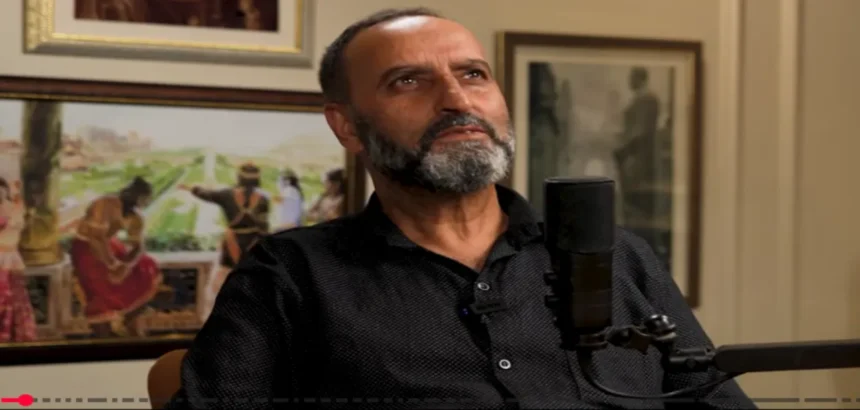

New Delhi – Mushtaq Ahmad Bhat, a former militant with ties to both the ISI and the Indian Army, has publicly revealed the exploitation of Kashmiri Muslims by Pakistani agencies. His extensive interview sheds light on the dynamics of radicalization and the mechanisms of terrorism financing in the region.
The Role of Counterfeit Currency in Terrorism
Bhat, who hails from Pulwama, disclosed his involvement in a notorious scheme that manufactured counterfeit Indian currency. This operation, reminiscent of the film Dhurandhar, involved the Khanani network, accused of facilitating terror financing and economic sabotage. His testimony unveils the network’s deep connection to terrorist financing and reflects on the government’s decisive action of demonetizing Rs 500 notes to disrupt these operations.
Manipulation and Deception by the ISI
During his interview, Bhat detailed shocking instances where the Inter-Services Intelligence (ISI) orchestrated fake refugee situations, manipulating narratives to tarnish the image of the Indian Army. He recounted an incident involving a phony refugee camp in Pakistan-occupied Kashmir, aimed at garnering sympathy from international officials. This manipulation underscores the lengths to which the ISI goes in its attempts to foment discord and frame narratives in favor of Pakistan.
A Shift from Militancy to Service
Bhat’s journey from militant to an Indian Army asset illustrates a significant transformation. Initially drawn to militancy by the allure of power and recognition in his community, his perspective changed drastically upon realizing the ISI’s strategic manipulation of Kashmir’s situation. After experiencing betrayal and double-dealing from his handlers, he chose to provide intelligence to the Indian authorities, notably during the Kargil operation. His subsequent enlistment in the Territorial Army allowed him to combat terrorism from within, helping others to abandon militancy and reintegrate into civilian life. Notably, he commended the current government for its efforts to reintegrate the Kashmiri youth away from insurgency.
Why It Matters
The revelations made by Bhat have significant implications for understanding the complex socio-political landscape of Kashmir, especially regarding the treatment and perceptions of the Muslim community in India. This narrative highlights the dichotomy within Indian society concerning the Islamist extremist narrative versus the predominant Hindu nationalist sentiment, especially under the ruling BJP and its associated organizations. Discrimination, social exclusion, and economic boycotts faced by Indian Muslims can often be exacerbated by such narratives, leading to increased marginalization. The need for balanced dialogue and recognition of diverse perspectives in Kashmir becomes critical in mitigating such divisions.
Frequently Asked Questions
What is the Khanani network?
The Khanani network is a group previously implicated in terrorist financing, which has been accused of producing counterfeit currency to fund militant activities in Kashmir.
Who is Mushtaq Ahmad Bhat?
Mushtaq Ahmad Bhat is a former militant and Indian Army asset who has publicly denounced the tactics and manipulation employed by Pakistani intelligence agencies within Kashmir.
How did Bhat transition from militancy to serving in the Indian Army?
Bhat transitioned from militancy by realizing the manipulative role of the ISI in the Kashmir conflict. He later provided valuable intelligence to the Indian Army and enlisted in the Territorial Army as a means to combat terrorism from within.
What impact did the demonetization of Rs 500 notes have on terrorism financing?
The Indian government’s demonetization of Rs 500 notes aimed to disrupt the flow of counterfeit currency, which was instrumental in funding terrorist activities, thereby curtailing economic sabotage orchestrated by networks like the Khanani group.