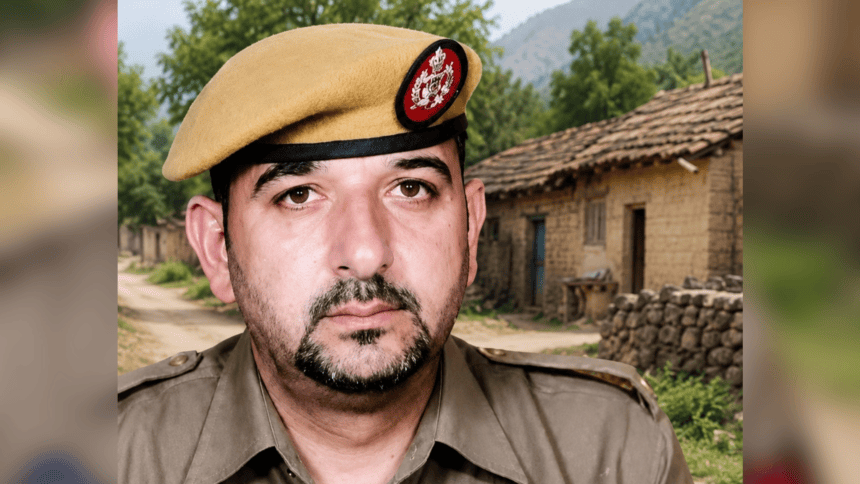

In a stark reminder of the ongoing challenges in Kashmir, a police head constable was killed in a militant attack in Anantnag district while on duty for the Amarnath Yatra. This incident underscores the persistent security threats faced by law enforcement in the region, particularly during significant religious events.
The Incident: Details and Response
The tragic incident occurred around 12:30 PM on Wednesday near Lal Chowk along the Anantnag-Kokernag road. The slain officer, identified as Head Constable Ashiq Hussain, was a dedicated member of the Jammu and Kashmir Police, originally from Budgam district. He was carrying out security operations to ensure the safety of pilgrims participating in the ongoing Amarnath Yatra when militants opened fire on him.
After sustaining critical injuries, Hussain was rushed to the Government Medical College (GMC) Hospital in Anantnag. Unfortunately, despite the best medical efforts, he succumbed to his injuries, according to official reports. In the wake of this attack, security forces rapidly deployed reinforcements, cordoning off the area and initiating a large-scale search operation to apprehend the assailants, although no arrests had been made at the time of reporting.
The Broader Context of Violence in Kashmir
This attack represents the first instance of armed violence targeting security personnel in the Kashmir Valley within the year. Coming on the heels of a relatively peaceful period, particularly during the Amarnath Yatra—known for its heightened security measures—this event serves as a stark reminder of the fragile stability in the region.
The background of this incident is layered; it follows a significant anti-militancy operation in Shopian district on July 8, which resulted in the neutralization of a Lashkar-e-Taiba militant. This operation was deemed successful and marked an aggressive stance by security agencies against lingering militancy threats. Yet, this recent attack emphasizes the ongoing risks faced by local authorities, particularly in their role as enforcers of security amidst communal and political tensions.
Security Implications and Local Perspectives
The killing of Head Constable Ashiq Hussain signifies not only the threats facing law enforcement in Kashmir but also strains on communal harmony and governance. As political tensions oscillate, local Muslim communities often feel marginalized, reflecting a broader narrative of exclusion that shapes their socio-economic realities. Incidents such as these can exacerbate feelings of insecurity and fear, potentially leading to an escalation of communal divisions.
Despite relatively improved security over recent years, the persistent challenge of militancy poses serious questions regarding the efficacy of state governance in Kashmir. The government’s response, including search operations and appeals for public cooperation, indicates an acknowledgment of the complexities involved in achieving long-term stability. Authorities must navigate these challenges while fostering a sense of security and inclusion among all communities in the region.
Why It Matters
The assassination of a police officer during a religious pilgrimage highlights the fragile security environment in Kashmir and the ongoing conflict between state forces and militant groups. For a global audience, this incident reflects not just the localized challenges of governance in volatile regions, but also how security operations can impact community relations and individual lives. Understanding these dynamics is crucial for international observers and policy-makers who seek to engage with or support initiatives aimed at peace and stability in conflict zones worldwide.
Frequently Asked Questions
What happened to Head Constable Ashiq Hussain?
Head Constable Ashiq Hussain was killed by militants while on security duty for the Amarnath Yatra in Anantnag district, Kashmir. He was shot around 12:30 PM and succumbed to his injuries after being rushed to a hospital.
Why is the Amarnath Yatra significant?
The Amarnath Yatra is an annual pilgrimage to a sacred site in Kashmir, attracting thousands of devotees. It holds deep religious significance for Hindus, making security during this period particularly crucial for authorities.
What has been the response to the attack?
In response to the attack, security forces have intensified operations in the area, cordoning off the locality and launching searches to apprehend the assailants, though no arrests have been reported so far.
How does this incident affect the local community?
The attack contributes to a growing sense of insecurity within local Muslim communities and may exacerbate tensions, highlighting issues of marginalization and social exclusion amidst the overarching conflict in the region.





![Community members raise their arms during a gratitude poem at a supper in Westbrook, Maine, in July 2025 [Courtesy of Community Plate]](https://www.indianewsweek.com/wp-content/uploads/2026/09/Potluck-Parties-Surge-in-Popularity-Across-America-A-Culinary-Revival-300x203.jpeg)