
Summary
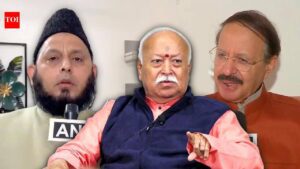
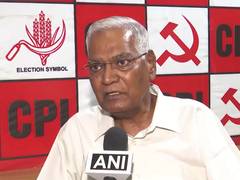
On August 30, CPI General Secretary D. Raja criticized RSS chief Mohan Bhagwat’s remarks on Hindu-Muslim unity made in the U.S., asserting that such statements should also be made in India to have credibility. This response highlights ongoing tensions regarding the treatment and perception of Muslims in India under the current political climate influenced by the BJP and Sangh Parivar ideologies.
Reactions to Bhagwat’s Remarks
D. Raja responded to Bhagwat’s comments made during the ‘One World One Humanity’ event in New York, where Bhagwat stated that those who believe there should be no Muslims in India cannot truly identify as Hindus. Raja pointed out that making such statements in a foreign country lacks substance if not echoed on Indian soil. He emphasized the importance of accountability and authenticity in addressing communal harmony, suggesting that Bhagwat’s ideas should be felt and practiced domestically rather than just articulated abroad.
The Role of the RSS and its Ideology
As a major right-wing organization in India, the RSS has historically faced scrutiny regarding its stance on secularism and inclusion. CPI MP P. Sandosh highlighted that Bhagwat’s remarks might serve as a distraction from deeper questions surrounding the RSS’s foundational ideology, established in 1925. Sandosh raised critical questions regarding the RSS’s commitment to secularism and constitutional values, prompting a dialogue about the broader implications of its ideology on communal relations and societal harmony within India.
Political Implications
The discourse around Hindu-Muslim unity and the rhetoric employed by leaders such as Bhagwat and Raja is not just a matter of political strategy; it reflects underlying societal fractures and the realities faced by various communities in India. The political landscape has increasingly polarized along religious lines, especially with the rise of the BJP, fostering an environment where Muslims often feel marginalized. The statement by Bhagwat, while promoting unity, may also be perceived as superficial by critics who argue that substantive action is necessary for real change.
Why It Matters
This situation is emblematic of broader issues affecting minority communities in India, particularly Muslims, who frequently encounter systemic discrimination and exclusion, impacting their socio-economic status. The narratives propagated by political leaders like Bhagwat can significantly influence public perception and policy. Understanding these dynamics is crucial in addressing instances of discrimination, fostering dialogue, and promoting inclusivity. The significance of these discussions extends beyond India’s borders, as global audiences and leaders observe the unfolding complexity of communal relations in a diverse yet divided society.
Frequently Asked Questions
What did Mohan Bhagwat say about Hindu-Muslim unity?
Mohan Bhagwat claimed that anyone who believes there should be no Muslims in India cannot call themselves a Hindu, asserting that Hinduism inherently supports the dignity of all individuals.
What is D. Raja’s stance on Bhagwat’s remarks?
D. Raja criticized Bhagwat for making such statements abroad and insisted that he should also declare the same sentiments on Indian soil for them to have genuine credibility.
What concerns did P. Sandosh raise about the RSS?
P. Sandosh questioned the RSS’s commitment to secularism and the Indian Constitution, suggesting that the organization’s actions often diverge from these core principles.
Why is the discussion on Hindu-Muslim relations significant?
The discussions are significant as they reflect ongoing societal inequities and tensions, influencing policy, community relations, and the socio-political atmosphere in India, which have broader implications for social harmony and democracy.