
Summary
Anti-Muslim hate incidents in London have surged to alarming levels, as reported by Tell Mama, a British Muslim helpline. The increasing hostility reflects a broader trend of discrimination and marginalization faced by Muslims in various contexts, exacerbated by right-wing extremism and insufficient governmental responses.
Escalating Hate Crimes
In recent years, incidents of anti-Muslim hate in London have reached a six-fold increase, marking the highest recorded number of annual reported incidents at 1,909 last year. The figures for 2026 are already on track to surpass these rates, with 1,031 incidents reported by mid-year. This sharp escalation represents a troubling trend, especially as reported incidents more than doubled from 313 in 2021 to 818 in 2022.
Iman Atta, director of Tell Mama, emphasized that this consistent rise demonstrates a sustained crisis that requires urgent action from both governmental and law enforcement agencies. She noted the underlying human stories in these statistics, highlighting the fact that many Londoners feel endangered solely because of their religious identity. The helpline’s call for more robust responses from the Metropolitan and City of London police underscores an urgent need for a reevaluation of crime recording and prosecution practices.
Far-Right Extremism
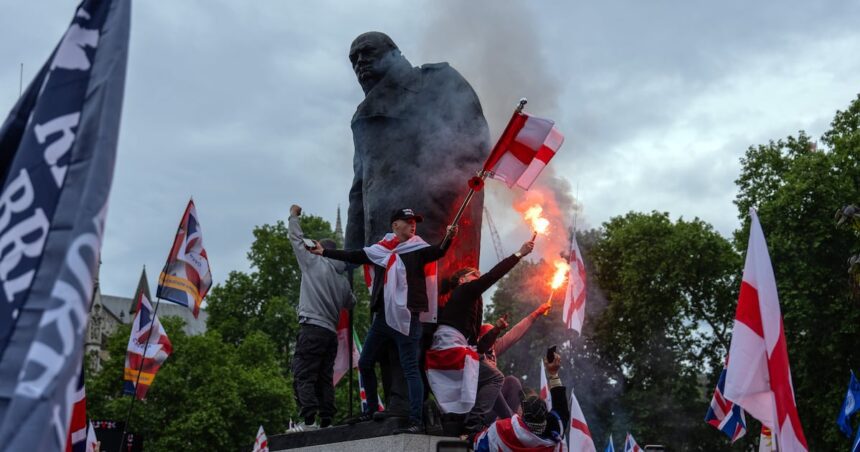
This increase in anti-Muslim incidents coincides with a notable rise in far-right extremism, including plots targeting mosques across the UK. Recently, a 14-year-old boy was charged for planning an attack on two mosques in London. Additionally, 12 individuals were arrested for threats to an Islamic festival, indicating an escalating environment of fear and hostility towards Muslim communities. Most anti-Muslim incidents are concentrated in the Westminster area, known for its bustling workforce, suggesting that public spaces are becoming increasingly hostile.
The helpline also drew attention to the role of social media in perpetuating online abuse, calling for stronger actions from both social media platforms and public institutions. These developments reveal a concerning trend wherein far-right ideology gains traction, fueled by online radicalization and public disenfranchisement of Muslim communities.
Children and Radicalization
Compounding these issues is the disturbing rise in online radicalization among children, as revealed by a report from the Children’s Commissioner for England. The report found that 71% of children referred to the UK’s Prevent anti-terrorism program became fixated on violence without adhering to a clear extremist ideology. This statistic signifies a broader societal issue where young people are increasingly exposed to harmful content that glorifies violence, making them vulnerable to radicalization.
Referrals to the Prevent program involving children have increased from 2,918 in 2016-17 to 4,715 in 2024-25. However, a significant percentage of referrals—79%—do not advance through the program, raising concerns about the efficacy of current prevention measures. Rachel de Souza, the Children’s Commissioner, expressed concerns that the existing process may overlook interventions needed to combat growing extremism among children.
Why It Matters
The rapid rise in anti-Muslim incidents signals an urgent need for comprehensive approaches that go beyond surface-level governmental responses. This scenario has implications not just for affected communities but also for societal cohesion and public safety. Addressing hate crimes effectively requires a multifaceted strategy to dismantle the systemic issues underlying discrimination and far-right extremism. The rise of online radicalization among children further complicates this landscape, necessitating proactive measures to protect vulnerable groups from harmful ideologies. For AI developers and users, algorithms and content moderation strategies must evolve to detect and combat hate speech and radicalizing content, fostering safer online environments.
Frequently Asked Questions
What is the current trend of anti-Muslim hate incidents in London?
Anti-Muslim hate incidents in London have increased six-fold over the past five years, with 1,909 reported cases in the last year, and figures for 2026 are expected to rise even further.
How are far-right extremist groups impacting Muslim communities in the UK?
Far-right extremist groups have been linked to plots and attacks on mosques, contributing to an environment of fear and increasing hostility towards Muslims.
What role does online radicalization play in these issues?
Online radicalization is a significant concern, with reports showing that a large percentage of children referred to anti-terrorism programs are becoming fixated on violence, often without a clear extremist ideology.
What actions are being called for to address these crises?
Community leaders and organizations like Tell Mama are urging stronger responses from law enforcement and government, as well as greater accountability from social media platforms to combat online hate and radicalization.