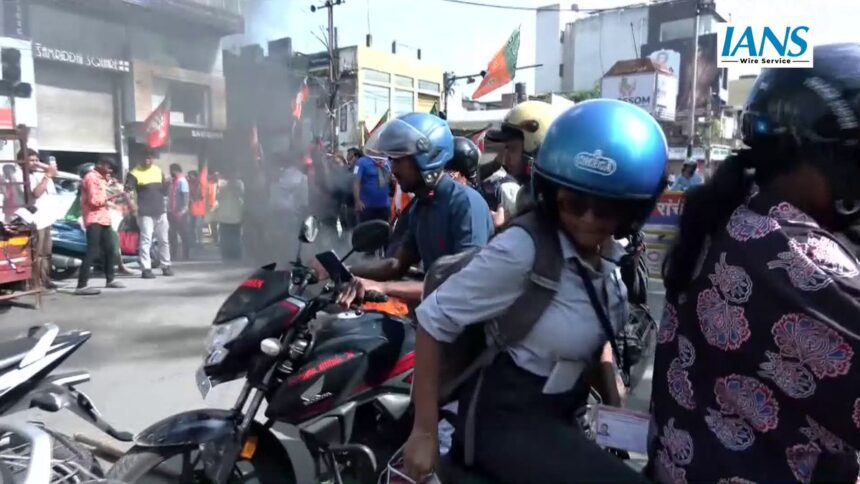

In a recent demonstration, BJP leaders have urged not to politicize student protests, coinciding with a state-wide bandh called by the party in Jharkhand. This bandh is in response to alleged police brutality against students during their protests for the JPSC-JSSC examinations in Ranchi.
Context of the Protest
The current unrest stems from student protests in Ranchi concerning the JPSC (Jharkhand Public Service Commission) and JSSC (Jharkhand Staff Selection Commission) examinations. The students are demanding transparency and reforms in the recruitment process, which they believe has been marred by inefficiencies and corruption. This protest has gained significant traction, attracting the attention of political leaders and media alike, indicating the growing frustration among the youth concerning employment opportunities in the state.
BJP’s Response and Accusations
In an effort to show solidarity with the students, the BJP announced a statewide bandh, condemning what they describe as excessive police action during the protests. This has been portrayed as a political maneuver to align with the student community while distancing themselves from accusations of ineffectiveness regarding job opportunities in Jharkhand. The party’s call for a bandh reflects their strategy to leverage the unrest for political gain, as they seek to present themselves as defenders of student rights against state repression.
Media and Public Reaction
Media coverage of the protests highlighted the contrasting narratives surrounding the events. While some commentators criticized the BJP for attempting to politicize an apolitical student movement, others expressed concerns regarding the impact of police action on young demonstrators. Social media platforms became a battleground for opinions, with various users pointing fingers at both the police and the BJP for escalating tensions instead of addressing the core issues of student grievances.
Why This Matters
This situation has broader implications for Indian politics, particularly in regions where youth unemployment is high. The ability of political parties to connect with student movements could significantly influence electoral outcomes, especially in a state like Jharkhand, where the youth demographic is substantial. Understanding how parties navigate these protests can provide insights into future political strategies and voter sentiments in upcoming elections. Moreover, this scenario adds to the discourse on civil rights and the role of police in maintaining public order during protests, a topic of increasing relevance in India’s political landscape.
Frequently Asked Questions
What sparked the protests in Jharkhand?
The protests were initiated by students demanding reforms and transparency in the JPSC and JSSC recruitment processes, which they claim have been plagued by inefficiencies.
What is the BJP’s stance on the protests?
The BJP has called for a statewide bandh in response to the alleged police action against students, positioning themselves as defenders of student rights.
How have the media and public reacted to the protests?
Media coverage has been divided, with some criticizing the BJP for politicizing the protests while others express concern over police actions against the demonstrators.
Why is this situation politically significant?
It encapsulates the ongoing struggle over youth unemployment and mobilization in India, reflecting how parties can leverage social movements for electoral advantage, particularly in states like Jharkhand.