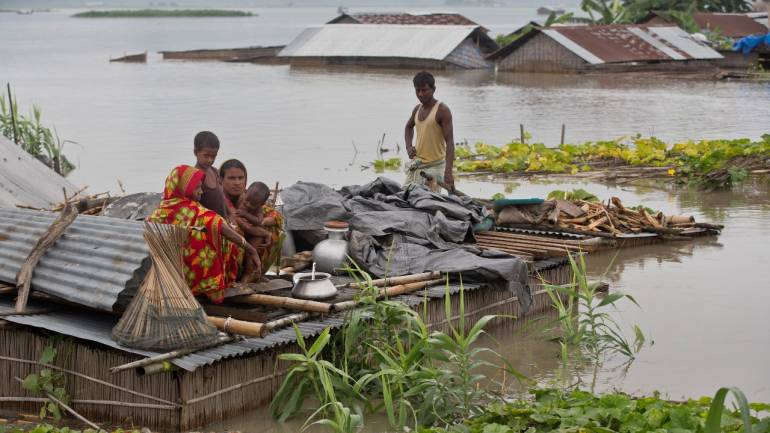

Flood Crisis in Assam: A Growing Emergency
The flood situation in Assam has escalated into a humanitarian crisis, with the reported death toll rising to 97 as authorities continue to address the aftermath of the devastating floods. More than 1.68 lakh people across 15 districts are now affected, an increase from the previous figures observed earlier in the week.
Extent of the Displacement and Damage
Golaghat remains the worst-hit district, with approximately 54,000 residents impacted, followed closely by Sivasagar (49,000) and Jorhat (27,000). The ongoing flooding has extended its reach to various other districts, including Udalguri, Nagaon, Kamrup Metropolitan, and others, encompassing a total of 14 districts amidst this calamity.
About 133 relief camps have been established across six districts, providing shelter and essential assistance to around 45,000 individuals displaced from their homes. The agricultural impact has also been significant, with a staggering 14,382.26 hectares of crop area reported as submerged, leading to severe losses for local farmers. Furthermore, infrastructure such as embankments, roads, and bridges has suffered extensive damage, complicating rescue and relief efforts.
Restoration of Railway Services Amidst Chaos
In a semblance of normalcy amidst the rampant chaos, railway connectivity through the worst-affected Sivasagar district has been restored after nearly two weeks of disruption due to damage sustained on the tracks. As of 4 PM on Thursday, the Northeast Frontier Railway announced that train services between Guwahati and Dibrugarh would gradually resume via Sivasagar, facilitating limited travel options for affected residents.
Chief Minister Himanta Biswa Sarma expressed appreciation for the restoration efforts and thanked Railway Minister Ashwini Vaishnaw and officials from the Northeast Frontier Railway. As part of precautionary measures, train services will initially run using diesel locomotives to minimize risks of electrocution, especially as many locals, including children and livestock, sought shelter near the tracks.
Why It Matters
The flood situation in Assam reflects not only the state’s vulnerability to natural disasters but also highlights the ongoing challenges faced by marginalized communities in the region, including socio-economic disparities. The response from local authorities and the efficacy of the relief measures implemented can significantly impact social cohesion and resilience in the long term. Infrastructure damage can hinder economic recovery, especially in agricultural communities, and elevated mortality rates can drive social exclusion. Furthermore, how the state manages the crisis may set precedents for disaster management in future situations and may reflect broader governance issues under the current political framework.
Frequently Asked Questions
What are the immediate needs of the people affected by the floods in Assam?
The immediate needs include shelter, food, clean drinking water, and medical assistance for the displaced individuals and communities affected by the floods.
How can one contribute to relief efforts in Assam?
Individuals can contribute to relief efforts by donating to recognized humanitarian organizations actively working on the ground, participating in local fundraising drives, or offering supplies like clothing and food to relief camps.
What measures are being taken by the government to assist flood victims?
The government has established relief camps, distributed food and medical assistance, and made arrangements for restoring essential services, such as rail connectivity to facilitate movement and aid delivery.
What are the long-term implications of this flood crisis on the local population?
Long-term implications may include ongoing economic hardships due to agricultural losses, potential displacement from homes, and challenges in rebuilding infrastructure, affecting overall community stability and resilience.