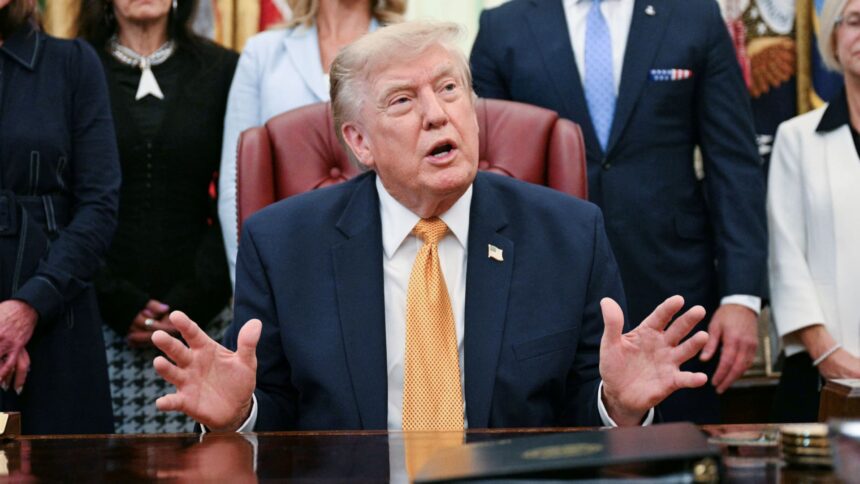

President Donald Trump criticized oil giants ExxonMobil and Chevron for their substantial profits during the ongoing conflict arising from the U.S.-Iran tensions. Amid skyrocketing crude oil prices and soaring gasoline costs in the U.S., Trump urged companies to lessen the financial burden on consumers by lowering retail prices.
The Surge in Oil Prices
Since February 28, when the U.S. and Israel launched attacks on Iran, crude oil prices have surged by approximately 20%. The conflict has led to Tehran attempting to disrupt oil exports via the crucial Strait of Hormuz, creating the largest supply disruption witnessed in recent history. These tumultuous developments have driven U.S. oil futures to an average closing price around $92 per barrel from April to June, representing a 27% increase from the previous quarter.
Record Profits Amidst Crisis
ExxonMobil and Chevron reported significant financial gains from their oil ventures, with Chevron’s earnings skyrocketing nearly 400% to $12 billion compared to $2.5 billion in the same quarter last year. Similarly, Exxon’s profits more than doubled to $14.5 billion, up from $7.1 billion in the same period last year. Trump’s remarks highlighted his concern regarding what he viewed as excessive profits made by these companies during a time of global instability.
“Chevron, too much money. ExxonMobil, too much money,” Trump stated. He urged both companies to return some profits back to the public and reduce consumer prices, hinting at the growing frustration among the American populace regarding rising gasoline prices.
Impact on Gasoline Prices
Gasoline prices in the United States have surged as well, averaging about $4.10 per gallon on Monday, a staggering 40% increase from $2.98 per gallon before the conflict began on February 27. With increased operational costs driven by the fluctuating crude oil market, consumers are feeling the pinch at the pump, further prompting discussions about the roles of major oil corporations during such crises.
Following Trump’s comments, shares of both Chevron and Exxon experienced a dip of nearly 2%, while the oil market weakened by roughly 5% due to speculations that U.S.-Iran discussions might ease escalating tensions.
Why This Is Trending
The ongoing conflict between the U.S. and Iran and its direct impact on global oil prices have captured significant attention in India. Rising crude prices affect not only international markets but also India’s import costs, which could lead to an increase in domestic prices for fuel and other commodities. As a major oil importer, India is particularly sensitive to global oil dynamics, making this topic highly relevant. Furthermore, the discussion around corporate ethics in times of crisis resonates in a country that watches global events keenly, as similar discussions echo in India where rising fuel prices affect daily living expenses.
Frequently Asked Questions
What caused the increase in oil prices?
The increase in oil prices is largely attributed to the ongoing tensions between the U.S. and Iran, which have disrupted oil exports and triggered fears of supply shortages in the market.
How did Exxon and Chevron perform financially?
Chevron’s profits soared nearly 400% to $12 billion, while Exxon’s profits more than doubled to $14.5 billion compared to the same quarter last year, leading to concerns about their excessive profit levels amidst a crisis.
What is President Trump’s stance on the profits of these oil companies?
Trump has criticized Exxon and Chevron for making “too much money” during a crisis and urged them to reduce retail prices to alleviate the financial burden on consumers.
How are consumers affected by rising gasoline prices?
The average national price of gasoline has increased nearly 40% since the onset of the conflict, impacting daily commuting costs and overall inflation in consumer markets.