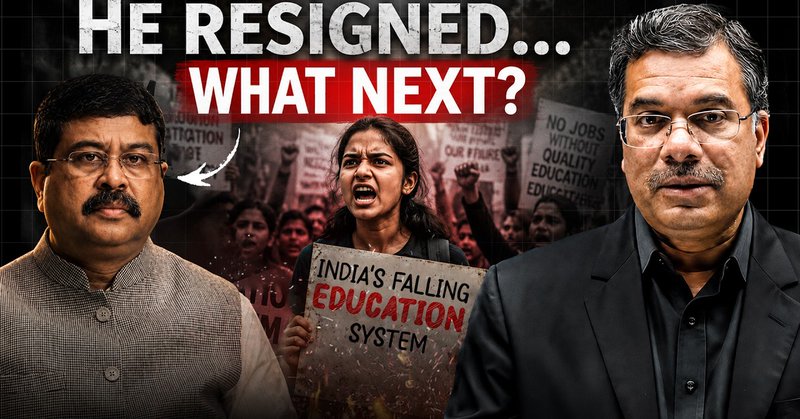

The education system in India is facing a significant crisis, as highlighted by data showing a stark contrast in public and private education spending. While families are investing a significant portion of their income in education, government expenditure remains significantly low, raising concerns about the future of public education and human capital development.
Current Spending Trends in Education
Education expenditure in India is alarming. Parents currently allocate between 15% to 40% of their family income on education. In stark contrast, the government invests merely 3% of its budget on this critical sector, reflecting a troubling disparity. The difference in spending indicates a shrinking commitment to public education, particularly as wealthier families can afford private institutions. This creates a system where those in public education are left behind, as policymakers, often engrossed in their privileged situations, tend to overlook the urgency of enhancing public schooling.
Historical Context and Recent Developments
The educational landscape has changed dramatically over the past decade. Notably, Dr. Manmohan Singh allocated 6.98% of the budget to education during his tenure, whereas the current government under Prime Minister Narendra Modi has reduced this to 5.39%. Furthermore, data reveals a significant increase in private colleges—by 49%—while government institutions grew only by 1%. This shift indicates a growing reliance on private education, a trend that is potentially detrimental, especially as approximately 90,000 schools have closed down while the population has increased by 12 crore, leading to overcrowded classrooms and inadequate resources.
A Looming Educational Crisis
The closure of educational institutions and the skyrocketing fees demonstrate a policy failure that could lead to long-term consequences. College fees have doubled, making higher education increasingly inaccessible. Additionally, programs like KVPY have been closed, and INSPIRE now operates without proper funding, further exacerbating the situation. These developments point towards a systemic neglect that could lead to a crisis in human capital—a necessary component for India to harness its demographic dividend. Without proper investment and reforms, the country’s future workforce may be ill-equipped to meet the global challenges ahead.
Why This Matters
Understanding the implications of the current educational crisis is essential for Indian readers as it highlights the stark reality that the government’s underinvestment in education threatens the nation’s socio-economic development. A well-educated population is crucial for progress; if parents are forced to invest heavily in private education while governmental support dwindles, the gap between the rich and poor may widen. This can lead to increased social tensions and a poorly skilled workforce, jeopardizing India’s ambitions as a global power. As the education system becomes increasingly privatized, the perception and value of public education might deteriorate, which is a significant concern for all stakeholders in India.
Frequently Asked Questions
What is the current percentage of the budget allocated to education in India?
The current government allocates about 5.39% of the budget to education, down from 6.98% under Dr. Manmohan Singh’s administration.
How has the number of government colleges changed over the last decade?
Over the last decade, the number of government colleges has only increased by 1%, in stark contrast to the 49% growth of private colleges.
What has been the impact of school closures in India?
The closure of around 90,000 schools amidst a population rise of 12 crore has resulted in overcrowded classrooms and inadequate educational resources, jeopardizing the quality of education.
Why are college fees increasing so dramatically?
College fees in India have doubled, which is attributed to factors such as lack of government investment, rising operational costs, and the increasing privatization of education.