
Ongoing Crackdown on Literature in Kashmir
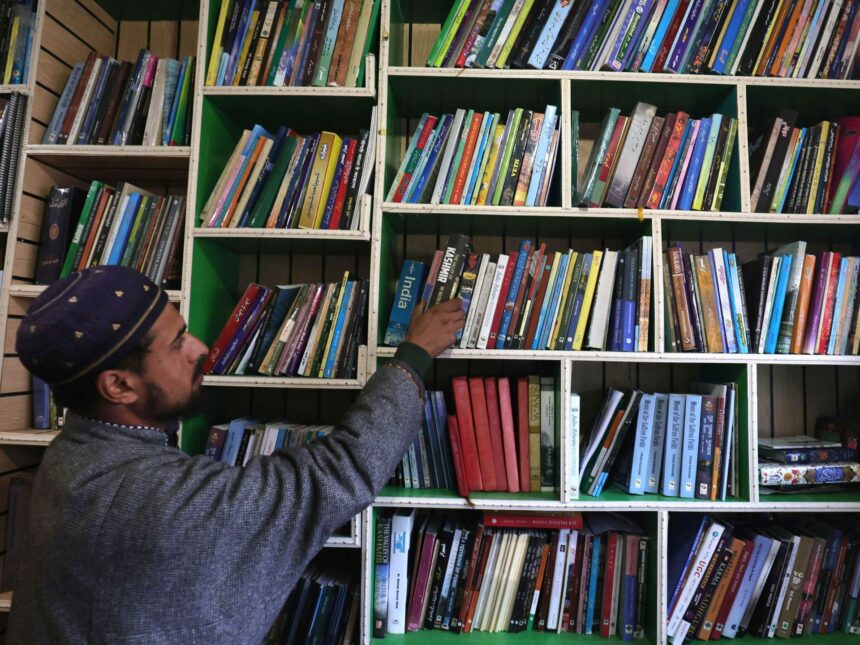
Authorities in India-administered Kashmir are enforcing a rigorous review of books in educational institutions and public libraries, targeting works that allegedly promote separatist ideologies or contain “objectionable” content. This effort reflects an intensified government approach to censor literature that could challenge the state’s narrative, further marginalizing voices associated with the region’s pro-freedom movement.
Details of the Government’s Directive
On July 9, the government ordered all educational institutions in the region to scrutinize and eliminate books, journals, dissertations, and digital resources deemed to possess misleading or inflammatory material. This includes any works that glorify or legitimize terrorism, violent extremism, or secessionism, thereby questioning the sovereignty and integrity of India. The crackdown has recently expanded from initial investigations solely on school libraries to include higher education institutions, affecting a broader spectrum of academic literature.
Political Motivations and Specific Incidents
The latest crackdown was sparked by a demand from Sunil Sharma of the right-wing Bharatiya Janata Party (BJP), who sought a ban on the book “Personalities and Legends of J&K.” This book includes discussions of key figures in Kashmir’s history, including separatists like Maqbool Bhat, whom the book labels a “martyr.” Sharma condemned the book as a vehicle for “academic jihad,” arguing that such works incite unrest among the youth. In response, police swiftly arrested three people connected to the book’s publication, accusing them of threatening national sovereignty.
In a region already reeling from political turmoil, this latest initiative has ignited fears among residents who now feel that expressions of Kashmir’s complex history can lead to reprisals. As a result, many are reevaluating their personal libraries for fear of possessing “anti-national” literature.
Wider Implications for Kashmiri Society
The filtering of literature is more than just a censorship issue; it reflects a broader strategy of control over educational and cultural narratives. Scholars and professionals are expressing concern that the government’s approach is effectively “memoricide,” a term suggesting an attempt to erase historical truths and lived experiences of the Kashmiri people. This strategy not only limits access to diverse perspectives but also hampers critical discussions about Kashmir’s tumultuous past and present. Academics argue that this leads to a generation of youth devoid of understanding their own cultural and historical context, making them more susceptible to indoctrination.
Why It Matters
The implications of this crackdown extend beyond literature into broader societal concerns regarding freedom of expression, academic integrity, and cultural identity. The control of information and the suppression of dissenting voices pose significant risks to democratic principles. For the AI industry, this situation exemplifies the challenges of managing narratives and access to information in politically charged environments. Developers must consider the ethical ramifications of content moderation, especially in regions where government policies may clash with fundamental rights to freedom of thought and expression.
Frequently Asked Questions
What actions has the Indian government taken regarding books in Kashmir?
The government has initiated a mass review and filtering of books in educational institutions and libraries, aimed at removing materials that contain content deemed “objectionable” or supportive of separatism.
Who initiated the recent crackdown on literature in Kashmir?
The crackdown was spurred by a demand from Sunil Sharma, a politician from the Bharatiya Janata Party, who specifically called for a ban on the book “Personalities and Legends of J&K.”
What are the consequences of the government’s actions on local scholars and authors?
Local scholars and authors face increasing risks regarding their work, causing anxiety over the potential criminalization of their literature. Many are preemptively removing books from their collections to avoid government scrutiny.
How has the local population responded to the filtering of literature?
Residents are experiencing anxiety and confusion, with many unsure about what constitutes “anti-national” literature. This has resulted in a chilling effect on academic discourse and literature in the region.