
Summary: In a recent escalation of violence in Indian-administered Kashmir, security forces conducted mass detentions and home demolitions following the assassination of a police officer, highlighting a contentious approach to counter-terrorism. Critics argue these actions serve as collective punishment, disproportionately impacting innocent families and communities.
The Incident and Immediate Crackdown
Head Constable Ashiq Hussain Qureshi, 45, was shot dead in Anantnag town while on duty, marking the first targeted killing of a police officer in the region this year. The attack was claimed by The Resistance Front, an armed group, which prompted a swift reaction from Indian security forces. Within hours, authorities detained approximately 1,200 individuals across six districts, with around 700 apprehensions in Srinagar alone. Some detentions involved civilians labeled as “overground workers” — a term used for those allegedly providing support to militants. This crackdown, characterized by its unprecedented scale, raises questions regarding its legality and efficacy.
Destruction of Homes: Collective Punishment?
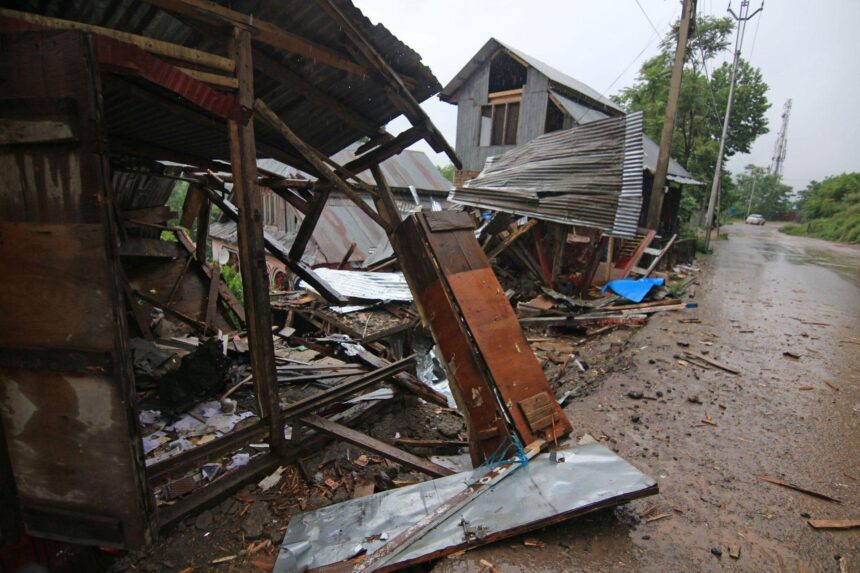
In addition to mass arrests, the government also demolished the homes of two men identified as alleged militants, who remain unconvicted. This act fits into a long-standing policy where the families of suspected militants face repercussions for their relatives’ actions. Such demolitions are not isolated events; they follow a pattern of punitive measures taken against civilians, often described as collective punishment. Critics across the political spectrum have condemned this practice, arguing that it punishes innocent family members and communities, thereby fostering resentment rather than deterring militancy. Former Chief Minister Mehbooba Mufti emphasized the importance of distinguishing between militants and civilians to prevent alienation and further unrest.
Legal and Ethical Implications
The demolitions of homes without due process raise significant legal concerns, as international humanitarian law prohibits punitive destruction of property not directly tied to the accused. The Indian Constitution also guarantees due process and the right to shelter, raising questions about the legality of these actions. Critics argue that not only does this violate basic legal principles, but it fails to address the root causes of militancy. The ongoing cycle of violence and retaliation undermines security objectives, as evidenced by the persistence of militant groups despite harsh crackdowns. Such tactics may alienate communities, contributing to a cycle that is self-perpetuating.
Why It Matters
The situation in Kashmir is emblematic of broader issues of social justice and human rights in India, particularly concerning marginalized communities, including Muslims. The ongoing discourse illustrates the challenges faced by minority populations under governmental policies that may infringe on their rights and security. For developers and users in the AI field, understanding the complexities and implications of these social dynamics is crucial, especially when considering the role of technology in surveillance and law enforcement. Awareness of such human rights issues can guide responsible innovation and inform the ethical deployment of AI technologies in sensitive contexts.
Frequently Asked Questions
What sparked the recent crackdown in Kashmir?
The crackdown was initiated after the targeted killing of Head Constable Ashiq Hussain Qureshi in Anantnag, leading authorities to detain over 1,200 individuals.
What are the legal implications of home demolitions in Kashmir?
Home demolitions conducted against family members of alleged militants raise significant legal issues, as they violate international humanitarian law and protections under the Indian Constitution regarding due process and property rights.
How does this situation relate to broader human rights issues in India?
This situation exemplifies the broader context of discrimination and systemic marginalization faced by Muslim communities in India, particularly in areas highly impacted by militant activity and counter-terrorism measures.
What are the potential consequences of collective punishment policies?
Collective punishment can lead to increased resentment among communities, potentially fueling future militancy rather than deterring it, creating a cycle of violence that is hard to break.