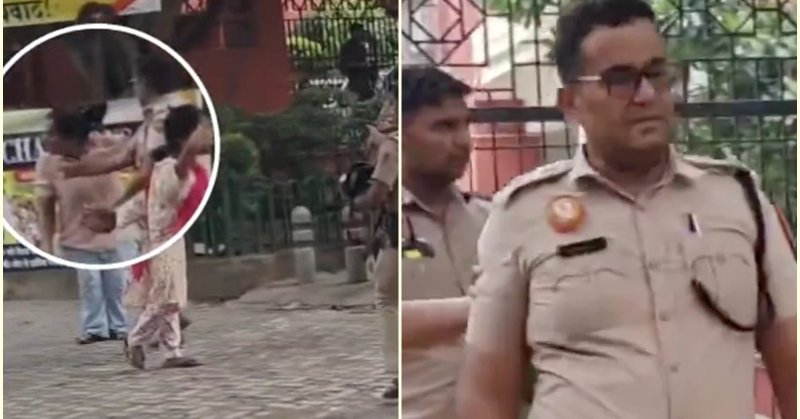

Recently, a Delhi police officer, Additional Deputy Commissioner of Police (ADCP) Sandeep Lamba, was removed from his post at Jantar Mantar after a video surfaced showing him slapping a female protester. This incident occurred during a significant protest leading to widespread criticism and subsequent action against him.
Incident Overview
The event took place during a protest organized by the Citizens for Justice and Peace (CJP) in New Delhi. As tensions escalated between protesters and law enforcement, video footage emerged showing ADCP Lamba physically assaulting a female protester. The video quickly gained traction on social media, sparking outrage among the public and leading to calls for accountability from the police force. The video highlights not only the aggressive tactics employed by police during protests but also raises concerns about the treatment of female protesters in India.
Response and Repercussions
Following the viral nature of the incident, a swift decision was made by the Delhi police to remove ADCP Lamba from his assigned duties. However, reports clarify that he was not suspended but was instead reassigned, which has become a point of contention among critics who seek more severe consequences for his actions. The police’s handling of this incident has drawn criticism about leniency and the lack of strict disciplinary measures in cases of misconduct. This situation also reignites discussions about the treatment of marginalized voices during protests and the responsibilities of law enforcement in ensuring safety rather than jeopardizing it.
Broader Context of Police-Protester Relations
The incident at Jantar Mantar is emblematic of the larger issues surrounding state violence and the right to protest in India. Protests have increasingly become flashpoints for clashes between law enforcement and civil society, raising questions about democratic rights and police accountability. The aggressive policing approach observed during protests has prompted demands for reforms in how law enforcement interacts with demonstrators, particularly women. In this climate, the actions of officers like Lamba not only reflect individual misconduct but also potentially symbolize systemic issues within the police force regarding sensitivity toward public dissent and individual rights.
Why This Matters
The incident underscores a critical moment for democratic practices in India, especially considering the increasing frequency of public protests on various socio-political issues. As society grapples with balancing law and order against the fundamental right to protest, incidents like these provoke a wider debate about police conduct. This also reinvigorates conversations around gendered violence during protests, highlighting the need for training and accountability mechanisms within law enforcement to protect rather than assault vulnerable populations.
Frequently Asked Questions
What led to the removal of ADCP Sandeep Lamba?
ADCP Sandeep Lamba was removed after a video went viral showing him slapping a female protester during a gathering at Jantar Mantar, prompting significant public backlash and criticism of police conduct.
Was ADCP Lamba suspended from his position?
No, he was not suspended; he was removed from his post, which has raised questions about the adequacy of disciplinary actions in cases of police misconduct.
What are the implications of this incident for police-protester relations in India?
This situation highlights ongoing tensions between police and protesters in India, emphasizing the need for better accountability and approach in managing public dissent, particularly towards marginalized groups.
How are similar incidents being addressed in India?
There is ongoing discourse around police reforms regarding their engagement with protesters, especially women. Activists and policymakers are pushing for new guidelines and training programs to ensure respectful and lawful interactions.