
Summary
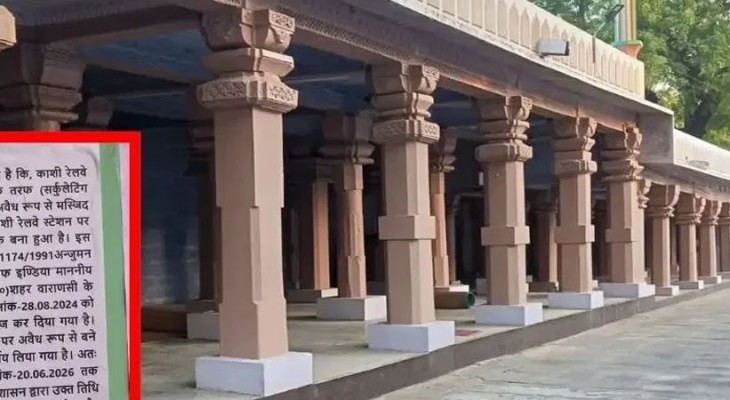
In a controversial move criticized by many as anti-Muslim, the BJP-led government in Uttar Pradesh has issued a demolition notice for the historic Ganj Shaheedan Masjid, a structure that dates back over a thousand years. The mosque’s management has challenged the legality of the notice, claiming it lacks essential documentation and rests on misleading assertions related to railway land use.
The Demolition Notice
The notice to demolish Ganj Shaheedan Masjid has been attributed to the Kashi Railway Station Redevelopment Project by the Railway authorities. They contend that the mosque was unlawfully constructed on railway land, a claim that has ignited protests from the local Muslim community. Residents are apprehensive that this action represents a broader trend of marginalization against Muslim institutions in the region.
Rebuttals from the Mosque Management
The Anjuman Intezamia Masajid Committee (AIMC), responsible for managing the mosque, has formally rejected the demolition notice, labeling it invalid due to lack of date, signature, or mention of an official logo. Committee Secretary Mohammad Yasin emphasized that the legal case cited by the Railways actually deals with a different tract of land and not specifically with the mosque itself. Furthermore, AIMC highlights the mosque’s historical registration with the Waqf Board and its presence on revenue maps dating back to the late 19th century.
Community Reactions and Wider Implications
The issuance of the demolition notice has evoked significant anxiety among local residents, who fear that the mosque, along with other Muslim properties such as mazars and madrasas, could be targeted in forthcoming anti-encroachment drives. This fear has been exacerbated by recent trends in Uttar Pradesh under BJP governance, where minority communities often report feeling marginalized and at risk of economic and social exclusion due to government policies. The potential dismantling of such historically significant structures raises questions about the preservation of cultural heritage amidst political maneuvering.
Why It Matters
The current situation surrounding Ganj Shaheedan Masjid highlights the challenges faced by Muslim communities in India, especially in light of systemic discrimination. The actions taken by the BJP government reflect a broader trend that could jeopardize the social fabric of pluralistic societies. For developers and policymakers, understanding these dynamics is crucial in fostering inclusive urban development strategies that respect historical and cultural significance while catering to all community members. Ignoring such issues may lead to further socio-political unrest and erode trust within diverse populations.
Frequently Asked Questions
What is Ganj Shaheedan Masjid?
Ganj Shaheedan Masjid is a historic mosque in Varanasi, Uttar Pradesh, believed to have been established around 1034 AD, making it over a thousand years old.
Why has the demolition notice been issued?
The demolition notice cites the Kashi Railway Station Redevelopment Project and claims the mosque was illegally built on railway land. This assertion has been disputed by the mosque’s management.
What is the Anjuman Intezamia Masajid Committee’s stance?
The AIMC rejects the legitimacy of the demolition notice, claiming it lacks proper documentation and that the cited legal case pertains to different land, not the mosque itself.
What implications could this have for other Muslim properties in Uttar Pradesh?
The notice has stoked fears among residents that similar actions may be taken against other Muslim properties, including mosques and educational institutions, during ongoing anti-encroachment drives.