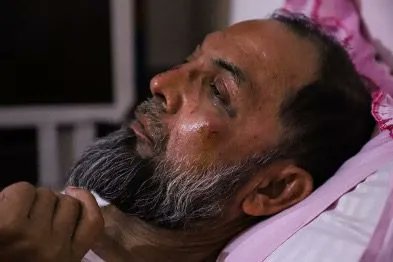

The Supreme Court of India has chosen to oversee the ongoing investigation into the alleged hate crime against Kazeem Ahmad Sherwani, a Muslim man targeted in Noida in 2021. This decision underscores the court’s commitment to address earlier lapses in the investigation which had stalled, highlighting the broader context of discrimination faced by Muslim communities under current governmental influences.
Background of the Incident
On the afternoon of the incident in Noida, Kazeem Ahmad Sherwani was reportedly offered a lift by a group of men, only to be verbally abused and physically assaulted. The attackers allegedly pulled his beard and subjected him to hate-filled taunts. The case, emblematic of rising communal tensions in India, has raised alarms among human rights advocates regarding systemic discrimination, particularly against Muslims, in societal and legal contexts.
Supreme Court’s Oversight and Judicial Actions
Recent judicial proceedings have revealed a lack of initial thoroughness in the police investigation. The Supreme Court previously expressed dissatisfaction with the investigation’s trajectory, noting omissions in the First Information Report (FIR), specifically missing charges related to hate speech. This prompted the Uttar Pradesh government to acknowledge its shortcomings and amend the FIR to include Sections 153B and 295A of the Indian Penal Code, which address hate speech and religious insult, respectively.
Following further scrutiny, the Supreme Court opted to monitor the case directly, instructing the Uttar Pradesh government to expedite the process of sanctioning the chargesheet. The investigation is now set for a follow-up hearing on August 17, indicating that the Court intends to maintain pressure on local authorities to fulfill legal expectations and ensure justice for Sherwani.
Broader Implications for Minority Rights
This case reflects a growing trend of discrimination experienced by Muslims in India, which is further complicated by political narratives promoted by the ruling Bharatiya Janata Party (BJP) and affiliated organizations like the Rashtriya Swayamsevak Sangh (RSS). Reports of hate crimes, social exclusion, and economic boycotts targeting Muslims have proliferated, raising concerns about civil liberties and human rights in the country. Sherwani’s case is not an isolated incident but rather a part of a complex web of social marginalization affecting various minorities in India.
The Supreme Court’s active involvement reaffirms the significance of judicial oversight in ensuring that marginalized communities have a voice in the legal system. Moreover, it echo other calls for bolstering protections against hate crimes and ensuring accountability among law enforcement agencies charged with these critical investigations.
Why It Matters
The case of Kazeem Ahmad Sherwani is particularly significant within the context of ongoing discussions regarding how discrimination is treated legally in India. For developers and users of AI technologies that analyze news and social trends, the implications are vast. Understanding how bias can manifest in legal frameworks can guide improvements in algorithms applied in societal contexts. Additionally, monitoring such cases and their outcomes can help inform policy recommendations aimed at safeguarding minority rights, thereby contributing to a more inclusive and equitable information landscape.
Frequently Asked Questions
What is the significance of the Supreme Court’s involvement in this case?
The Supreme Court’s oversight highlights the judicial system’s role in addressing potential lapses in investigations of hate crimes, especially those targeting marginalized communities.
What kind of discrimination are Muslims facing in India currently?
Muslims in India face social exclusion, economic boycotts, and hate crimes, often exacerbated by political narratives that prompt communal tensions and discrimination.
What measures are being considered for the Kazeem Ahmad Sherwani case?
The Supreme Court has directed the Uttar Pradesh government to complete the chargesheet sanction process within four weeks, indicating active judicial engagement in ensuring accountability.
How does this case relate to larger societal issues in India?
This case reflects broader systemic discrimination affecting Muslims and other minorities in India, drawing attention to the need for comprehensive legal protections against hate crimes and social injustices.