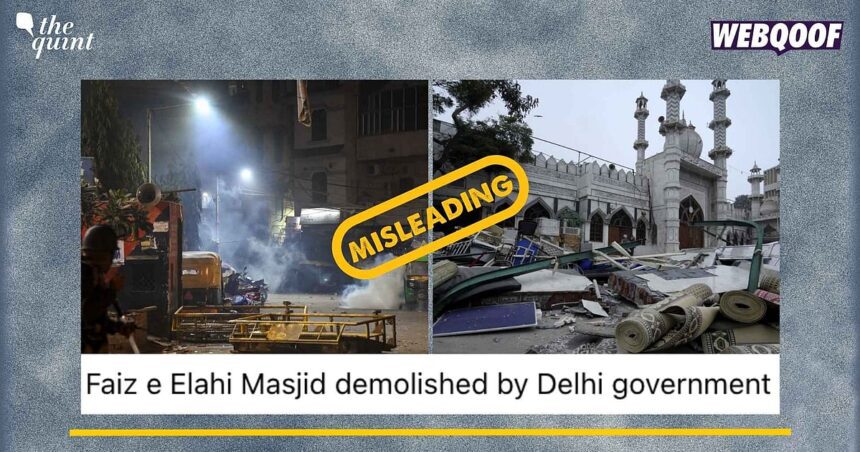

The Municipal Corporation of Delhi’s (MCD) recent demolition drive near the Faiz-e-Elahi Mosque has sparked widespread concern and backlash, particularly among the Muslim community. The demolition of encroachments adjacent to the mosque, executed around 1 AM on January 7, follows a Delhi High Court order deeming a dispensary and community hall there as illegal.
Demolition Drive and Legal Context
The MCD’s actions were sanctioned by a judicial ruling which mandated the removal of alleged illegal structures close to the Faiz-e-Elahi Mosque, a significant place of worship in the Turkman Gate area of Delhi. According to reports, the demolition was part of a larger initiative to clear encroachments in the vicinity of the Ramlila Maidan, where the MCD holds land ownership. The legal context underscores the ongoing tensions surrounding urban land use in Delhi, particularly in areas densely populated by marginalized communities.
Confrontation Between Police and Residents
During the demolition, tensions heightened as local residents confronted police forces. The situation escalated, with reports of stone-pelting incidents resulting in injuries to approximately five police personnel. Such confrontations exemplify the deep-seated frustrations within the local population, who frequently feel marginalized and alienated from governmental actions that affect their lives and communities.
Community Response and Social Media Backlash
Following the demolition, social media became a platform for voicing grievances against the MCD’s actions. Many users expressed outrage over the perceived targeting of the mosque, leading to various posts misunderstanding the nature of the demolition. While the MCD did not demolish the mosque itself, the adjacent structures’ removal, alongside the prevailing legal framework, has prompted discussions about discrimination and the social exclusion of Muslim communities. Such narrative framing calls attention to the broader patterns of governance under the current political climate.
Why It Matters
The incident raises vital concerns regarding the treatment of marginalized groups in urban governance, especially under the auspices of the ruling Bharatiya Janata Party (BJP) and associated organizations. The demolition, facilitated by legal provisions, reflects larger themes of social exclusion wherein governmental actions disproportionately impact vulnerable communities. Understanding such events is crucial for comprehending the socio-political landscape in India and the implications these have for democracy, human rights, and community rights in urban settings.
Frequently Asked Questions
What triggered the demolition near the Faiz-e-Elahi Mosque?
The demolition was initiated due to a Delhi High Court order that deemed a community hall and dispensary next to the mosque as illegal, instructing their removal by the MCD.
Were any confrontations reported during the demolition?
Yes, confrontations between police and local residents occurred, leading to incidents of stone pelting, which injured several police personnel.
What has been the community’s reaction to these actions?
The local community has expressed significant dissatisfaction, particularly via social media, where many users claimed that the mosque itself was targeted, highlighting feelings of marginalization.
How has the MCD responded to the backlash?
The MCD has not publicly addressed the backlash in detail, but it maintains that its actions were in accordance with legal rulings regarding land use and urban encroachment.