
Yoga guru Baba Ramdev’s recent comments advocating for a “Hindu Rashtra” have ignited a significant political and social debate in India, raising concerns about the implications for religious minorities, especially Muslims. His assertion that all religions share the same ancestors and that there is no threat to Muslims in a Hindu nation has prompted criticism from various political and religious leaders.
Ramdev’s Controversial Remarks
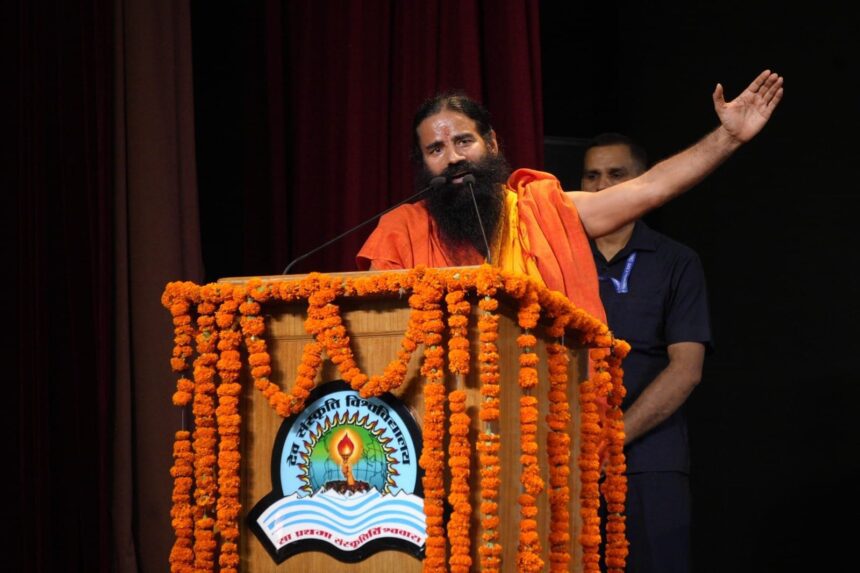
At an event commemorating the 84th Prakatya Mahotsav of Jagadguru Shankaracharya Swami Nischalanand Saraswati at Delhi University, Ramdev emphasized that the concept of a Hindu Rashtra should not instill fear among Muslims. He stated, “Our religions may be different, but our ancestors are the same. The ancestors of all of us were Sanatani Hindus.” His comments suggest that adherence to one’s ancestral traditions should be paramount while dismissing concerns over the Hindu Rashtra as unfounded.
Ramdev addressed criticisms regarding the implications of such a nation for Muslims, stating, “There is no danger for Muslims or Christians in Hindustan.” He further advocated for the Gurukul tradition and stated that the preservation of Sanatan culture should be a collective goal, urging major temples to contribute to this cause.
Reactions from Political and Religious Leaders
Ramdev’s statements have drawn significant backlash, particularly from Congress leader Salman Khurshid. He asserted that India is governed by its Constitution, emphasizing the importance of secularism in a diverse nation. Khurshid poignantly questioned Ramdev’s claims of common ancestry, implying that such statements risk sowing division among communities, saying, “Whatever we believe must remain within the framework of the Constitution.”
Shia cleric Maulana Saif Abbas echoed these sentiments, stating that Muslims only fear Allah and criticized the notion that the Hindu majority is under threat, labeling these views as “baseless.” His remarks highlight the perception among many Muslims that the discourse surrounding a Hindu nation undermines the foundational values of the Indian Constitution.
Concerns of Discrimination and Marginalization
The reactions to Ramdev’s remarks signify broader political and social tensions in India. Several Muslim organizations, including Jamiat Ulema-e-Hind, condemned his statements. Maulana Siraj Khan emphasized that India should be governed by constitutional principles, asserting that no individual or group has the authority to challenge this framework.
NCP (SP) national spokesperson Naseem Siddiqui further criticized Ramdev’s narrative, arguing that such proclamations threaten the very fabric of India’s secular identity and can lead to social exclusion and marginalization of minority communities. As tensions rise, there is increased worry that the rhetoric surrounding Hindu nationalism may translate into practical discrimination and economic boycotts affecting Muslims across the country.
Why It Matters
Ramdev’s comments reflect a growing trend in India where religious identities are increasingly politicized, raising alarms over potential discrimination practices against minority groups, particularly Muslims. In a country with a secular constitution that protects the rights of all citizens, such statements could serve as catalysts for social unrest and division. The ongoing discourse around Hindu nationalism not only affects the political landscape but also shapes societal attitudes towards diversity, potentially leading to economic barriers as communities become polarized.
Frequently Asked Questions
What is a Hindu Rashtra?
A Hindu Rashtra concept refers to the idea of establishing a nation primarily based on Hindu culture and values, which some proponents argue is necessary for preserving Hindu identity in India.
What are the implications of Ramdev’s remarks for Indian Muslims?
Ramdev’s comments raise concerns among Muslims about potential discrimination and marginalization, suggesting that a push for a Hindu Rashtra may undermine their rights and social standing in the country.
How have political parties reacted to these comments?
Political parties, particularly the Congress, have criticized Ramdev’s assertions, emphasizing that India is a secular nation and should abide by its constitutional values that protect all faiths.
What role does the Constitution play in this debate?
The Indian Constitution is designed to guarantee freedom of religion and equality for all citizens, serving as a legal framework to protect minority rights against discrimination based on religious identity.