
Misrepresentation Fuels Communal Tensions in Haryana
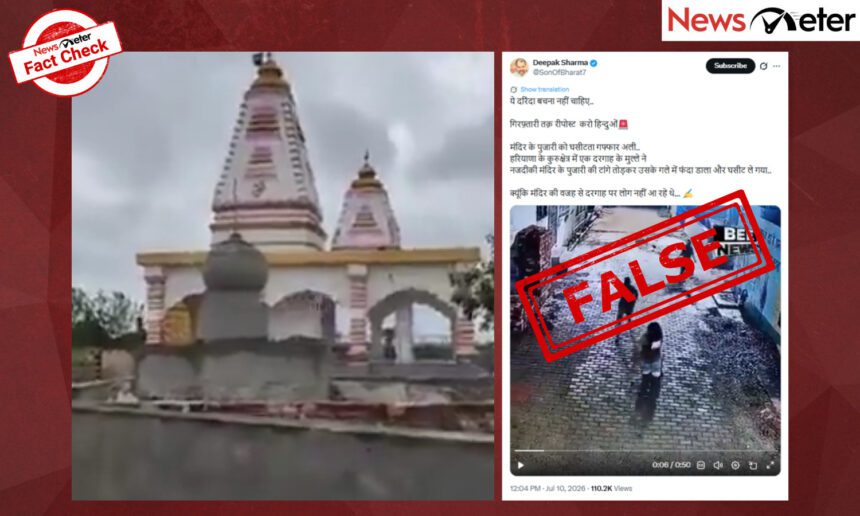
A recent incident in Haryana, India, has highlighted the dangers of misinformation, particularly within the context of communal identities. A video circulated claims that a Muslim man assaulted an elderly Hindu priest, labeling it as an act driven by religious animosity. However, the facts reveal that the accused, identified as Pankaj Saini, is Hindu, and the incident was misrepresented to inflame communal tensions.
Incident Details and Viral Claims
The video in question depicts a violent scene captured on CCTV footage, showing a man dragging another individual on the street. It was originally reported that this occurred in Adhoni village, where an 80-year-old priest named Yogiraj was assaulted early in the morning. Users on social media platforms, particularly on X (formerly Twitter) and Facebook, circulated the video accompanied by narratives accusing a man named Gaffar Ali, purportedly a Muslim, of the attack. These claims falsely framed the incident as an attack on a Hindu priest meant to reinforce communal animosities.
According to reports, the assailant Pankaj Saini attacked the elderly priest with a stick, resulting in a broken leg, and subsequently dragged him while he was incapacitated. Not only was the narrative shifted from individual actions to communal identity, but the underlying social dynamics and potential motivations for the assault were completely overlooked.
Fact-Checking the Misleading Narrative
Fact-checking initiatives, including those by local media outlets, quickly debunked the claim that a Muslim man was involved in this incident. As mentioned in a report by Amar Ujala, the real assailant, Pankaj Saini, harbored a personal grudge against the priest, a detail crucial for understanding the motivations behind the attack.
The portrayal of this incident as a communal clash misleads the public and can exacerbate existing societal divides. The victim, Yogiraj, and the assailant, Saini, belong to the same religious community, yet the virality of the misinformation attempts to manipulate public perception for political gains.
Impact on Social Cohesion and Political Manipulation
This incident is emblematic of a broader trend where isolated acts of violence are morphed into communal narratives that serve political agendas. Such manipulation diminishes the complexities of interpersonal relationships and communal identities in India, often resulting in social exclusion and discrimination against minority communities, particularly Muslims.
The misuse of social media to propagate misleading narratives not only fuels communal tensions but also poses significant risks to community safety. The BJP and its affiliates have been criticized for allegedly fostering an environment where such narratives flourish, complicating the social fabric of the nation and perpetuating cycles of marginalization against minority groups.
Why It Matters
The increasing phenomenon of misinformation in social media platforms can have far-reaching consequences for community relations. For developers and AI industry stakeholders, understanding the impacts of narratives shaped by false claims is crucial. It highlights the need for robust fact-checking algorithms and tools that can filter misinformation before it goes viral, potentially averting escalations in community violence. Additionally, it underscores the importance of digital literacy initiatives aimed at educating users about verifying information before sharing, ultimately promoting a more informed and peaceful society.
Frequently Asked Questions
What was the true nature of the incident involving the priest in Haryana?
The incident involved a Hindu man named Pankaj Saini assaulting an elderly Hindu priest, Yogiraj, without any communal motives, contradicting the viral claims that it was perpetrated by a Muslim man.
How did misinformation spread about the incident?
The misinformation spread primarily through social media platforms like X and Facebook, where users falsely identified the assailant as Gaffar Ali, aiming to incite communal tensions.
What steps were taken by authorities regarding the incident?
The local police arrested Pankaj Saini and his accomplices after the incident was reported, confirming the details around the assault and rejecting the false communal narrative.
Why is it important to fact-check information like this?
Fact-checking is essential to prevent misinformation from shaping public perception, which can lead to increased communal tensions and social unrest in a diverse society like India.