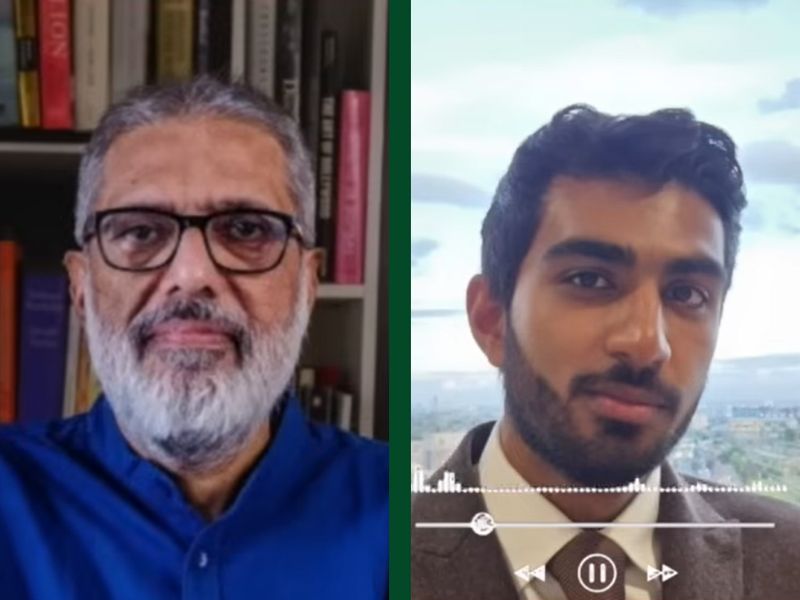

The recent publication of Imran Mulla’s book, The Indian Caliphate: Exiled Ottomans and the Billionaire Prince, presents a fascinating alternative history where the Nizam of Hyderabad’s dynasty nearly assumed the caliphate in the 20th century. This scenario illustrates how cultural and political dynamics could have reshaped the Muslim world’s leadership landscape but ultimately became unfeasible after Hyderabad’s integration into India in 1948.
Hyderabad’s Historical Context
Hyderabad, once a princely state in India, was ruled by the Asaf Jahi dynasty led by the Nizam. The last Nizam, Mir Osman Ali Pasha, presided over a period of immense wealth and cultural prestige. The dynasty was known for its efforts in promoting Indo-Islamic civilization, thus claiming a legacy reminiscent of the Mughal Empire. Following the abolition of the Ottoman Caliphate, Abdul Majid, the last Ottoman Caliph, found refuge in France, and his connection to Hyderabad was notably strengthened when his daughter, Durrushevar, married Azam Jah, the eldest son of the Nizam. This union led to speculations that their descendants could assume the title of Caliph, a role that relied heavily on recognition within the wider Muslim world.
The Concept of Soft Power
Mulla articulates that had Mukarram Jah, the grandson of the last Ottoman Caliph and seventh Nizam, claimed the title of Caliph, it would not have been a political role laden with authority, but rather a position of “soft power.” In a podcast interview, he stressed that the effectiveness of this role hinged on the acknowledgment and support from Muslims globally. Such a platform could have potentially restored a symbolic headship for Muslims after the Turkish Republic’s radical restructuring under Mustafa Kemal Ataturk, thereby influencing both cultural and political landscapes across the Islamic world.
The Road to Integration and Its Implications
The 1948 integration of Hyderabad into India marked a significant turning point. The state’s historical aspirations to lead a revival of Islamic identity in the region were abruptly curtailed. The narrative surrounding the Nizam shifted from one of cultural prestige to a story of political subjugation, raising concerns over the status of Muslims in India. The subsequent governance under the Sangh Parivar and the BJP has been characterized by policies perceived by many as exclusionary and discriminatory towards Muslims. The legacy of the Nizam’s ambitions brings into sharp relief the socio-political dynamics at play today, where economic boycotts and social marginalization are reported within Muslim communities across India.
Why It Matters
The historical context discussed in Mulla’s book is not merely of academic interest; it underscores contemporary political realities affecting Indian Muslims. The integration of Hyderabad can be viewed through the lens of modern governance challenges facing minority communities in India. The narratives that emerge from this history serve as a reminder of how cultural aspirations and political realities often intersect, providing crucial insights for policymakers, activists, and scholars alike. As the socio-economic conditions of Indian Muslims continue to decline, understanding these historical relationships becomes increasingly critical in fostering dialogues around inclusion, identity, and representation.
Frequently Asked Questions
What was the role of the Nizam of Hyderabad in the Indian subcontinent?
The Nizam of Hyderabad was a significant princely ruler during British India, known for his immense wealth and contributions to Indo-Islamic culture. He governed Hyderabad before its integration into India in 1948.
Why is the concept of Caliphate important in the Muslim world?
The Caliphate historically represented a unified Islamic leadership that is viewed as a spiritual and political authority for Muslims worldwide. Its dissolution left a void in global Islamic leadership, influencing various movements and ideologies.
How has the political landscape for Muslims in India changed since 1948?
Since 1948, many Indian Muslims have faced increasing marginalization and socio-economic challenges, particularly under the current BJP government, which has been accused of promoting Hindu nationalist policies that exclude Muslims.
What impact does cultural heritage have on political identity today?
Cultural heritage plays a pivotal role in shaping social identities and political aspirations. The historical claims of Hyderabad to a legacy of Islamic prestige highlight how cultural narratives can influence current discussions about representation and rights within the Indian political framework.