
Compassion in Action: Responding to Violence and Injustice
The recent incidents of violence in India have sparked concern and empathy among various communities. Organizations are stepping up to provide support to victims and their families affected by communal strife, showcasing a collective commitment to healing and restoration of hope.
Tragic Loss: Meena Khatoon and Aayan Saifi
The story of Meena Khatoon highlights the tragic loss faced by families embroiled in communal violence. Her son, Aayan Saifi, was brutally shot dead in Delhi, an incident that emphasizes the escalating tensions and the urgent need for compassion. This loss has resonated far beyond her immediate circle, prompting collective outrage and support for those impacted by such acts of violence.
In response to this tragedy, community efforts have mobilized to provide not only emotional support but also practical assistance to bereaved families. Aayan’s death serves as a grim reminder of the ongoing issues of communal violence that plague certain regions of India, reinforcing calls for unity and understanding.
Assault in Assam: Amir Uddin and Islam Uddin
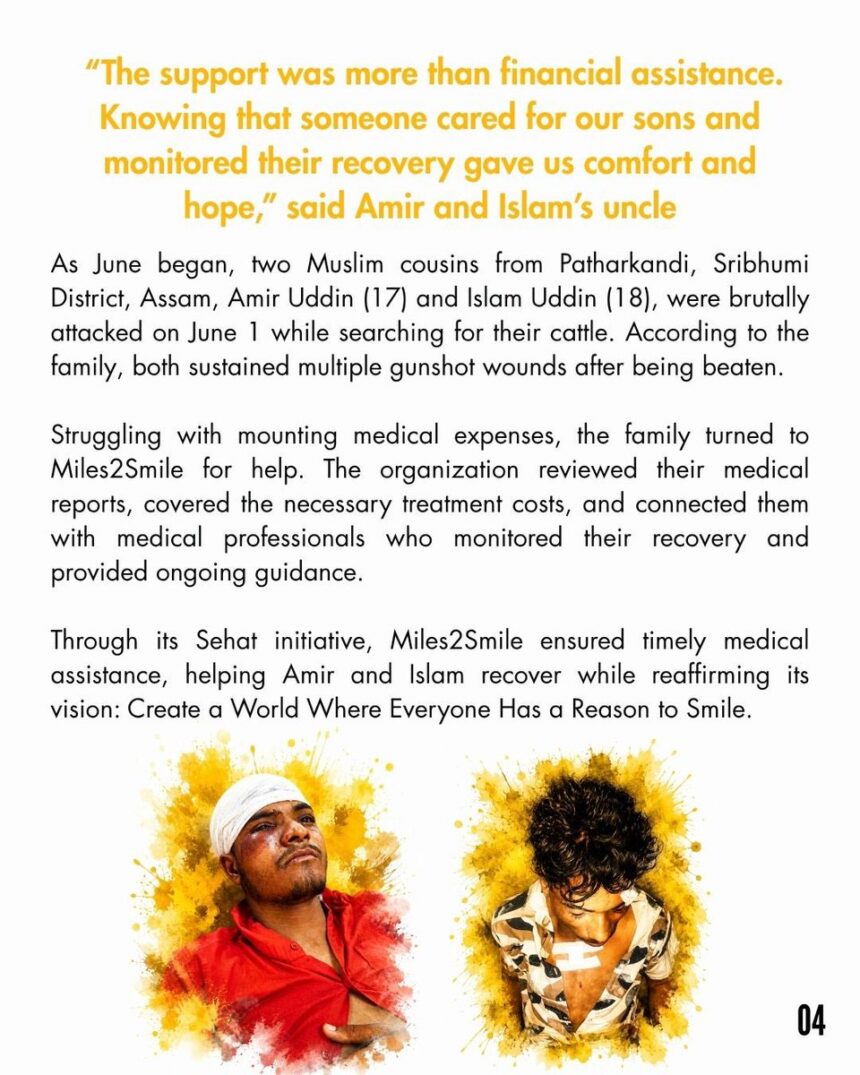
In a separate incident, Amir Uddin and Islam Uddin faced a brutal assault in Assam due to suspicions of cow theft, which reflects the deep-rooted tensions surrounding the cow protection debate in India. This incident not only raises questions about law enforcement and mob justice but also points to the dire consequences faced by individuals targeted for their community identities.
The medical assistance provided to Amir and Islam underscores the community’s role in looking after its members in times of crisis. These events bring attention to the importance of dialogue and legal protections to deter such violence and ensure justice for victims of community-targeted assaults.
Educational Initiatives: Supporting Future Generations
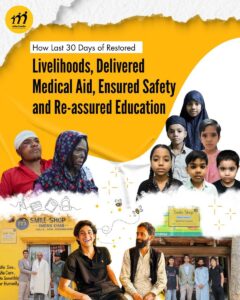
In the wake of these violent incidents, the organization has also stepped in with educational programs focusing on children who have lost their fathers to communal violence. Admitting six students into their education initiative reflects a long-term commitment to healing and rebuilding lives. Providing education is not just about individual growth; it’s about fostering a generation capable of breaking cycles of hatred and intolerance.
As these young students navigate their loss, the support they receive signifies a hopeful investment in a more peaceful future, where the tragic narratives of their past can transform into strength and resilience.
Why This Matters
The significance of these incidents and the subsequent community responses illustrate the pressing need for dialogue about communal harmony in India. The underlying issues related to violence against individuals based on religion or ethnicity not only affect immediate victims but also have broader implications for social cohesion in the country. Collective actions, like those seen in response to Aayan’s death and the assaults in Assam, highlight the role civil society plays in combating violence and promoting peace.
The political landscape in India is intricately tied to these communal tensions; addressing them is vital for any government or political party attempting to foster national unity. The support for victims illustrates a grassroots push that can pressurize lawmakers to take action against hate crimes and bring about necessary reforms in community policing and legal protections.
Frequently Asked Questions
What triggered the recent incidents of violence in India?
The incidents were fueled by communal tensions, specifically related to religion and caste, leading to violent confrontations in some areas.
How are community organizations responding to these issues?
Organizations are providing medical assistance, emotional support, and educational initiatives for families affected by violence, demonstrating a commitment to community solidarity.
What is being done to prevent future violence?
There are calls for better law enforcement, community dialogue, and educational programs aimed at fostering understanding between different groups to prevent such incidents.
Why is education important for children affected by violence?
Education serves as a powerful tool for healing and empowerment, enabling children to build a better future and break the cycle of violence and communal strife.