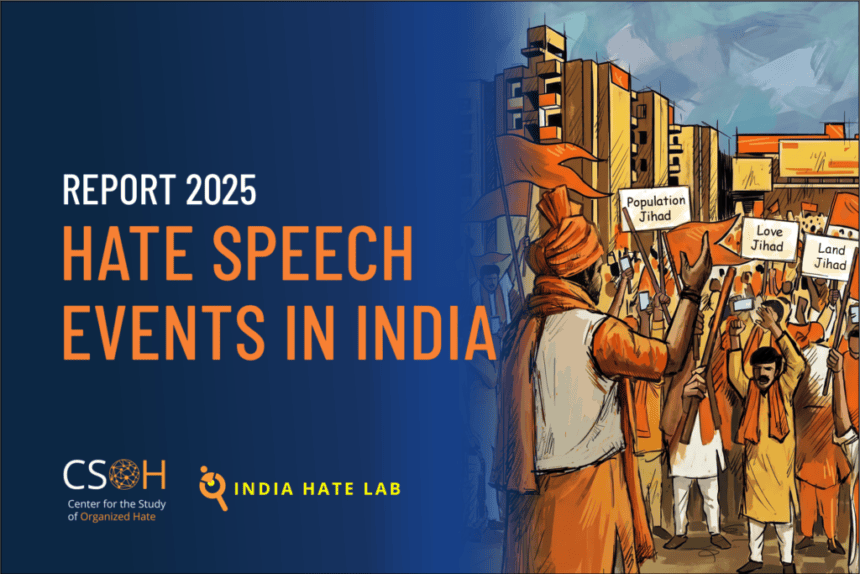

Rising Tide of Hate Speech in India: A Disturbing Trend
The year 2025 has marked a significant and alarming increase in hate speech incidents against religious minorities in India, particularly Muslims and Christians. Reports indicate that documented hate speech events have reached 1,318, signifying a 13% increase from 2024 and reflecting the troubling normalization of communal animosity in India’s political landscape.
Political Climate and Incremental Normalization of Hate
The surge in hate speech aligns closely with the political agenda of the ruling Bharatiya Janata Party (BJP) and its associated Hindu nationalist groups. This partnership has embedded anti-minority sentiments into the operational fabric of political discourse. In 2025, political rallies and local elections served as significant platforms for such rhetoric, with national leaders of the BJP increasingly propagating messages characterized by exclusion and fear.
Various local legislative measures, such as the Karnataka Hate Speech and Hate Crimes (Prevention) Bill, 2025, further illustrate a fragmented acknowledgment of the issue at the state level, even as hate speech proliferated at the national level. This duality underscores a growing acceptance of sectarianism in public life, where hate speech is no longer relegated to the fringes but constituted a mainstream political strategy.
Mechanisms of Hate: Speech, Social Media, and Grassroots Mobilization
The pervasive nature of hate speech in 2025 has been facilitated by several factors, including the organized efforts of far-right groups like the Vishwa Hindu Parishad (VHP) and Bajrang Dal. These organizations, alongside political leaders, not only vocalized hate but also deftly utilized social media platforms like Facebook, Instagram, and YouTube to amplify their messages. This digital ecosystem enabled rapid nationwide dissemination of inflammatory rhetoric, often contradicting platform policies aimed at curbing hate speech.
The content of these speeches frequently included dehumanizing descriptors for minorities, further entrenching negative perceptions within dominant communities. With nearly 50% of the hate speeches referencing conspiracy theories—such as “love jihad” and “halal jihad”—this rhetoric has solidified a culture of targeted hostility against Muslims and Christians. The implications are dire, as they not only polarize society but also lay the groundwork for systemic discrimination and violence.
Patterns of Targeted Violence and Economic Boycotts
Hate speech incidents included overt calls for violence, economic boycotts, and the destruction of minority-owned properties. In 2025 alone, 120 speeches called for economic boycotts primarily against Muslim communities, showcasing a strategy aimed at marginalizing and isolating religious minorities. Moreover, 308 speeches explicitly incited violence, with a notable proportion emerging from states governed by the BJP.
States like Maharashtra, Madhya Pradesh, and Uttar Pradesh recorded the highest numbers of hate speech events, reflecting geographic patterns of systemic discrimination aligned with political power. In such environments, economic disenfranchisement becomes a tangible consequence of inflammatory rhetoric, impacting livelihoods and perpetuating cycles of poverty among targeted communities.
Why It Matters
The normalization of hate speech not only affects local communities but represents a significant challenge to democratic norms and human rights in India. The implications extend to various facets of society, increasing vulnerability and systemic harassment for religious minorities. This growing atmosphere of discrimination erodes social cohesion, threatening the stability and fabric of an already diverse nation. Moreover, global observers and policymakers must consider the ramifications of such anti-minority rhetoric and its potential to inspire violence, thereby affecting international relations and humanitarian efforts.
Frequently Asked Questions
What were the total hate speech incidents documented in India for 2025?
A total of 1,318 hate speech incidents were documented in India for the year 2025, indicating a 13% increase from 2024.
Which religious minorities were primarily targeted by hate speech?
The majority of recorded hate speeches, approximately 98%, targeted Muslims, either explicitly or alongside Christians, while 12% focused explicitly on Christians.
How have social media platforms contributed to the spread of hate speech?
Social media platforms such as Facebook, YouTube, and Instagram played a crucial role in disseminating hate speech events nationwide, with 1,278 of the reported incidents being shared or live-streamed on these platforms.
What role do political leaders play in promoting hate speech?
Political leaders, particularly from the BJP and associated entities, have increasingly adopted hate speech as a strategy for political mobilization, facilitating its normalization in public discourse and grassroots political efforts.